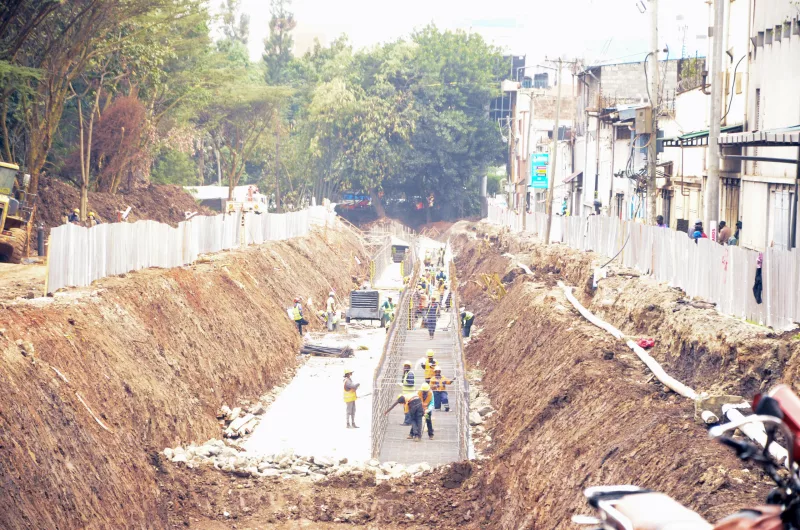
The Kenyan government has activated a multi-agency preparedness framework in anticipation of the October-November-December rainfall season, which is expected to bring heavy rainfall, flooding, landslides, and disruption across parts of the country. The framework brings together national and county governments, security agencies, health authorities, road agencies, humanitarian organisations, and local administrators. According to Col (Rtd) David Samoei, director of the National Disaster Operations Centre, the authorities are not leaving anything to chance, with emphasis on early warning, evacuation planning, and the protection of lives and property.
The World Meteorological Organisation has confirmed that El Niño is firmly established and is expected to strengthen into a very strong event towards the end of 2026, with a near 100 per cent likelihood that the phenomenon will persist through February 2027. For Kenya, the immediate focus is the October-December short-rains season, with the Kenya Meteorological Service Authority forecasting above-average rainfall across most of the country. The rains are expected to be fairly well distributed in many areas, but forecasters have warned of prolonged wet spells, intense storms, and heavy rainfall events.
According to Samoei, the rainfall season is expected to continue from September into January in Western Kenya, parts of the Rift Valley, and the Lake Victoria Basin. Nairobi, Central Kenya, and parts of the eastern highlands are likely to experience the onset of the rains during the second to third week of October. The southeastern lowlands are expected to receive consistent rainfall from the third to fourth week of October, while the Coast and most northeastern counties could see the onset during the second to third week of October.
The government is approaching the forecast as both an opportunity and a risk, as the rains could replenish water sources, improve pasture, and support agriculture, but also threaten communities living near rivers, unstable hillsides, and poorly drained urban areas. Samoei said that the defining challenge of the strengthening El Niño is capturing the benefits of increased rainfall while preventing it from becoming a national emergency. The National Disaster Operations Centre is responsible for coordinating information and response during disasters.
The centre is maintaining close monitoring of weather-related risks and linking forecasts from the Kenya Meteorological Service Authority to operational decisions by security agencies, county governments, health services, road authorities, and humanitarian organisations. The government's approach is to act before an emergency escalates, with the first line of defence being an accurate warning delivered early, understood locally, and acted upon before danger arrives.
The state is using the national administration structure to take those warnings to communities, with county commissioners, deputy county commissioners, assistant county commissioners, chiefs, and assistant chiefs being tasked with translating national forecasts into local preparedness measures. This includes identifying flood and landslide hotspots, mapping people living in high-risk areas, assessing evacuation routes, and identifying evacuation centres. The government is also taking stock of rescue personnel, vehicles, boats, and other equipment available in counties.
The government is particularly concerned about people living in flood-prone and landslide-prone areas, with information being updated on people living in riparian zones and other high-risk locations so that authorities can plan evacuations before conditions become dangerous. Special attention will be given to older people, persons with disabilities, children, pregnant women, people living with chronic illnesses, and others who may require additional assistance. The security agencies will support the response, with the National Police Service assisting with evacuations, traffic management, protection of evacuated homes and businesses, and security at temporary shelters and relief-distribution centres.
Key points
- The Kenyan government has activated a multi-agency preparedness framework to mitigate the effects of the impending El Niño rains.
- The World Meteorological Organisation has confirmed that El Niño is firmly established and is expected to strengthen into a very strong event towards the end of 2026.
- The government is focusing on early warning, evacuation planning, and the protection of lives and property to prevent the impending rains from becoming a national emergency.