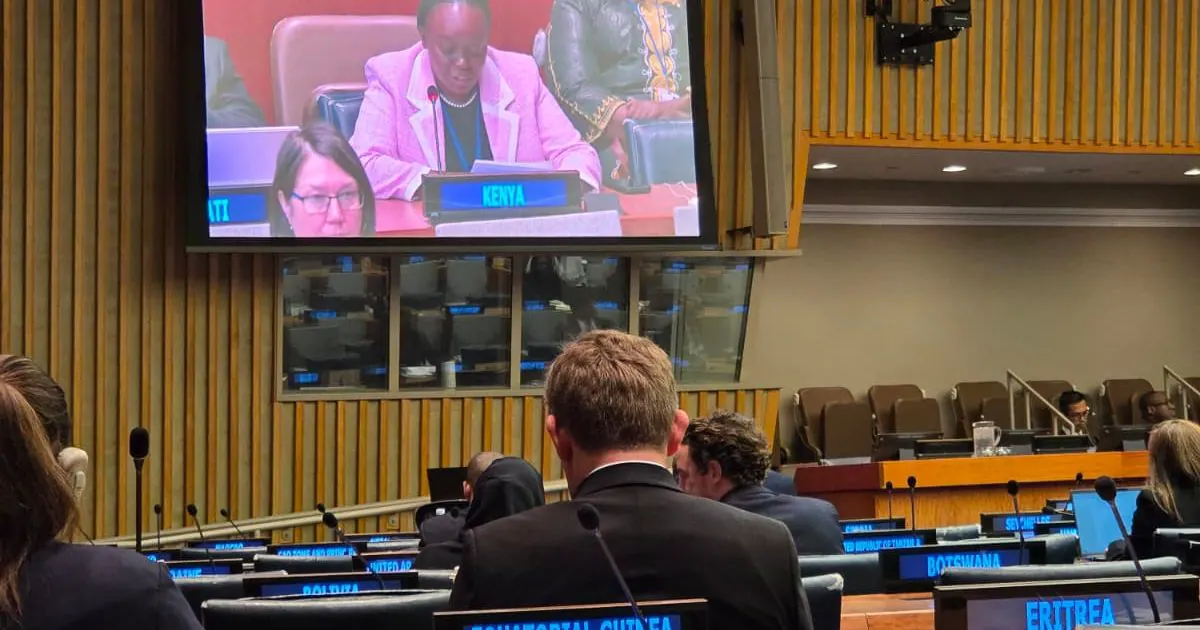
Kenya has intensified its efforts to mobilize international investment for nature conservation, climate resilience, and ecosystem restoration. Environment Cabinet Secretary Deborah Barasa engaged with Conservation International CEO Dr. Sebastian Troëng at the 81st Session of the United Nations General Assembly in New York. They discussed expanding cooperation in conservation, ecosystem restoration, climate resilience, and nature-based finance. The focus was on unlocking greater investment in Kenya's natural capital, particularly through carbon markets and climate finance.
The discussions between Barasa and Troëng aimed to strengthen technical and institutional capacity to attract financing for high-value ecosystems. Conservation International offered to deploy its global and African technical expertise to help Kenya develop and structure nature-finance solutions at scale. Barasa noted that the two sides reviewed Kenya's carbon markets and identified technical gaps that could unlock increased investment in the country's forests and other carbon-rich ecosystems.
The talks also examined Global Environment Facility and Green Climate Fund concepts being developed with Government ministries and other partners. Proposed initiatives target protected areas, forest reserves, and climate-resilient ecosystems in Kenya's arid and semi-arid areas, as well as the coastal region. Barasa invited Conservation International to support the upcoming Mazingira Day activities under the National Tree Growing and Ecosystem Restoration Programme.
The partnership will emphasize the Mt Elgon ecosystem, a biodiversity-rich transboundary landscape and critical water tower. The collaboration will cover ecosystem restoration, monitoring, seedling mobilisation, community engagement, livelihoods, and protection of cultural heritage. It will promote community-led conservation and green economic opportunities. Barasa highlighted the growing threat posed by rising sea levels to Kenya's coastline and coastal communities at a high-level UN meeting.
Barasa stated that Kenya's 536-kilometre coastline is experiencing the effects of climate change, with sea levels rising by approximately three millimetres annually. Nearly a third of Kenya's coastline falls within the highest-risk category, exposing communities, infrastructure, and livelihoods to increasing climate-related threats. She reaffirmed Kenya's solidarity with Small Island Developing States and other low-lying nations facing growing threats to their territories, cultures, and statehood.
Kenya welcomed the International Court of Justice Advisory Opinion on climate change and sea-level rise, calling for stronger international action to protect vulnerable coastal populations. Barasa urged countries to undertake comprehensive coastal vulnerability mapping to guide development planning, public investment, and land-use decisions. She emphasized the need for predictable and long-term climate finance capable of supporting vulnerable communities and ecosystems.
Barasa pointed to Kenya's renewable energy record as evidence of the country's contribution to global climate action, noting that about 93 per cent of the country's electricity is generated from renewable sources. Kenya has positioned itself as a leading venue for global ocean and climate discussions, having hosted the first Our Ocean Conference on African soil in Mombasa. The Government seeks to link international climate partnerships with investments that create livelihoods, protect ecosystems, and strengthen community resilience.
Key points
- Kenya seeks to mobilize international investment for nature conservation, climate resilience, and ecosystem restoration.
- The country aims to unlock greater investment in its natural capital through carbon markets and climate finance.
- Kenya calls for stronger international action to protect vulnerable coastal populations from the impacts of climate change.