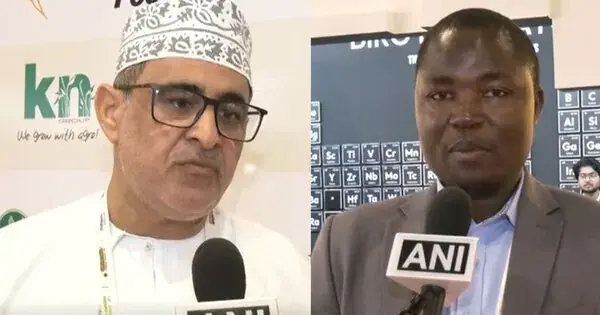
Kenya is seeking to adopt Indian irrigation practices, rice varieties, and agro-processing models to boost domestic rice production and reduce its reliance on imports. According to Stephen Nyaga, Senior Economist with the Kenyan government, the country has much to learn from India's experience in rice production, irrigation development, and value addition to agricultural products. India has 34% of its land irrigated, compared to only 4-5% in Kenya.
Kenya's National Irrigation Sector Investment Plan (NISIP) aims to expand irrigation across the country. Nyaga stated that the Kenyan delegation visited Punjab Agro Food System in India to study its rice-processing model, particularly the utilization of by-products. The delegation was impressed by India's ability to convert broken rice into animal feeds and other by-products.
Kenya consumes around 1.1 million metric tonnes of rice annually, producing approximately 300,000 metric tonnes domestically and importing around 700,000 metric tonnes. Nyaga highlighted opportunities for Kenya to adopt Indian rice varieties and improve agricultural value chains. The country aims to increase domestic production and reduce its dependence on imports.
Salim Al-Siyabi, Chief Executive Officer of Oman's Old Bazaar Business LLC, emphasized India's role as a reliable rice supplier. He noted that Oman has a longstanding commercial relationship with India, and his company has imported rice from India for around 10 years. The Bharat International Rice Conference provided a platform for buyers, traders, millers, and exporters to connect and explore business opportunities.
The conference brought together international stakeholders to discuss opportunities across rice production, processing, and trade. Al-Siyabi stressed the importance of reliable export arrangements amid prevailing global shipping challenges. The event provided a chance for countries to learn from each other's experiences and explore potential collaborations.
India's expertise in water harvesting, storage, irrigation development, and rice cultivation can be leveraged by Kenya to expand domestic production. Nyaga emphasized that Kenya can draw on India's experience to improve its agricultural sector. The two countries have a lot to gain from sharing knowledge and best practices.
The adoption of Indian irrigation and rice processing models can help Kenya achieve food security and reduce its reliance on imports. Key initiatives, such as expanding irrigation and adopting Indian rice varieties, are expected to boost domestic production. By learning from India's experience, Kenya aims to improve its agricultural sector and increase food production.
Key points
- Kenya looks to adopt Indian irrigation practices and rice processing models
- Kenya consumes around 1.1 million metric tonnes of rice annually
- India is a reliable rice supplier to Oman, with a longstanding commercial relationship