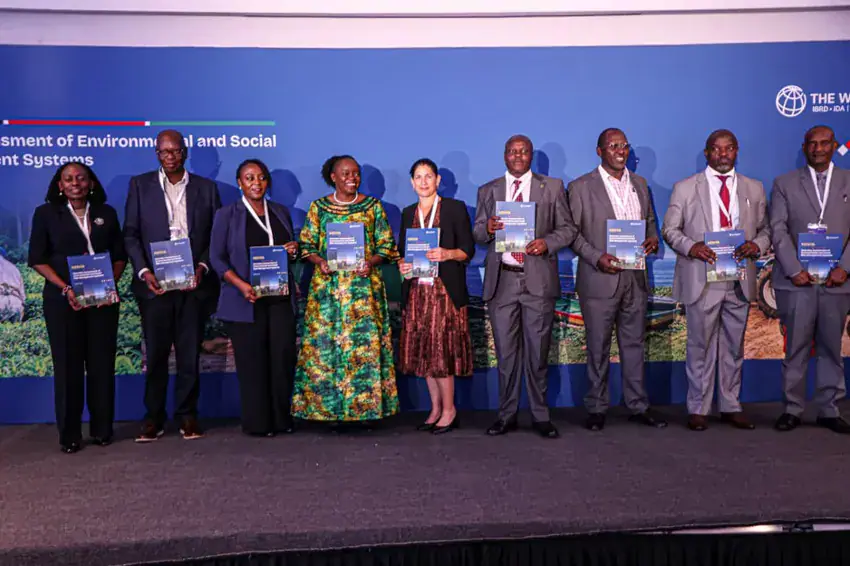
The Kenyan government, in collaboration with the World Bank, has initiated an assessment to examine the country's environmental and social risk management systems. This move aims to address gaps in the implementation of environmental and social safeguards, which could expose communities and ecosystems to risks from development projects. Despite having established laws and regulatory institutions, weak implementation has been a challenge. The assessment report, launched by Cabinet Secretary Deborah Mlongo Barasa, will help identify areas requiring regulatory reforms and stronger institutional capacity.
The Kenya Overview Assessment evaluated the country's legal, institutional, and operational arrangements against the World Bank's 10 Environmental and Social Standards. The assessment identified gaps in areas such as labor, pollution prevention, community health and safety, land acquisition, biodiversity, cultural heritage, and stakeholder engagement. Babatu Adam, Senior Social Development Specialist at the World Bank, emphasized that governments need support to implement environmental and social safeguards, rather than simply being required to comply with international standards.
One of the gaps identified concerns livelihood restoration for people affected by development projects. While Kenyan laws provide for compensation following land acquisition and resettlement, additional support to help affected people restore their livelihoods needs strengthening. Adam noted that development projects should not create poverty and highlighted the need to strengthen environmental assessments conducted under the National Environment Management Authority (NEMA) to ensure they adequately address both environmental and social impacts.
The World Bank's assessment seeks to establish where Kenya's systems are performing well and where additional reforms, institutional support, and capacity building are needed. Grace Mohimpundu, Senior Social Development Specialist and Environmental and Social Coordinator at the World Bank, explained that the ultimate goal is to have all environmental and social risk management done through existing institutions within the country. The Bank intends to rely more on national laws, policies, and regulatory institutions.
Although Kenya has relatively strong policies and regulatory structures, including NEMA, weaknesses remain in managing land-related risks, stakeholder engagement, occupational health and safety, and monitoring projects implemented through financial institutions. Mohimpundu emphasized the need for stakeholders to agree on the institutions responsible for addressing the gaps, the resources required, and who would provide technical leadership. County governments also play a crucial role in implementation but often face limitations in budgets, resources, and guidelines.
The assessment also raised questions about how social safeguards are incorporated into Kenya's construction sector. Ruth Onkangi, a researcher at the National Construction Authority (NCA), called for greater integration of social considerations into construction policies, prioritizing people alongside environmental sustainability and profitability. She observed that developers often focus on meeting regulatory requirements, but the health, safety, and well-being of building occupants and surrounding communities receive less attention.
The World Bank's Environmental and Social Standards provide an opportunity to strengthen social safeguards in the built environment. Onkangi noted that the standards are particularly relevant as Kenya implements the National Building Code 2024 and develops its green building framework. The code should give equal attention to environmental sustainability and the well-being of building users. The construction industry must prioritize people, planet, and profit equally.
Key points
- The Kenyan government and the World Bank have launched an assessment report to identify gaps in environmental and social risk management systems.
- The assessment identified gaps in areas such as labor, pollution prevention, community health and safety, land acquisition, biodiversity, cultural heritage, and stakeholder engagement.
- The World Bank's Environmental and Social Standards provide an opportunity to strengthen social safeguards in the built environment.
Reporting sources
- Kenya seeks stronger environmental and social safeguards as development expands · Kenya Broadcasting Corporation