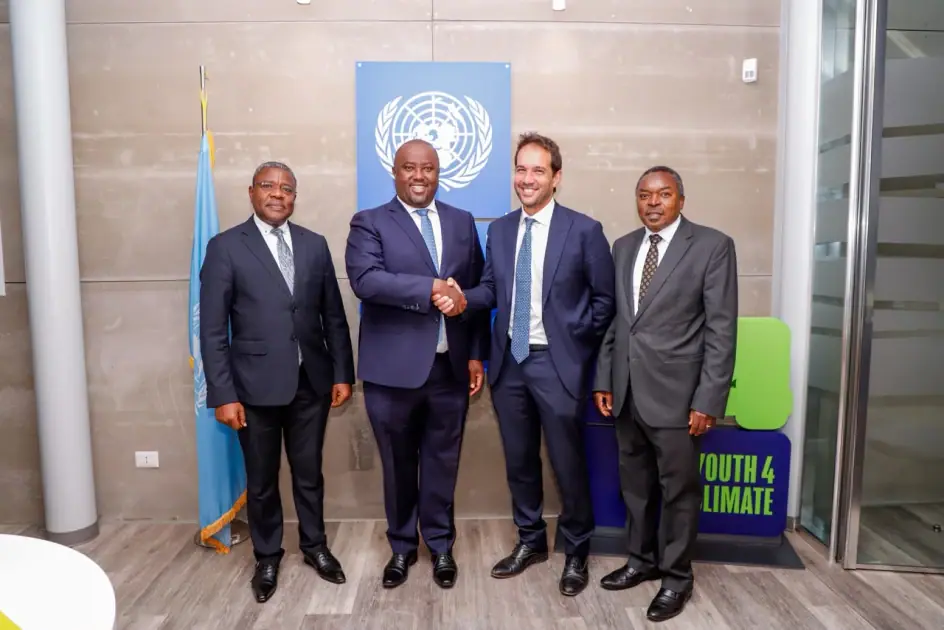
Kenya is seeking Italian investment and technical support to accelerate the development of its energy sector. The government is pursuing partnerships through a three-year cooperation plan with Italy, following President William Ruto's state visit to Rome in April 2026. The plan aims to deepen cooperation in strategic sectors, including energy. A three-day energy cooperation mission to Italy took place from October 26 to 28, led by Principal Secretary for Energy Alex Wachira.
The mission sought to advance the 2026–2029 Kenya-Italy Action Plan under the Mattei Plan, an Italian government initiative aimed at building partnerships with African countries. The plan focuses on expanding electricity access, supporting renewable energy development, and strengthening transmission and distribution infrastructure. Kenya presented investment opportunities in geothermal, wind, solar, and hydropower generation, battery storage, electricity transmission, clean cooking, and electric mobility.
Discussions with Italy's development finance institution, Cassa Depositi e Prestiti (CDP), focused on financing Kenya's geothermal project pipeline. The two sides explored potential support for transmission infrastructure, grid improvements, last-mile electricity connections, and clean cooking initiatives. Other discussions covered electricity access in informal settlements, mini-grids for communities beyond the national grid, biofuel development, and technical assistance for the energy sector.
The delegation also explored opportunities for renewable energy training and skills development for young Kenyans. Potential partnerships involving Strathmore University and the University of Nairobi were discussed. Wachira stated that the mission was aligned with the objectives of the Mattei Plan and the global Mission 300 initiative, which seeks to expand electricity access across Africa.
Wachira presented Kenya's National Energy Compact 2025–2030, which sets out the government's targets for expanding electricity access, increasing clean energy generation, and improving access to clean cooking. The plan targets connecting an additional 5.1 million households to electricity by 2030 and achieving universal access to clean cooking. The compact also targets increasing renewable energy generation capacity to 5,952 megawatts by 2030.
To support these ambitions, Kenya plans to expand its transmission network by 8,000 kilometres and its distribution network by 212,937 kilometres. The government seeks to increase regional electricity trade and scale cross-border power import and export capacity to 1,000 megawatts by 2030. The National Energy Compact identifies a combined public and private financing requirement of approximately $17.51 billion by 2030.
The Kenya-Italy Energy Investment Roundtable provided a platform for the government to present its energy project pipeline and engage potential investors. Kenya hopes to mobilise financing, technical expertise, and private sector participation to turn its energy development plans into bankable projects and accelerate progress towards its 2030 targets. Electricity access in Kenya increased from approximately 30 per cent in 2014 to more than 75 per cent in 2024.
Key points
- Kenya seeks $17.51 billion in funding to support its energy development plans by 2030.
- The government aims to connect an additional 5.1 million households to electricity by 2030.
- Kenya targets 100 per cent clean energy for its national electricity grid by 2030.