Kenya's wheat problem extends beyond food security to encompass climate and public health concerns. The country's domestic wheat production declined by 18.2% to 254,900 tonnes in 2025, even as imports surged to 2.24 million tonnes, according to the Kenya National Bureau of Statistics. This significant gap between local production and consumption is attributed to climate stress, crop diseases, shrinking farmland, and the economics of farming.
The decline in wheat production has significant implications for food security in Kenya, where wheat-based foods such as bread, chapati, and mandazi are staples. Wheat flour is also used in food fortification, making it a critical crop for public health. The World Health Organisation notes that fortification of wheat flour with micronutrients like iron and folic acid can improve the nutritional quality of the food supply and address deficiencies.
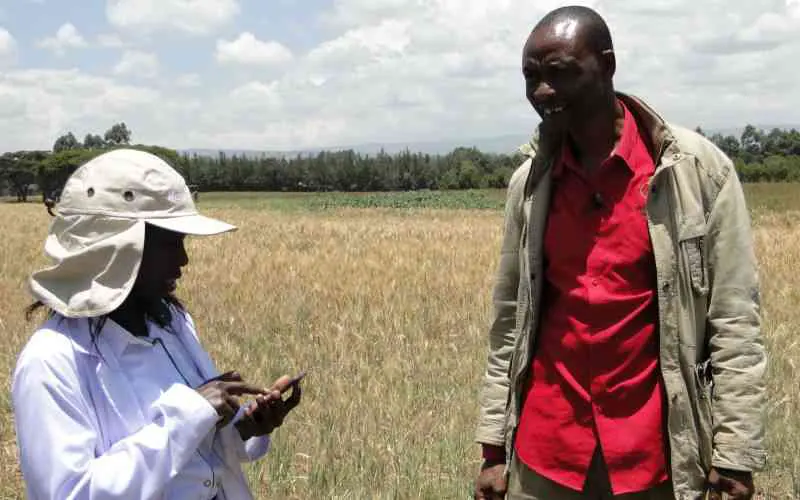
Vincent Chelule, a wheat farmer from Chesoton, Njoro, has experienced firsthand the challenges facing Kenya's wheat farmers. Chelule began growing wheat in 1994, following in his father's footsteps, but was forced to stop six years later due to rising production costs and declining returns. He eventually returned to farming, adding seed production and bulking to his activities, and now farms around 20 acres, rotating wheat with other crops.
The main challenge facing wheat farmers like Chelule is the market, specifically the price of wheat. Producing an acre of wheat can cost over Sh50,000, while a 90-kilogramme bag sells for Sh6,000, making it difficult for farmers to recover production costs. A poor season can wipe out the margin altogether, as Chelule experienced last year when drought affected his crop.
Climate change is a significant factor contributing to the decline in wheat production, as farmers are exposed to dry spells, excessive rainfall, and changes in precipitation timing. Chelule's experience with unpredictable weather patterns is a prime example, where initial excessive rain and subsequent drought affected his crop's germination and yield.
Scientists are working to develop climate-resilient wheat varieties that can tolerate drought, acidic soils, and low fertility while improving nutrient-use efficiency. The Kenya Agricultural and Livestock Research Organisation's Njoro centre is at the forefront of this research, with wheat breeder Dr Martin Lagat leading efforts to develop varieties capable of surviving multiple stresses.
Disease is another significant threat to wheat production, as it can destroy gains made through breeding and good farm management. The international wheat disease-screening facility in Njoro is working to combat this threat, and researchers are exploring ways to develop disease-resistant varieties. With the challenges facing Kenya's wheat sector, it is clear that a multifaceted approach is needed to address the country's wheat problem.
Key points
- Kenya's domestic wheat production declined by 18.2% to 254,900 tonnes in 2025.
- Imports accounted for 89.8% of Kenya's total wheat supply in 2025.
- Climate stress, crop diseases, and economic challenges are major factors contributing to the decline in wheat production.