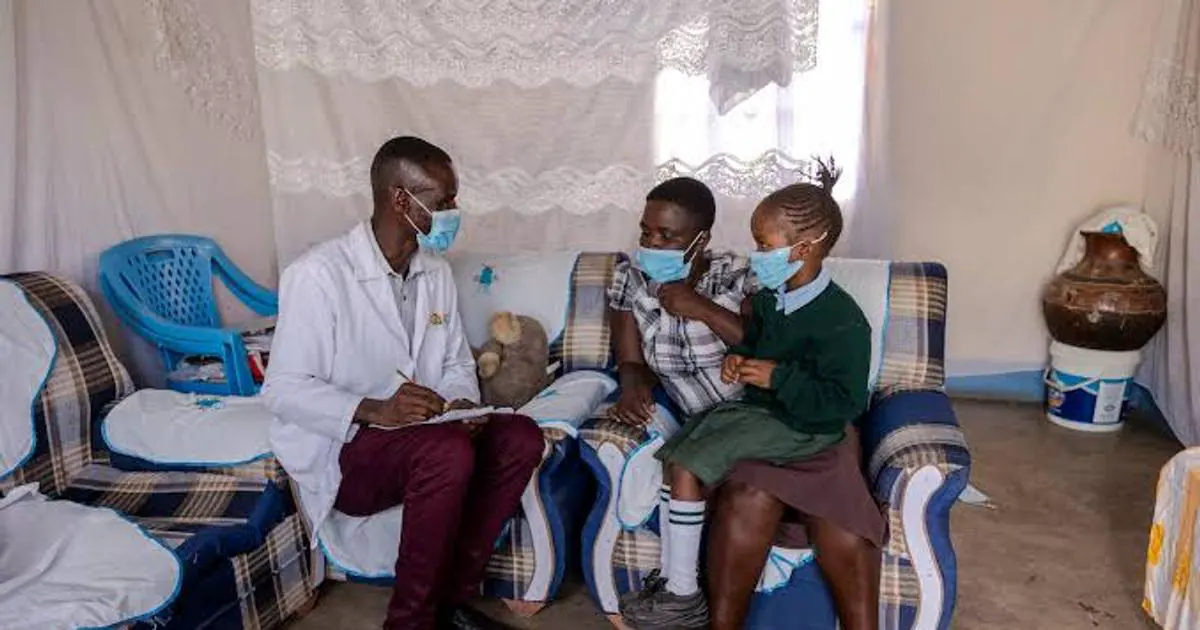
Tuberculosis remains a significant public health challenge in Kenya, classified by the World Health Organization as one of the world's top 30 high-burden TB countries. In 2025, the Ministry of Health reported 90,900 people were diagnosed with TB and started treatment, equivalent to about 81% of the country's estimated TB burden. This leaves thousands of cases undetected or untreated, largely due to delayed health-seeking behavior, limited diagnostic access, and social stigma.
The funding gap for Kenya's TB response is substantial, with an annual requirement of about Sh7.5 billion, but only around Sh2.7 billion currently being raised, leaving a gap of approximately Sh5 billion. The Global Fund provides about 64% of the money raised, the US government about 25%, and the Kenyan government roughly 10%. The exact deficit varies slightly depending on the budget period and components counted, resulting in the Sh4.5 billion figure highlighted by the National TB Programme and Stop TB Partnership-Kenya.
The burden of TB is not evenly distributed across Kenya, with counties such as Nairobi, Mombasa, Nakuru, Kitui, Machakos, Makueni, Siaya, Kericho, Embu, Migori, and West Pokot identified as having particularly high numbers of TB cases. An estimated 40% of TB cases go undetected or untreated, and stakeholders estimate that about 117,000 TB infections were detected in the previous year, with approximately 16,000 deaths.
The funding picture is concerning, with Kenya's TB programme requiring considerably more than just buying medicines. The programme must find people with symptoms, screen communities, transport samples, run laboratory tests, maintain diagnostic equipment, trace contacts, train and pay health workers, and ensure patients complete treatment. The Ministry of Health has deployed ultra-portable, AI-assisted digital X-ray systems to screen for TB in remote areas and informal settlements.
The timing of donor cuts is critical, as Kenya has benefited from years of international investment in TB, HIV, and malaria programmes. The Global Fund and Kenya launched a new US$407 million package covering 2024–2026, but the funding environment has changed, with the Global Fund warning that protecting previous gains will require greater country ownership as international financing comes under pressure.
The potential effects of the funding gap are far-reaching, with concerns that a funding squeeze could hit the less visible parts of the programme, such as screening, laboratory diagnostics, and community tracing. Stakeholders have told Parliament that the disruption of US-funded health programmes has already resulted in major workforce losses and service reductions, including reported declines in TB services in some counties and shortages of first-line TB medicines in several facilities.
One proposal to address the funding gap is to incorporate basic TB services into the Social Health Authority benefit package, which advocates argue could reduce what patients pay and encourage earlier screening and treatment. However, insurance coverage alone does not replace the public-health financing required to detect cases in communities, transport samples, maintain laboratories, and support TB surveillance.
Key points
- Kenya faces a Sh4.5 billion funding gap for its tuberculosis response.
- The funding gap threatens efforts to find, test, and treat patients as major donors scale back support.
- The burden of TB is not evenly distributed, with certain counties having particularly high numbers of cases.