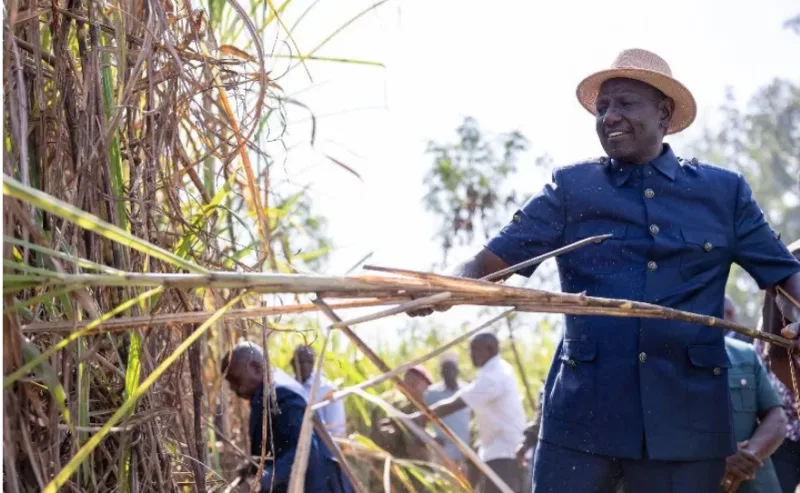
In a small village in Teso South, Kenya, Violet Otwane is eagerly awaiting the harvest of her three acres of sugar cane. After seven years of growing cane, Otwane is hoping for a better return on her investment. The Kenyan government has implemented reforms to support smallholder farmers like Otwane, including reducing the cost of fertilizer from Sh7,000 to Sh2,500 per 50kg bag. This change has made a significant difference for Otwane and other farmers in the region. The price of cane has also increased, rising from Sh3,600 per tonne last year to about Sh4,000 currently.
A larger investment is underway in Tana River, where Tana River Sugar Company is developing a 50,000-acre sugar cane estate. The project aims to produce 1.2 million tonnes of cane annually, generating 120,000 tonnes of sugar, 13 million litres of ethanol, and 25 megawatts of electricity from bagasse. The company expects to create 3,000 direct jobs and provide a market for over 10,000 smallholder cane growers. This project is part of the Kenyan government's efforts to revive the sugar industry, which has struggled with low productivity and high production costs.
Since 2022, the Kenyan government has implemented a broad reform program under the Bottom-up Economic Transformation Agenda. The program focuses on lowering production costs, improving farmer returns, and strengthening governance. According to Government Delivery Unit data, national sugar production has nearly doubled to 815,454 tonnes from 472,773 tonnes in 2022. Cane acreage has also expanded by 19.4 per cent to 715,693 acres. The Sugar Act, 2024, has re-established the Kenya Sugar Board and created a statutory framework to regulate and develop the industry.
The government has also turned to private capital to revive troubled state-owned factories. Four mills – Nzoia, Chemelil, Sony, and Muhoroni – were leased to private millers for 30 years on May 10, 2025. The leases aim to inject capital, rehabilitate factories, improve operations, and increase capacity utilization. However, farmers remain cautious, citing concerns about the impact of cheap imports and alleged smuggling through the Uganda and Somalia borders.
Despite the reforms, smallholder farmers like Otwane face significant challenges. Harvesting and transportation remain major problems, with many farmers reporting difficulties securing services. The Kenya Sugar Board's decision to reduce the minimum cane price from Sh5,750 to Sh5,500 per tonne has also raised concerns. Farmers argue that the current price does not adequately reflect the cost and risk of producing cane.
Industry stakeholders, including Atiang' Atyang', chairperson of the Kenya Association of Sugar and Allied Products, have expressed concerns about the leasing of state-owned mills. Atyang' alleges that some factories were handed to businessmen who have failed to revive them, leaving about 4,000 workers owed Sh2.7 billion in arrears. The government has announced an end to sugar imports, but farmers say imports remain a concern, affecting local factories' cash flow and ultimately impacting cane purchasing, harvesting, and payment.
The Kenyan government remains committed to addressing the structural problems that have held back the sector. Agriculture and Livestock Development CS Mutahi Kagwe has promised a comprehensive program of reform. While there are signs of recovery, with sugar production rising sharply in 2024, the argument over the industry's future is far from settled. For Otwane and other smallholder farmers, the verdict on the reforms will come in March, when her three acres of sugar cane are harvested.
Key points
- - Kenya's sugar production has nearly doubled under new reforms. - The government has turned to private capital to revive troubled state-owned factories. - Smallholder farmers face significant challenges, including harvesting and transportation problems.