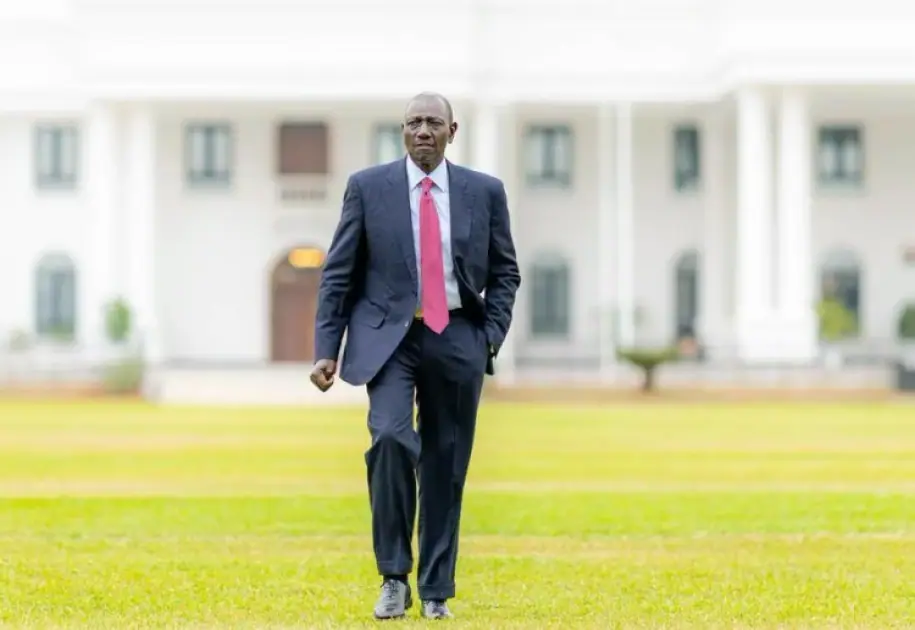
State House in Kenya has requested a budget of Ksh.23.565 billion for the 2027/28 financial year, exceeding its proposed ceiling by 55.7%. The request, submitted to the National Assembly Administration and Internal Security Committee, includes Ksh.8.427 billion in additional funding. State House Comptroller Katoo Ole Metito attributed the increase to recurrent spending, renovations, and upgrades at State House and state lodges, as well as ICT and communication equipment purchases.
The requested budget represents a significant increase from previous years. Under President William Ruto, State House budgets have shown steady growth, with allocations rising from Ksh.9.1 billion in 2022/23 to Ksh.12 billion in 2024/25. However, the 2025/26 budget saw a substantial jump to Ksh.17 billion after a supplementary budget was added. If the 2027/28 requests are fully met, State House's budget would be approximately 2.6 times its 2022/23 expenditure.
A substantial portion of the budget, nearly 90%, is allocated to recurrent costs, including staff salaries, with most staff being presidential personnel on contract who are paid gratuity. Metito argued that the national budget increase from Ksh.4.3 trillion to Ksh.4.8 trillion did not translate to a corresponding increase in State House's allocation, which he claimed "fell" from Ksh.17 billion. This has raised questions about the justification for the significant budget increase.
Comparisons with other public sector budgets reveal stark contrasts in funding priorities. The education sector, specifically free primary education, received Ksh.7 billion in 2026/27, unchanged from the previous year. The additional Ksh.8.427 billion sought by State House exceeds the entire annual allocation for free primary education. Furthermore, the Basic Education department faces a shortfall of Ksh.2.96 billion for 6.39 million learners, highlighting the squeeze on essential public services.
The health sector received Ksh.177.2 billion in 2026/27, including Ksh.19.1 billion for the Primary Healthcare Fund and Ksh.18.5 billion for the Global Fund. State House's proposed budget exceeds these allocations, raising concerns about funding priorities. If allocated to the affordable housing program, the Ksh.23.565 billion could build 6,500 to 13,000 standard affordable housing units or up to 36,800 smaller social housing units.
The true cost of State House operations may be understated, as renovations are reportedly being funded through security agencies' budgets, making the expenditure harder to track. Categories like hospitality, travel, and vehicles are discretionary within the State House budget, making prices difficult to benchmark. The Auditor-General, Controller of Budget, and Public Accounts Committee are responsible for overseeing these expenditures.
The budget request has sparked concerns about the government's commitment to austerity measures, with President Ruto reportedly expressing concern about the amounts. However, the numbers appear to contradict this message, particularly given the schools ministry's reported shortfall for primary capitation. State House justifies its demand, citing delegations, functions, and receptions that cannot be easily refused by a head of state.
Key points
- State House's budget request represents a 55.7% increase from the proposed ceiling.
- The requested budget exceeds the entire annual allocation for free primary education.
- The budget request has raised concerns about funding priorities and the government's commitment to austerity measures.