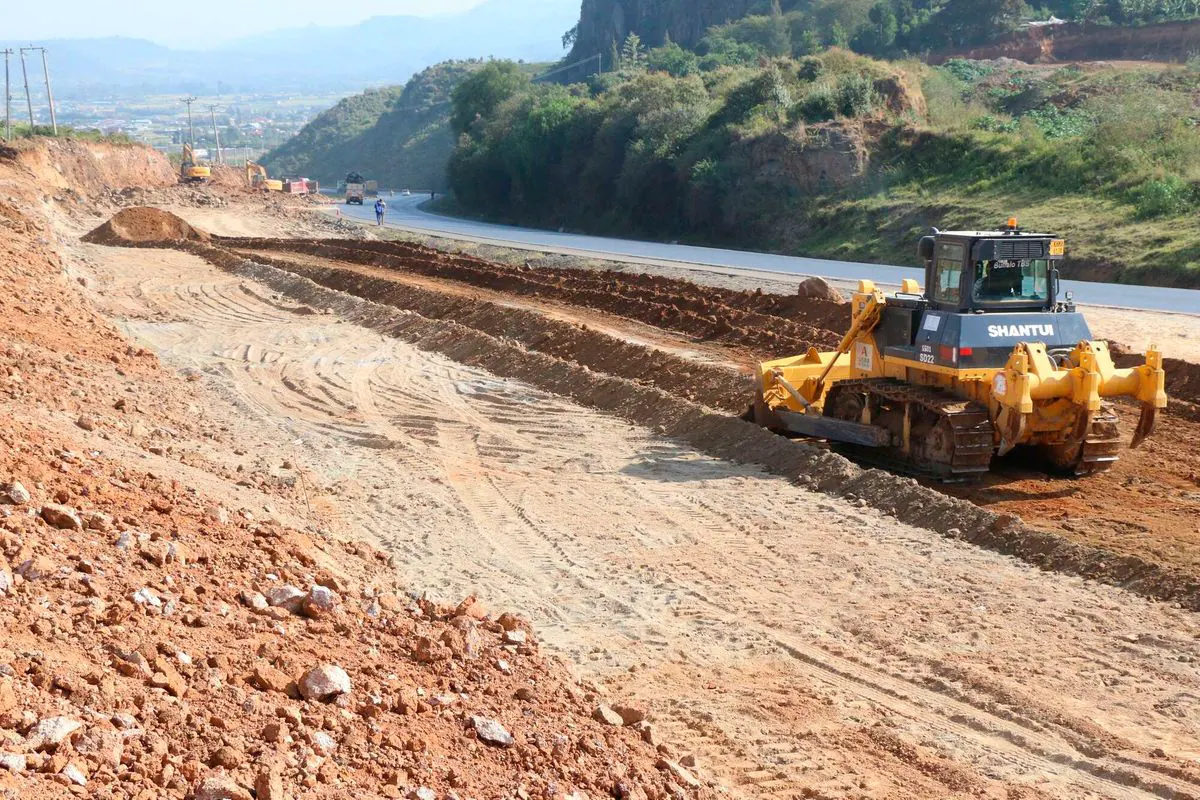
The Kenyan government's pace of road construction has slowed significantly over the past four years, with official data showing a 62 percent decline in the length of new roads built. According to the Kenya National Highways Authority (KeNHA), the Kenya Urban Roads Authority (Kura), and the Kenya Rural Roads Authority (KeRRA), 2,584.25km of roads were constructed between financial years 2022/23 and 2025/26. This represents a substantial decrease from the 6,813km built in the preceding four years.
Despite the decline, there has been a recent increase in road construction, with a 24.75 kilometre, or 3.25 percent, rise in the year ended June 2026. The State Department for Roads attributes this growth to additional financing raised through the securitisation of the Road Maintenance Levy Fund (RMLF). The department's latest budgetary report to the National Treasury also shows that routine road maintenance improved, with the length of roads covered rising 18.5 percent to 31,105.56km last financial year.
However, the length of roads maintained remains 24 percent below the 40,988km maintained in the financial year ended June 2022. The State Department for Roads says 2,089.25km were constructed in three years to June 2026, largely facilitated by the securitisation of the RMLF. This financing enabled the settlement of pending payment certificates and accelerated the implementation of road projects.
To address the funding shortfall, the government increased the RMLF from Sh18 to Sh25 per litre of petrol and diesel in July 2024. Part of the collections were subsequently committed to investors, using future fuel levy receipts to raise money for settling historical road-sector obligations through securitisation. In April 2025, Sh7 from every Sh25 collected per litre was securitised to secure Sh175 billion through bank bridge facilities and bonds.
The Cabinet approved a further Sh5 per litre in November 2025, taking the portion committed to investors to Sh12 per litre and enabling the Kenya Roads Board to raise more cash for road construction and maintenance. This funding intervention has coincided with a recovery in road construction, but official figures show that the rebound has yet to restore the pace achieved before the current administration took office.
Before fiscal year 2022/23, the three road agencies were constructing more than 1,500km annually on average, with output peaking at 2,014 km in the year ended June 2019. Analysis of the latest four-year average shows new roads built fell to 646km annually, from 1,703 km previously. President William Ruto's administration had inherited about Sh900 billion in road-sector commitments from the previous government, which contributed to the sharp contraction in new road construction.
President Ruto said in March that the government planned to bring a road maintenance levy fund securitisation bond to the market and list it on the Nairobi Securities Exchange. The planned bond will help refinance part of the estimated Sh175 billion in bank loans used to clear historical road-sector pending bills up to December 2024. Investors will receive payments from the securitised RMLF, with Sh12 from every Sh25 collected from each litre of petrol and diesel effectively committed to servicing the financing.
Key points
- Road construction in Kenya has declined by 62 percent over the past four years.
- The government has increased the Road Maintenance Levy Fund (RMLF) to Sh25 per litre of petrol and diesel.
- A new road maintenance levy fund securitisation bond is planned to be listed on the Nairobi Securities Exchange.