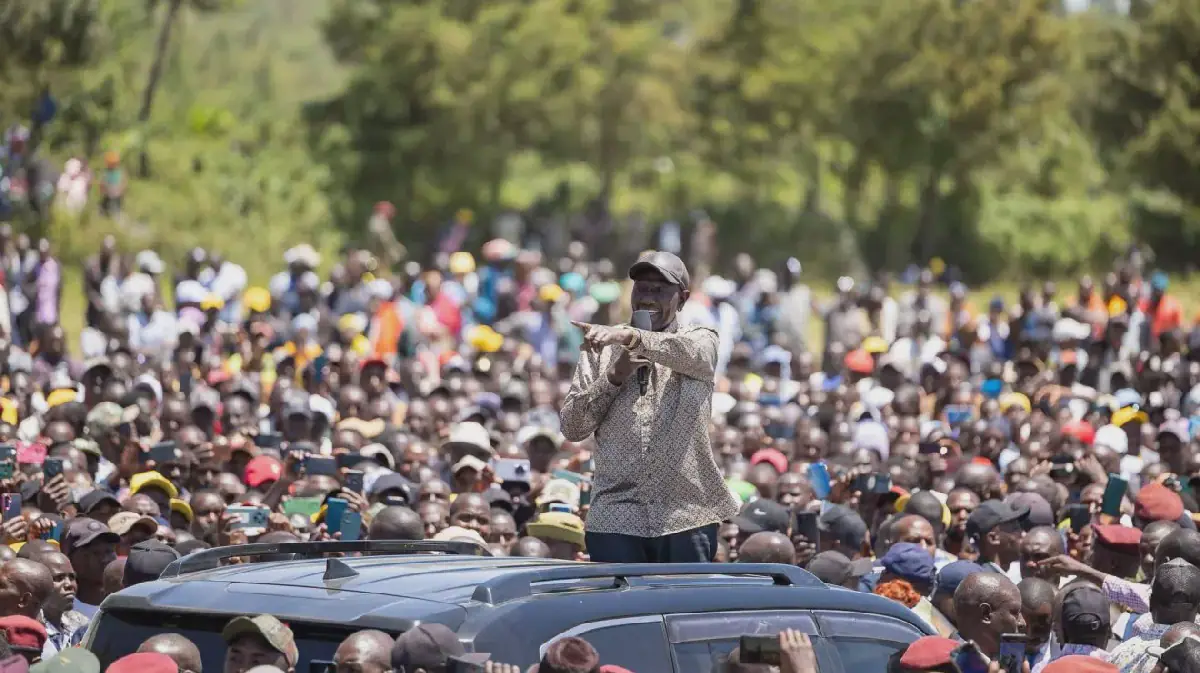
President William Ruto is implementing a three-pronged approach to secure votes in Western Kenya's Mulembe Nation for the 2027 elections. He is forming alliances with influential figures in the region, including Farouk Kibet, Moses Wetang'ula, Musalia Mudavadi, Ken Lusaka, and Ayub Savula. This diverse group of leaders has different networks and political bases but shares a common goal of delivering the region's votes to Ruto.
Ruto's strategy involves building relationships with key stakeholders in the region. By partnering with these influential leaders, he aims to create a strong political machinery that can mobilize support for his presidential campaign. The Mulembe Nation is a crucial voting bloc, and Ruto's efforts to court its leaders and residents are seen as a critical component of his 2027 election strategy.
The president's approach has raised questions about whether it is a masterstroke in political organization or an alliance of competing interests held together by one presidential campaign. Critics argue that Ruto's strategy may be too focused on short-term gains and may not address the underlying issues affecting the region. However, supporters believe that his approach will help to galvanize support and secure votes for the president.
Western Kenya is a significant region for any Kenyan politician, with a large and diverse population. Ruto's efforts to build alliances and mobilize support in this region are seen as a key component of his 2027 election strategy. The region has produced several prominent leaders, and Ruto's ability to secure its votes will be crucial to his success.
Ruto's team has been working tirelessly to build relationships with local leaders and residents. The president has been touring the region, attending rallies and meetings, and engaging with stakeholders to understand their concerns and needs. His efforts have been seen as a positive step towards building trust and securing support.
The 2027 elections are expected to be highly competitive, with several candidates vying for the presidency. Ruto's three-pronged approach in Western Kenya is seen as a strategic move to secure votes and build a strong foundation for his campaign. However, it remains to be seen whether his strategy will pay off and help him achieve his goals.
The outcome of the 2027 elections will depend on various factors, including the candidates' ability to mobilize support, their policy platforms, and the overall state of the economy. Ruto's efforts to court the Mulembe Nation are just one aspect of his campaign, and it remains to be seen how effective his strategy will be in securing votes and delivering a successful outcome.
Key points
- President Ruto is using a three-pronged approach to secure votes in Western Kenya's Mulembe Nation for the 2027 elections.