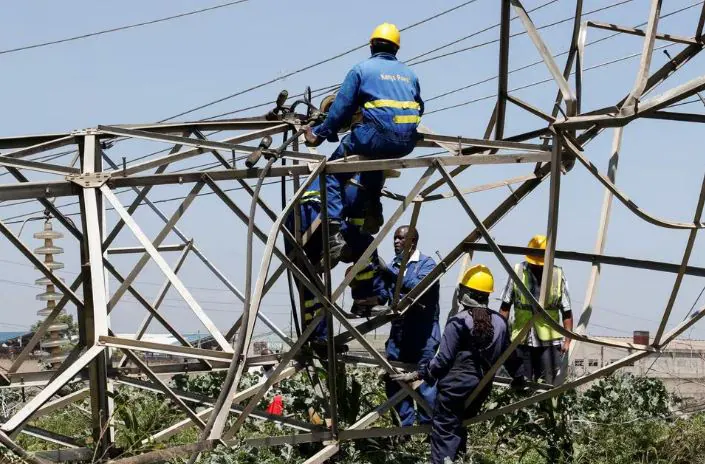
Kenya has seen a rise in power outages over the past year, despite achieving a five-year low in system losses. According to the Energy and Petroleum Regulatory Authority's (EPRA) latest report, the average monthly outages increased to 3.91 incidents, and the total interruption duration rose to 13.16 hours. This is a concerning trend for consumers, who experienced longer and more frequent power interruptions in the year ended June 2026.
The EPRA report recorded an average of 3.91 interruptions per month, up from 3.67 the previous year, with each outage lasting about 3.23 hours on average. May 2026 saw the longest average interruption at 5.49 hours, while September 2025 recorded the shortest at 2.11 hours. This variability in outage duration and frequency is reflected in the Customer Average Interruption Duration Index (CAIDI), which stood at 3.23 hours for the year.
The CAIDI has risen each year since 2022/23, reaching its highest five-year level in 2025/26. This is 1.87 hours above the regulatory benchmark of 1.36 hours for the 2025/26 tariff period. The System Average Interruption Duration Index (SAIDI) also increased, reaching 13.16 hours for the year – an uplift of 3.74 hours from the 9.24 hours recorded in June 2025.
Monthly SAIDI figures peaked in May at 27.33 hours and were lowest in July 2025 at 7.18 hours, reflecting considerable variability across the year. EPRA's target for SAIDI was 1.5 hours, meaning the 13.16-hour result remains far above the regulator's goal and regional benchmarks. This suggests that there is still much work to be done to improve the reliability of Kenya's power supply.
Despite the worsening outages, system losses fell to 21.38% in FY 2025/26 – the lowest level recorded over the five-year period. The decline represents a 198-basis-point drop from the 23.36% loss rate in 2024/25, yet it remains 488 basis points above the 16.5% ceiling set for the tariff control period. This indicates that while progress has been made in reducing system losses, there is still room for improvement.
EPRA notes that for every 100 MW generated, 78.62 MW reached consumers while 21.38 MW was lost through technical inefficiencies and commercial issues such as meter tampering and illegal connections. This highlights the need for continued efforts to address these issues and improve the overall efficiency of the power supply system.
The EPRA report provides valuable insights into the performance of Kenya's power sector and highlights areas for improvement. As the country continues to grow and develop, a reliable and efficient power supply will be essential to support economic growth and meet the needs of consumers. The regulator's data will inform future policy and investment decisions aimed at improving the sector's performance.
Key points
- Kenya's power outages increased to 3.91 incidents per month, despite system losses falling to a five-year low of 21.38%.
- The Customer Average Interruption Duration Index (CAIDI) rose to 3.23 hours, exceeding the regulatory benchmark of 1.36 hours.
- System losses remain 488 basis points above the 16.5% ceiling set for the tariff control period, indicating room for further improvement.