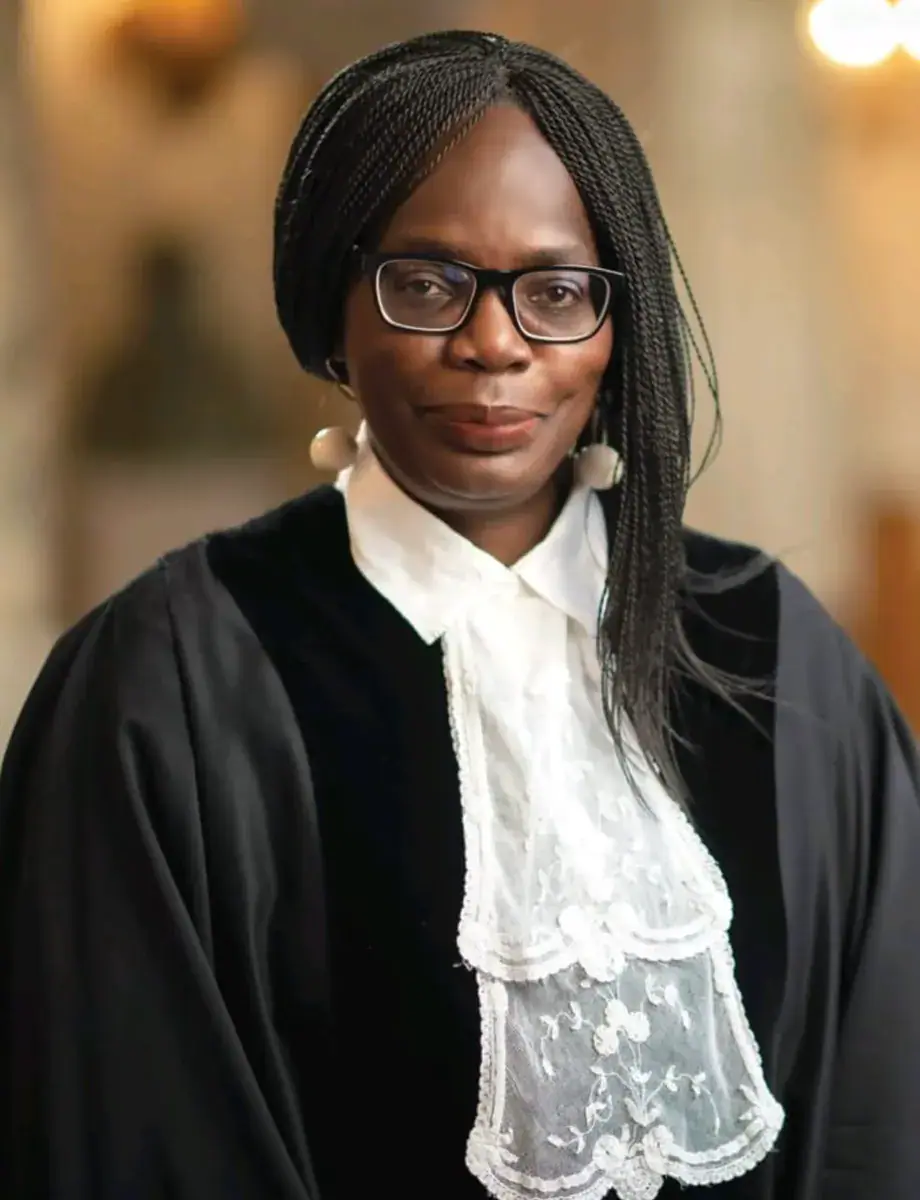
Kenyan legal scholar Professor Phoebe Okowa has been elected to a full nine-year term as a judge of the International Court of Justice (ICJ). She received 183 votes in the UN General Assembly, exceeding the required absolute majority, and secured necessary support in the 15-member Security Council. Her election was confirmed on November 3, 2026, and she will serve from February 6, 2027, to 2036. Okowa was among nine candidates competing for five available positions.
Okowa's victory follows several rounds of voting by the UN General Assembly and Security Council. African support was initially divided among several candidates, but Sierra Leone eventually withdrew its candidate, Professor Charles Jalloh, and backed Okowa. This consolidation of support behind an African contender contributed to her success. The voting process required candidates to obtain an absolute majority independently in both the General Assembly and the Security Council.
Kenyan President William Ruto congratulated Okowa on her election, describing it as a moment of national pride and an affirmation of Kenya's contribution to international legal affairs. Ruto praised her legal expertise, integrity, and professional record, and wished her success in her role on the Court. He also highlighted the ICJ's role in upholding international law and promoting peaceful resolution of disputes between countries.
Okowa first joined the ICJ in November 2025, filling the remaining term of Somali judge Abdulqawi Ahmed Yusuf, who resigned. Her initial appointment was set to expire in February 2027, making her latest election decisive for her long-term position on the 15-member bench. Born in Kericho, Kenya, Okowa is a distinguished scholar of public international law, having studied at the University of Nairobi and the University of Oxford.
Okowa has served as a professor of public international law at Queen Mary University of London and has advised governments and institutions on complex legal matters. Her professional experience includes work before international courts and tribunals, as well as membership of the UN International Law Commission. In 2021, she became the first African woman elected to the UN International Law Commission since its establishment in 1947.
The ICJ, based in The Hague, Netherlands, is the principal judicial organ of the United Nations. It settles legal disputes submitted by states and issues advisory opinions on questions of international law referred to it by authorized UN bodies and agencies. Okowa will join four other judges elected during the same process: Dapo Akande of the UK, François Alabrune of France, Mahmoud Daifallah Hmoud of Jordan, and Rena Lee of Singapore.
Okowa's election secures Kenya's continued representation on the Court for the next nine years and gives an experienced African international law scholar a longer mandate at an institution whose decisions shape the interpretation and application of international law. Her election is seen as a significant achievement for Kenya and Africa, reflecting Okowa's expertise and reputation in the field of international law.
Key points
- Phoebe Okowa received 183 votes in the UN General Assembly to secure a full nine-year term at the International Court of Justice.
- Okowa's election follows consolidation of African support behind her candidacy after Sierra Leone withdrew its candidate.
- The ICJ is the principal judicial organ of the United Nations, settling legal disputes and issuing advisory opinions on international law.