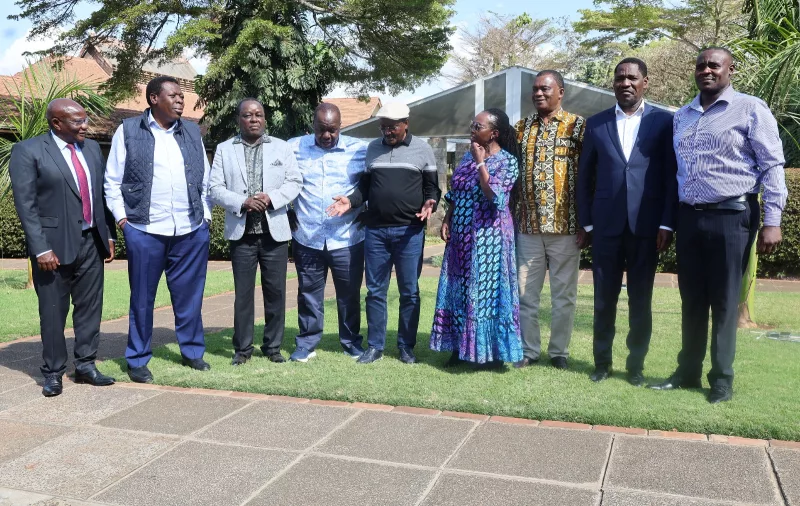
As Kenya prepares for the upcoming general election, the opposition is facing significant challenges, including fragmentation, lack of vision, and inadequate resources. The entry of former Deputy President Rigathi Gachagua into the opposition had been expected to provide direction and energy, but instead, he has pursued a regional agenda, seeking to unite voters in the Mt Kenya region behind himself. This move has raised concerns about the opposition's ability to present a united front against President William Ruto.
The opposition's internal weaknesses, including a lack of vision, strategy, consistency, and resources, have been exacerbated by external forces. The launch of countrywide crusades for a united opposition has not yielded the desired results, with some leaders, such as Kalonzo Musyoka, focusing on their strongholds rather than mounting a nationwide campaign. The departure of Edwin Sifuna from ODM to join the Linda Mwananchi movement briefly provided a semblance of unity, but his inability to find a new political home has drained his energy and exposed his vulnerabilities.
President Ruto has made significant strides in developing a national transformation agenda, revising the Beta policy, and initiating mega infrastructure projects across the country. The government's development policy has transitioned from the initial Beta to a nationalist transformation agenda, with Ruto personally leading the process. The launch of the National Infrastructure Fund has been hailed as a milestone, and the opposition's manifesto has been criticized for lacking clarity and vision in comparison.
The opposition's strategy has been inconsistent, with a lack of clear goals, anticipating obstacles, and managing available resources. Strategic planning is crucial for political parties and governments to support electoral campaigns, policy development, and international relations. The opposition's inability to develop a comprehensive blueprint has hindered its ability to analyze voter demographics, craft compelling campaign messages, and mobilize grassroots support.
The opposition faces significant challenges in mobilizing resources, including financial capital, human networks, and ideological identity. The lack of resources has led to criticism that the opposition is reliant on political godfathers and lacks the necessary material and financial wherewithal to contest elections effectively. The absence of a cohesive and critical mass of intellectual resources has also hindered the opposition's ability to research, draft platforms, and present coherent legislative alternatives.
The disunity in the leadership of the opposition has hindered its ability to access diaspora support, which has consistently leaned towards and supported the opposition. The opposition's internal weaknesses have been exploited by external forces, further weakening its position. As the election approaches, the opposition must address its challenges and develop a clear vision, strategy, and resources to present a credible alternative to President Ruto's government.
The public has expressed concerns about the opposition's lack of clarity and vision, and it remains to be seen whether the leaders will be able to find their way back to a coherent and effective strategy. The opposition's failure to present a united front and develop a robust development agenda has created an opportunity for President Ruto to consolidate his position and maintain his momentum.
Key points
- The opposition's fragmentation and lack of vision, strategy, and resources have hindered its ability to present a credible alternative to President Ruto's government.
- President Ruto's robust development agenda and mega infrastructure projects have strengthened his position and created a challenge for the opposition.
- The opposition's inability to access diaspora support and mobilize resources has further weakened its position ahead of the election.