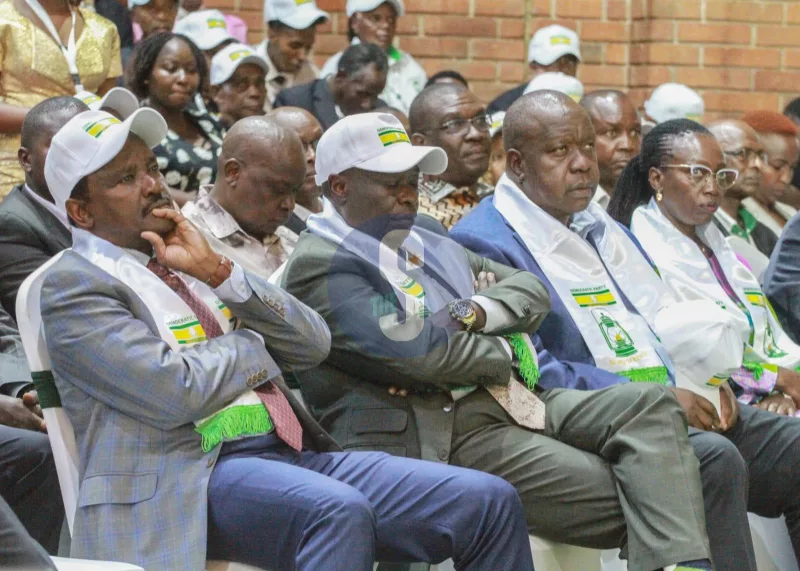
Kenya's opposition is facing internal divisions over the timing of naming its presidential candidate to challenge President William Ruto in the 2027 election. The disagreement centers on whether to announce the candidate early or wait until closer to the election. Leaders from different opposition formations are at odds over the best approach, with some pushing for a swift decision and others advocating for a more measured approach. This internal debate comes as the opposition seeks to build a broader alliance to take on Ruto.
Wiper leader Kalonzo Musyoka and Deputy President Rigathi Gachagua are among the key figures involved in efforts to build a united opposition. However, their approaches to naming a presidential candidate differ. An ally of Musyoka, Kitui Senator Enoch Wambua, has called for an early decision, arguing that the opposition needs to settle on a candidate by November to build momentum and avoid repeating past mistakes. Wambua believes that Musyoka is the best candidate to face Ruto, citing his credentials.
In contrast, Gachagua has cautioned against rushing into a decision, warning that an early announcement could give Ruto an opportunity to interfere with and weaken the opposition. He believes that the opposition still has time to negotiate and agree on a candidate. Gachagua's position has put him at odds with Embakasi East MP Babu Owino, who has warned that delays could undermine the opposition's unity and chances of winning the election.
The debate over the timing of naming a presidential candidate has sparked concerns about the opposition's ability to present a united front. Nairobi Senator Edwin Sifuna and Babu Owino are pursuing their own political formations, adding to the complexity of the situation. The opposition's internal divisions have raised questions about its ability to mount a strong challenge against Ruto in the 2027 election.
Proponents of an early decision argue that the opposition needs a clear political center before the election season gathers momentum. They believe that once a candidate is identified, the coalition can focus on building a nationwide campaign structure, resolving the question of a running mate, and negotiating how to share political responsibilities. However, those opposed to an early announcement believe that the candidate should emerge from negotiations after assessing their respective political strength.
The opposition's internal divisions come as it grapples with the political vehicle or coalition through which it will approach the 2027 election. The emerging disagreement presents a crucial test of whether the opposition principals can agree on a common strategy. The outcome will likely have significant implications for the opposition's chances of success in the 2027 election.
As the debate over the timing of naming a presidential candidate continues, Kenyans are eagerly awaiting a decision. The opposition's ability to present a united front and mount a strong challenge against Ruto will depend on its ability to resolve its internal divisions and settle on a candidate. The next few months will be critical in determining the opposition's strategy and its chances of success in the 2027 election.
Key points
- The opposition is divided over whether to name its presidential candidate early or wait until closer to the election.
- The debate has sparked concerns about the opposition's ability to present a united front and mount a strong challenge against President William Ruto.
- The outcome of the debate will have significant implications for the opposition's chances of success in the 2027 election.