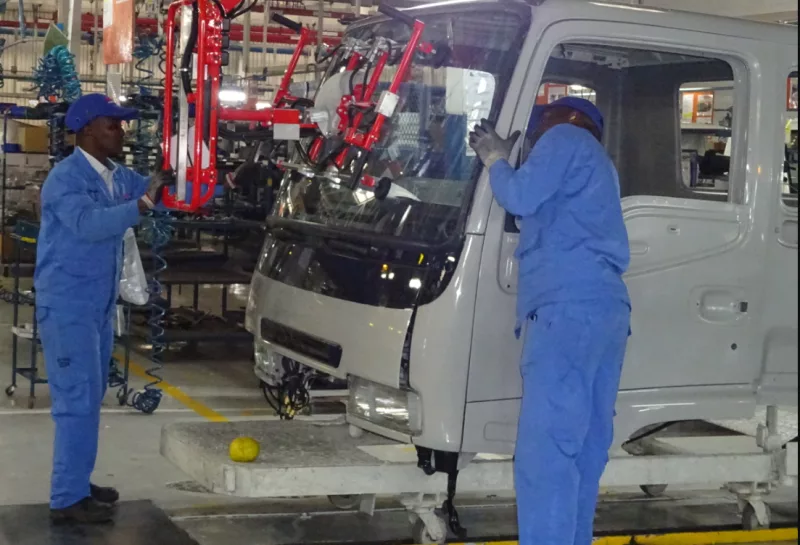
The Kenyan government's efforts to clear pending bills and restart road projects have led to a significant increase in new vehicle sales. According to data from the Kenya Motor Industry Association (KMIA), 11,349 units were sold in the year to August 2026, representing a 27.3% growth or 2,435 units compared to the same period last year. This growth is attributed to the government's fiscal intervention, specifically the mobilisation of Sh139 billion to clear contractor bills and restart road projects.
The government's move to clear pending bills dating back to 2020 has had a positive impact on the automotive market. In February 2026, the government cleared Sh177 billion in pending road contractor bills, followed by an additional mobilisation of Sh139 billion in August 2026. This has led to an increase in demand for heavy commercial vehicles, which accounted for the lion's share of sales. Dealers sold a total of 4,836 units of heavy commercial vehicles, with Isuzu East Africa dominating the market with 3,301 trucks sold.
The automotive market recorded 1,592 units sold in August 2026, with the highest monthly sales being recorded in July at 1,912 units. Stable economic activities in transport, agriculture, manufacturing, retail, and other key sectors also drove the uptake of new vehicles. Single cabin and double cabin pickup trucks sold during the period totaled 1,934 and 1,119 units, respectively. Minibuses of 21-40 seats totaled 644 units, while large buses (over 40 seats) sold were 223.
Isuzu East Africa maintained its market leadership with a 47.6% industry share, selling 5,405 units year-to-date. Within the SUV-D category, Isuzu achieved a 350% year-to-date volume surge, recording a dominant 61.2% segment share. This performance was driven by local assembly price competitiveness, increased public sector procurement under the Buy Kenya Build Kenya policy, and an aggressive retail conversion strategy targeting buyers moving away from imported used alternatives.
CFAO came in second with 3,942 units sold year-to-August, taking 34.7% of the market share. Other notable sales were recorded by Simba Corporation (865 units) and Tata Africa (533 units). The industry is keen to drive growth in the country's automotive industry mainly through policy and a phased reduction of used-car imports.
According to Isuzu East Africa chairperson and managing director Rita Kavashe, the country's assembly and production capacity utilization is only at 34% of the installed capacity, meaning 60% capacity is still idle. The industry is looking to drive growth through policy and increased production.
The growth in new vehicle sales is expected to continue, driven by the government's infrastructure projects and the increasing demand for commercial vehicles. The industry is optimistic about the future, with plans to increase production and reduce reliance on used-car imports.
Key points
- The Kenyan government's efforts to clear pending bills and restart road projects have driven a 27.3% growth in new vehicle sales.
- Isuzu East Africa maintained its market leadership with a 47.6% industry share, selling 5,405 units year-to-date.
- The industry is keen to drive growth through policy and a phased reduction of used-car imports.