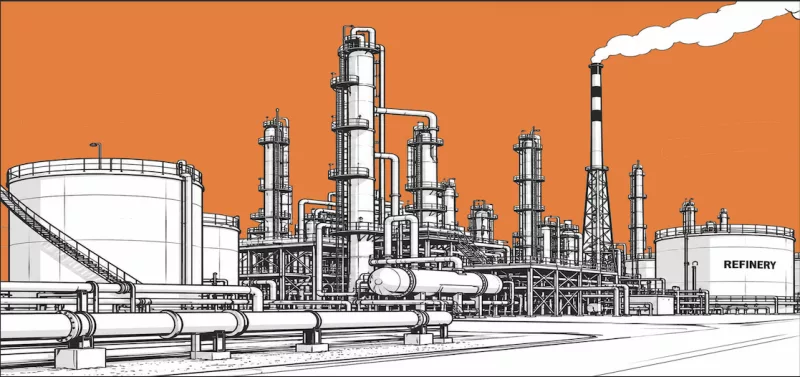
Kenya's only refinery, located in Mombasa, ceased operations in 2013 due to high maintenance costs and low production capacity. The plant, which was commissioned in 1963, had a capacity to supply about 40 per cent of the country's petroleum products. However, it failed to compete with imported fuel, leading to its closure. A new refinery project in Lamu, launched by President William Ruto and Aliko Dangote, aims to process 700,000 barrels of crude oil per day.
The new refinery in Lamu is expected to reduce Kenya's dependence on imported fuel and provide a more reliable and cheaper source of fuel. According to Nicholas Okumu, a surgeon and columnist, a refinery must earn its place every year or the market will close it. The Lamu project has sparked concerns about its size and funding, with some questioning where the crude oil will come from and how the plant will be paid for.
The Mombasa refinery's failure was attributed to its small size and lack of investment in upgrades. A 2011 study found that more than a third of equipment in 16 developing countries was out of service due to lack of spare parts. The Lamu project, with a capacity to process more than the region's refined fuel demand, estimated at about 450,000 barrels per day, must win customers beyond Kenya to succeed.
The project has been hailed as a significant investment in Kenya's energy sector, with the potential to create jobs and stimulate economic growth. However, concerns have been raised about the project's financing and supply plans, which have not been made public. The government has been credited with attracting a serious investor and turning the Mombasa site into storage.
To avoid repeating the mistakes of the Mombasa refinery, three safeguards have been proposed. Firstly, the Treasury should write reinvestment into the deal from the first day. Secondly, Parliament should allow the refinery to compete on price, rather than through legislation. Thirdly, the Ministry of Energy should secure regional supply agreements before the plant is built.
The Lamu refinery project has the potential to turn Kenya into a fuel exporter, following the example of Nigeria's Dangote plant. However, the project's success depends on securing a stable supply of crude oil and winning customers in the region. The government has been urged to make public the supply and financing plans for the project.
The project's launch celebrated job creation in Lamu, but concerns remain about the project's viability. With the right safeguards in place, the Lamu refinery can avoid the mistakes of the past and provide a reliable and cheaper source of fuel for Kenya and the region. The project's success will depend on its ability to compete on price and secure a stable supply of crude oil.
Key points
- The new Lamu refinery aims to process 700,000 barrels of crude oil per day.
- The project has sparked concerns about its size and funding.
- The project's success depends on securing a stable supply of crude oil and winning customers in the region.