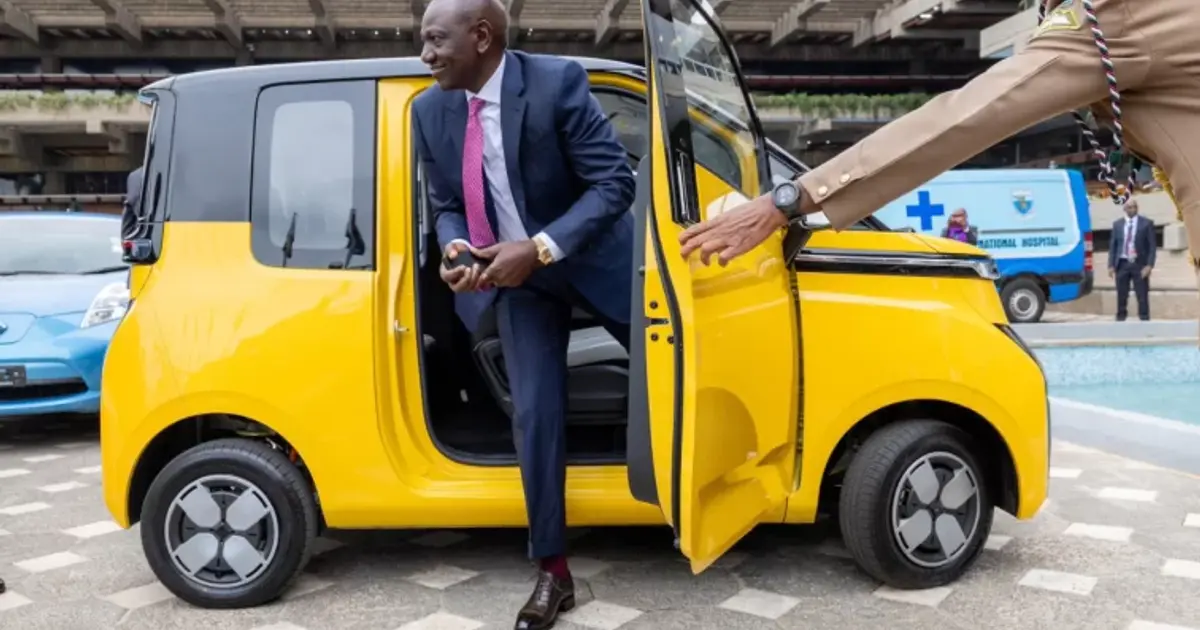
Kenya has removed a 15,000-kWh ceiling on its special e-mobility electricity tariff, allowing EV charging stations, battery-swapping businesses, and electric fleets to grow without losing access to preferential power rates. The Energy and Petroleum Regulatory Authority (EPRA) amended Kenya Power's electricity tariff schedule, publishing the change in the Kenya Gazette on September 18, 2026. This move is expected to boost the growth of Kenya's electric vehicle (EV) sector.
The revised arrangement allows e-mobility customers supplied and metered by Kenya Power at 240 or 415 volts to continue falling under a dedicated tariff. Consumption above the applicable energy threshold is handled through the discounted Time-of-Use (TOU) structure. For new e-mobility customers, the threshold is calculated using average consumption during their first three consecutive months, with a growth factor applied. This change enables charging businesses to expand without being penalized.
Kenya's EV sector is experiencing significant growth, with cumulative EV registrations surging past 39,000 vehicles. The Ministry of Roads and Transport reported that Kenya had registered 39,324 EVs cumulatively by the end of 2025, up from 1,378 in 2022. Electric motorcycles account for a substantial share of this growth, reflecting the popularity of boda bodas, delivery services, and other high-mileage commercial transport.
The current energy charge for Kenya's dedicated e-mobility tariff is Sh16 per kWh during normal periods and Sh8 per kWh during off-peak periods. However, public chargers can charge considerably more than the underlying electricity tariff, as operators need to recover costs such as chargers, installation, and maintenance. For example, BasiGo and Rubis have announced an indicative Sh48 per kWh rate at their highway charging sites.
The old 15,000-kWh limit became increasingly restrictive as electric mobility expanded. EPRA recorded e-mobility electricity consumption rising 300% to 5.04 gigawatt-hours in the year to June 2025, up from 1.26 GWh a year earlier. Kenya Power says electricity sales to the e-mobility sector generated Sh382 million cumulatively between July 2023 and April 2026.
Kenya's National Electric Mobility Policy, launched in February 2026, covers charging infrastructure, vehicle manufacturing and assembly, technical skills, regulation, and investment. The policy aims to create a more formal regulatory framework as Kenya's charging network expands. Additionally, the Electricity (Electric Vehicle Charging Station Safety) Regulations, 2026, set technical and safety requirements for charging-station owners, installers, contractors, importers, and retailers.
The immediate change is not a guaranteed reduction in the amount appearing on a charging receipt. Instead, the new tariff removes a cost barrier behind the charging network, allowing for greater capacity: more charging stations, more battery-swapping points, and more electric fleets operating at scale. This change is expected to benefit motorists in the long run, making electric vehicles a more viable option.
Key points
- Kenya removes 15,000-kWh ceiling on e-mobility electricity tariff to boost EV growth.
- EV registrations in Kenya surge past 39,000 vehicles, with electric motorcycles driving growth.
- The new tariff structure allows for greater capacity and expansion of charging networks.