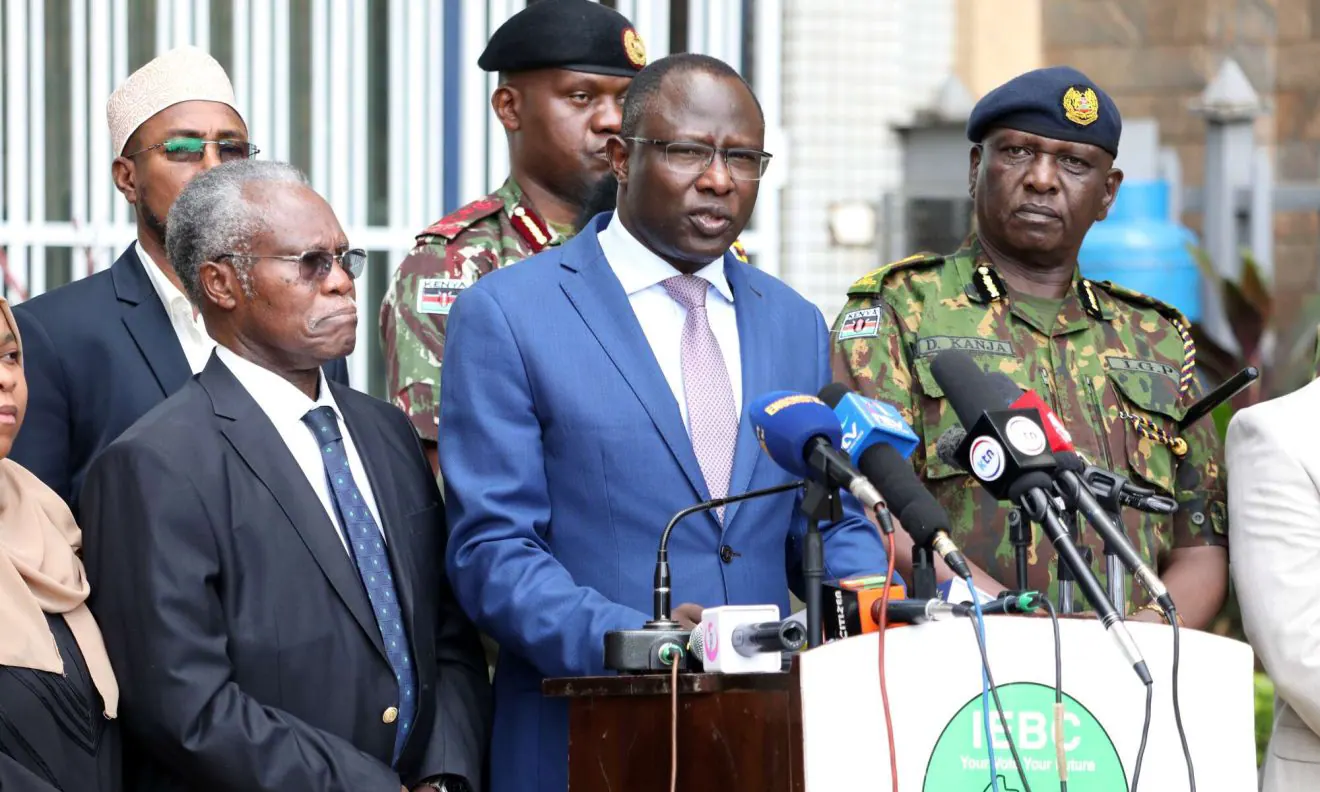
With just 11 months to go until the August 10, 2027, general election, a legal battle over the existence of the National Tallying Centre (NTC) has intensified. The centre, which is used to verify presidential election results, has been challenged in court by Senator Okiya Omtatah and leaders of the opposition. They argue that the NTC is unconstitutional and should be abolished. The case will be heard in the High Court on September 22, 2026.
The petitioners claim that the constitution designates the constituency as the primary and final centre for counting, verifying, and declaring presidential results. They want the court to rule that the IEBC is not allowed to recount or alter results announced by constituency officials. Former Chief Justice David Maraga has supported the petitioners, stating that the constitution does not provide for a national centre to count votes. The IEBC, however, argues that it has the constitutional and legal mandate to verify results at the national level.
The controversy surrounding the NTC has sparked a heated debate among stakeholders. Former Attorney General Justin Muturi and former Law Society of Kenya president Nelson Havi have also backed the abolition of the NTC. They argue that results counted and announced in the 290 constituencies should be final. On the other hand, former IEBC commissioner Paul Kurgat says the constitution does not specify a particular building as the centre for counting votes, but rather provides for a process.
The High Court's decision on the matter is expected to set a precedent for future elections. If the court rules in favour of the petitioners, it could significantly alter the electoral process. The IEBC has used the NTC in previous elections to verify results, but its legitimacy has been questioned by some stakeholders. The commission has maintained that the centre is necessary to ensure the accuracy and transparency of election results.
The case has also raised questions about the role of the IEBC in the electoral process. The commission is responsible for conducting elections and declaring results, but its mandate has been challenged by some stakeholders. The petitioners argue that the IEBC has overstepped its constitutional mandate by establishing the NTC. The commission, however, maintains that it is acting within its powers.
The controversy surrounding the NTC has sparked concerns about the credibility of the 2027 election. The election is expected to be highly competitive, and any disputes over the counting and verification of results could have significant implications. The IEBC has assured stakeholders that it will ensure a free and fair election, but the controversy surrounding the NTC has raised questions about its ability to do so.
The court's decision on the NTC case will have far-reaching implications for Kenya's electoral process. If the court rules that the NTC is unconstitutional, it could lead to significant changes in the way election results are counted and verified. The IEBC will have to revisit its electoral processes and ensure that they are aligned with the constitution. Ultimately, the court's decision will determine the fate of the NTC and shape the course of Kenya's electoral process.
Key points
- The National Tallying Centre has been challenged in court by Senator Okiya Omtatah and opposition leaders, who argue that it is unconstitutional.
- Former Chief Justice David Maraga has supported the petitioners, stating that the constitution does not provide for a national centre to count votes.
- The court's decision on the NTC case will have far-reaching implications for Kenya's electoral process.