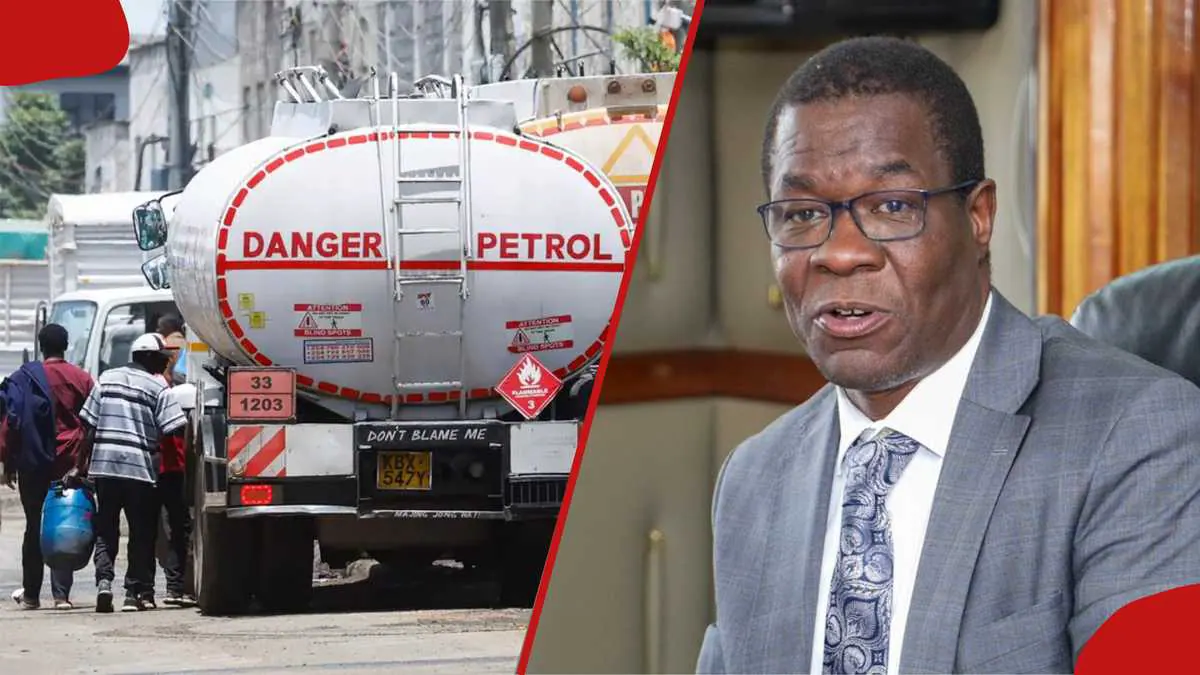
The Ministry of Energy and Petroleum in Kenya has issued a statement defending the government-to-government fuel importation arrangement. This move comes after renewed scrutiny of the deal, sparked by remarks from Uganda's President Yoweri Museveni. He suggested that middlemen in the regional fuel supply chain were driving up petroleum costs. In response, Cabinet Secretary Opiyo Wandayi provided details about the arrangement, aiming to clarify the role of local counterparties and the benefits of the deal.
The G-to-G arrangement was established in March 2023, during a dollar liquidity crisis in Kenya. At the time, fuel stocks were critically low, and the import bill for refined products stood at USD 500 million. This was approximately 35% of the country's entire import bill. To address the crisis, the government signed Master Framework Agreements with Aramco Trading Fujairah FZE, Abu Dhabi National Oil Company Global Trading Ltd, and Emirates National Oil Company (Singapore) Private Limited. These agreements allowed for refined petroleum products to be supplied on 180-day credit terms.
The Ministry of Energy revealed that six local companies were selected as counterparties by International Oil Companies (IOCs). These companies are Gulf Energy Limited, Galana Energies Limited, Oryx Energies Kenya Limited, One Petroleum Limited, Asharami Synergy Limited, and BE Energy Limited. The ministry explained that the IOCs chose these counterparties to handle in-country logistics. The government provided a list of licensed Oil Marketing Companies (OMCs) for the IOCs to vet independently.
The ministry also disclosed that seven banks have been involved in the G-to-G arrangement. These banks, which issue Letters of Credit, have grown from KCB Bank to include MCB, I&M Bank, DTB, Stanbic, UBA, and Equity Bank. The arrangement has allowed Kenya to preserve and rebuild its foreign exchange reserves, stabilizing the US dollar-Kenya shilling exchange rate.
The ministry has renegotiated freight and premium charges twice since 2023. Initially, in March 2023, the figures stood at USD 97.50 per metric tonne for super petrol, USD 118 for diesel, and USD 114.25 for jet A1. After renegotiation in September 2023, the figures decreased to USD 90, USD 88, and USD 111.75, respectively. A further renegotiation in March 2025 reduced the rates to USD 84 for super petrol, USD 78 for diesel, and USD 97 for jet A1.
Despite changes in August's landed costs, the Energy and Petroleum Regulatory Authority (EPRA) announced that Kenya's maximum retail prices for super petrol, diesel, and kerosene would remain unchanged from September 15 to October 14, 2026. In Nairobi, super petrol retails at KSh 214.03 per litre, diesel at KSh 217.86, and kerosene at KSh 191.38. The government provided KSh 938 million in stabilisation support to keep petrol and kerosene prices unchanged.
The Ministry of Energy's defence of the G-to-G arrangement aims to address concerns about transparency and cost. Key points include the preservation of foreign exchange reserves, the stabilization of the exchange rate, and the reduction of premium charges over time. The ministry's efforts seek to provide clarity on the deal's structure and benefits, amid ongoing scrutiny.
Key points
- The G-to-G arrangement has helped stabilize Kenya's fuel supply and exchange rate.
- Six local companies and seven banks are involved in the arrangement.
- Freight and premium charges have been renegotiated twice since 2023, reducing costs.