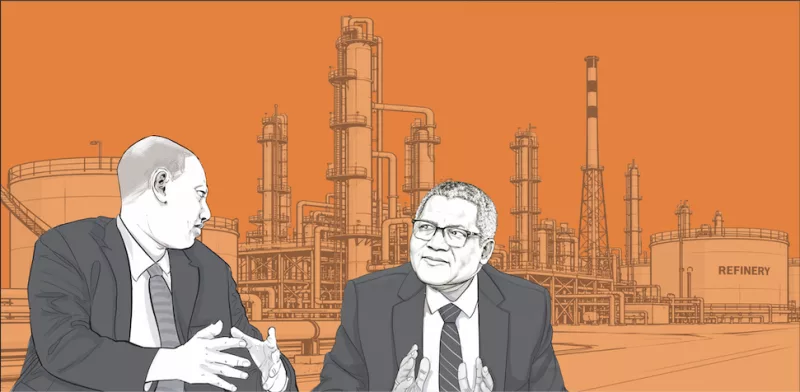
Kenya has embarked on a significant geopolitical move with the launch of a $17 billion industrial project, a refinery in Lamu. This development is seen as Kenya's boldest move yet in its diplomatic and economic contest with Tanzania for influence over East Africa's trade and energy corridors. The project, led by Aliko Dangote, was marked by a groundbreaking ceremony at Lamu port, attended by President Ruto and other heads of state.
The Lamu refinery project has been in the making since 2014, when Kenya and Uganda agreed to build a crude oil pipeline from Uganda's Lake Albert oilfields to Lamu, anchoring the Lapsset corridor. However, Tanzania offered lower transit fees and a port requiring no dredging, leading Total Energies to prefer the southern route. By 2016, Uganda opted for Tanzania, and the East African Crude Oil Pipeline was routed to Tanga, dealing a significant setback to Kenya's plans.
The choice of Lamu over Tanga has altered the dynamic, with Lamu port's natural depth of 17.5 to 18 meters allowing it to berth the world's largest crude supertankers fully loaded. This is a decisive advantage for a refinery processing 700,000 barrels per day. Kenya's larger market, more liquid banking sector, and available land also make it an attractive location for the project.
The strategic implications of the Lamu refinery project are unmistakable, with Tanzania and Uganda advancing their own plans, signing a memorandum with Vitol Bahrain to develop a $20 billion energy hub in Tanga. A corporate rivalry between Dangote and TotalEnergies is also at play, with Dangote's refinery processing crude locally, potentially removing the most profitable stage from TotalEnergies' vertically integrated model.
The benefits to Kenya are substantial, with the country spending over Sh516 billion annually importing petrol, diesel, and coal. A functioning refinery would alter this equation, expand GDP, and establish Kenya as a key fuel supplier for eight nations. Tens of thousands of jobs are expected, and the refinery will also produce feedstocks for plastics and fertilizers.
The project is also significant for broader international engagement, with China building the first three berths of Lamu port and aligning the refinery with its Belt and Road Initiative. The United States has expanded the Manda Bay airstrip nearby, highlighting the project's geopolitical importance. President Ruto's diplomacy, including meeting Dangote at the UNGA and hosting other heads of state, positions Kenya as a serious regional player.
While the refinery might not be operational until 2029 or 2030, Kenya still lacks commercial crude production. However, the strategic significance lies not in what it produces in 2030, but in what it signals now: Kenya remains committed to shaping East Africa's energy future. The Lapsset corridor now has an anchor tenant of extraordinary scale, and if Kenya sustains this momentum, the long-term outlook is promising.
Key points
- The Lamu refinery project positions Kenya as a leading energy gateway in East Africa.
- The project has significant geopolitical implications, challenging Tanzania's influence in the region.
- The refinery is expected to create tens of thousands of jobs and expand Kenya's GDP.