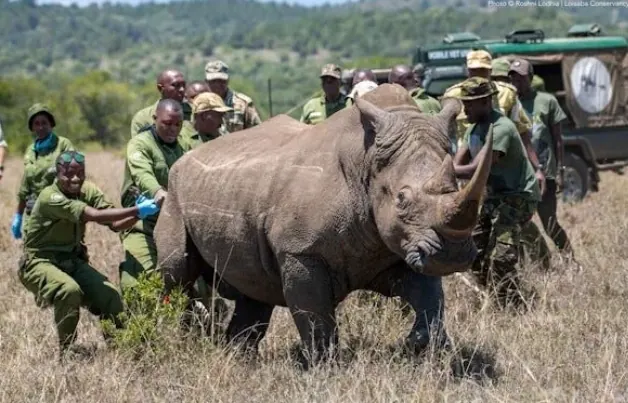
Kenya's conservation success story has led to a surge in its black rhino population, which has grown from about 350 animals in the late 1980s to 1,147 individuals today. This turnaround is a result of the country's efforts to establish secure sanctuaries and intensified protection. The population recovery marks a dramatic turnaround, with conservation efforts having paid off. However, this success has created a new challenge: securing enough habitat for the growing numbers.
A new documentary, RHINO, which premiered in Nairobi, depicts Kenya's success in rebuilding its black rhino population. The documentary, directed by Tom Martienssen and narrated by Tom Hardy, follows Kenyan rangers and conservation teams over five years, documenting the daily risks and work involved in protecting the country's black rhinos. The screening was attended by hundreds, including diplomats, conservation leaders, rangers, and veterinary experts.
According to Professor Erustus Kanga, Kenya Wildlife Service (KWS) Director General, the growing black rhino population requires extra space to survive. He emphasized that "we must have the space. We must create distance." The black rhino species had been severely depleted by poaching and illegal international wildlife trade in the 1970s and 1980s. Kenya recorded no rhino poaching in 2025 and had maintained that record into 2026.
The previous recovery plan for the black rhino population was on course to meet its target of 1,200 black rhinos. However, with the current population of 1,147 individuals, the focus has shifted to creating space for the rhino populations to expand. Sophie Kinyua, Loisaba conservancy Board Chair, noted that "we have reached the point where our greatest challenge is no longer preventing loss. It is creating space for our rhino populations to expand."
The goal of increasing the black rhino population to 2,000 individuals by 2037 requires sustained investment. According to Kanga, achieving this goal will depend on continued conservation efforts and securing additional habitat for the growing population. The Kenyan government is faced with the challenge of balancing the need for conservation with the demands of human activities such as agriculture and urbanization.
The success of Kenya's conservation efforts has been recognized globally, with the country's black rhino population serving as a model for conservation initiatives in other countries. However, the challenge of securing extra space for the growing population is a pressing concern that requires urgent attention. The Kenyan government and conservation organizations are working together to address this challenge and ensure the long-term survival of the black rhino species.
The screening of the documentary RHINO highlighted the importance of conservation efforts and the need for continued support to protect the black rhino population. The event brought together stakeholders from various sectors, including conservation, government, and the private sector, to discuss the challenges and opportunities in conservation. Key stakeholders emphasized the need for collaborative efforts to address the challenges facing the black rhino population and to ensure its long-term survival.
Key points
- Kenya's black rhino population has grown to 1,147 individuals, requiring additional habitat for survival.
- The Kenyan government and conservation organizations are working together to address the challenge of securing extra space for the growing black rhino population.
- The goal of increasing the black rhino population to 2,000 individuals by 2037 requires sustained investment and conservation efforts.