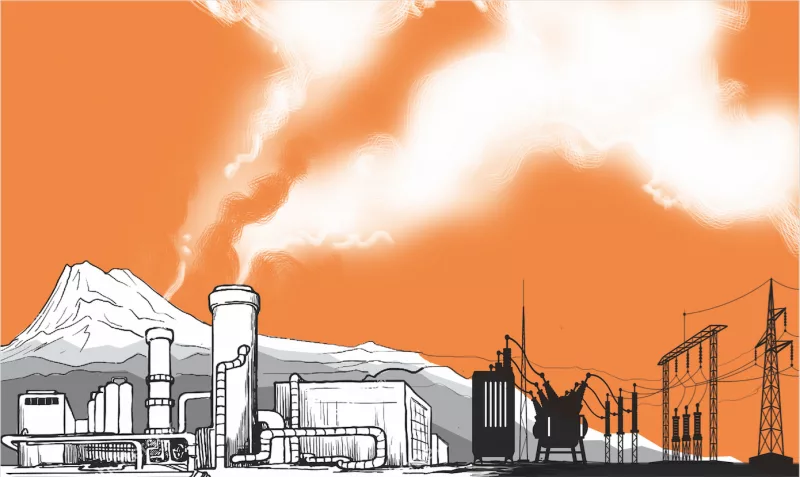
Kenya's industrial growth is heavily dependent on its ability to provide reliable and affordable green energy. The country's impressive green energy portfolio, with over 90% of its renewable energy grid, gives it a competitive edge in securing investments. Industries require electricity that is available every hour of every day and priced competitively to operate optimally. International buyers and financiers now require documented low-emission production credentials from their suppliers.
The global shift towards green manufacturing creates a window of opportunity for Kenya to claim its portion of global industrial growth. The European Union's Carbon Border Adjustment Mechanism and comparable rules in other major economies impose tariffs and market access barriers on manufacturers in high-carbon settings. Producers based in countries with clean electricity grids hold a clear competitive edge. Kenya's geothermal energy, which supplies between 40 and 45 percent of its national electricity, is a key advantage.
Kenya currently operates about 1,000 megawatts of geothermal capacity, the largest in Africa and seventh globally. Geothermal energy delivers steady baseload power around the clock, making it an ideal resource for energy-intensive industries. The KenGen Green Energy Park in Naivasha was developed to transform this energy advantage into tangible manufacturing activity and employment. The park offers manufacturers direct access to competitively priced renewable power, streamlined regulatory processes, and attractive tax incentives.
The KenGen Green Energy Park has already attracted five investors across strategically important sectors. These include a hyperscale data centre, a green fertiliser complex, an electric vehicle assembly operation, a steel fabrication plant, and a fish feed manufacturing plant. The spread of industries is as important as the number of investors, demonstrating that the park's core offer of reliable, competitively priced renewable power is working.
Confidence in Kenya as a green manufacturing hub is being strengthened by developments beyond the park itself. The site's designation as a Customs Controlled Area has activated the full suite of tax and customs benefits under the Special Economic Zone framework. Ongoing expansion of geothermal capacity and new agreements for industrial steam use further indicate that Kenya is translating its renewable resources into a workable environment for long-term industrial investment.
To maintain momentum, infrastructure planning must stay purposeful. KenGen has expanded its development pipeline from 1,500 megawatts to 5,500 megawatts, incorporating additional geothermal capacity, hydropower projects, future nuclear generation, as well as wind and solar. Raising planned capacity threefold shows a grounded reading of industrial demand for the next decade. However, generation capacity alone will not suffice, and transmission lines and distribution networks must expand in parallel to deliver power where industries are located.
The global shift toward green manufacturing creates a window of opportunity that will not remain open indefinitely. Other countries are racing to build their own renewable energy infrastructure and attract the same pool of climate-conscious investors. Kenya's geothermal foundation and early-stage green industrial parks position the country to capture a significant share of manufacturing investment being relocated for carbon compliance. Turning this advantage into long-term industrial growth requires maintaining infrastructure investment levels and continuing to present Kenya as the preferred site for entrepreneurs and industries who understand that reliable renewable power is now a necessity.
Key points
- Kenya's reliable green energy is crucial for its industrial growth and attracting climate-conscious investors.
- The country's geothermal energy supplies between 40 and 45 percent of its national electricity.
- KenGen has expanded its development pipeline from 1,500 megawatts to 5,500 megawatts to meet industrial demand.