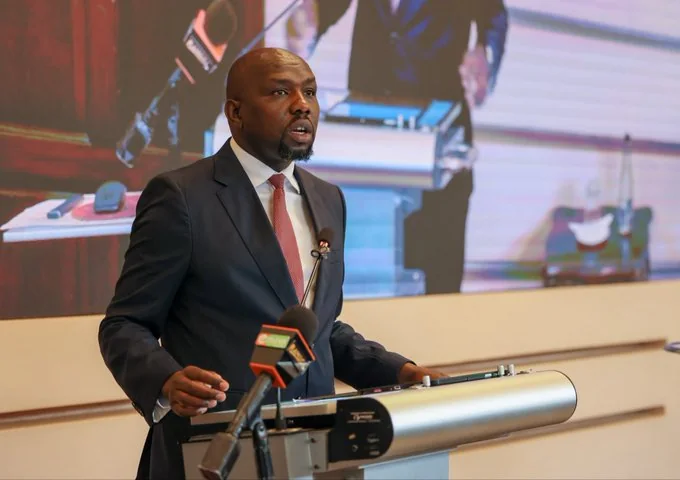
Kenya's Interior Cabinet Secretary Kipchumba Murkomen has acknowledged that the government misread the anger of Generation Z protesters over the 2024 Finance Bill, leading to a wider national crisis. Speaking at the National Defence College in Karen, Nairobi, Murkomen stated that the government's response was affected by its failure to view the protests as an issue involving several parts of government and society. The protests began on June 18, 2024, with young people using social media to organise opposition to the Finance Bill 2024.
The demonstrations quickly moved beyond Nairobi as more Kenyans joined the protests, with tensions reaching a critical point on June 25 when protesters entered Parliament following clashes with police. The Kenya National Commission on Human Rights later recorded 60 deaths and 601 injuries connected to the demonstrations between June 18 and July 15, 2024. Separately, the Armed Conflict Location & Event Data project recorded 96 political violence events and 82 reported fatalities between June 1 and July 12.
Murkomen said that the government's response was affected by its failure to view the protests as an issue involving several parts of government and society. He stated that the reality is that a problem that should have been seen from a multidimensional perspective was left to be a budget problem to be dealt with by Treasury and for the police to only protect Parliament from people who wanted to come and harass parliamentarians as they did go about their constitutional duties.
The Interior CS said that the events exposed the close link between national security, governance, public participation, and communication with citizens. He said that a national budget containing unpopular proposals should have been handled with greater public engagement, allowing citizens to understand, question, and discuss the measures before anger reached a higher level. Murkomen also pointed to misinformation as another challenge that made the situation harder to manage.
Murkomen stated that the government has since changed its approach and is seeking to respond faster when misleading information emerges. He cited the recent budget process, during which Treasury Cabinet Secretary John Mbadi moved quickly to publicly challenge claims that he considered false. The experience, Murkomen said, had also shown that the government cannot expect citizens to understand complex policies without clear and timely explanations.
The protests eventually forced President William Ruto to withdraw the Finance Bill 2024 and make major changes to his government. Murkomen, however, said that the initial Gen Z protests should be separated from the violence and destruction that occurred during the unrest. He argued that political actors and criminal elements took advantage of the demonstrations, including during the breach of Parliament.
Murkomen concluded that the events had changed the way the government should view public participation, arguing that listening to citizens and engaging them early is not only a governance responsibility but also an important part of national security. The government has a responsibility to communicate early and give people the opportunity to see the things they are engaging in, Murkomen said, adding that the government cannot now take anything for granted and say common sense will apply.
Key points
- The Kenyan government misread the anger of Gen Z protesters over the 2024 Finance Bill, leading to a wider national crisis.
- The government's response was affected by its failure to view the protests as an issue involving several parts of government and society.
- The government has since changed its approach and is seeking to respond faster when misleading information emerges.