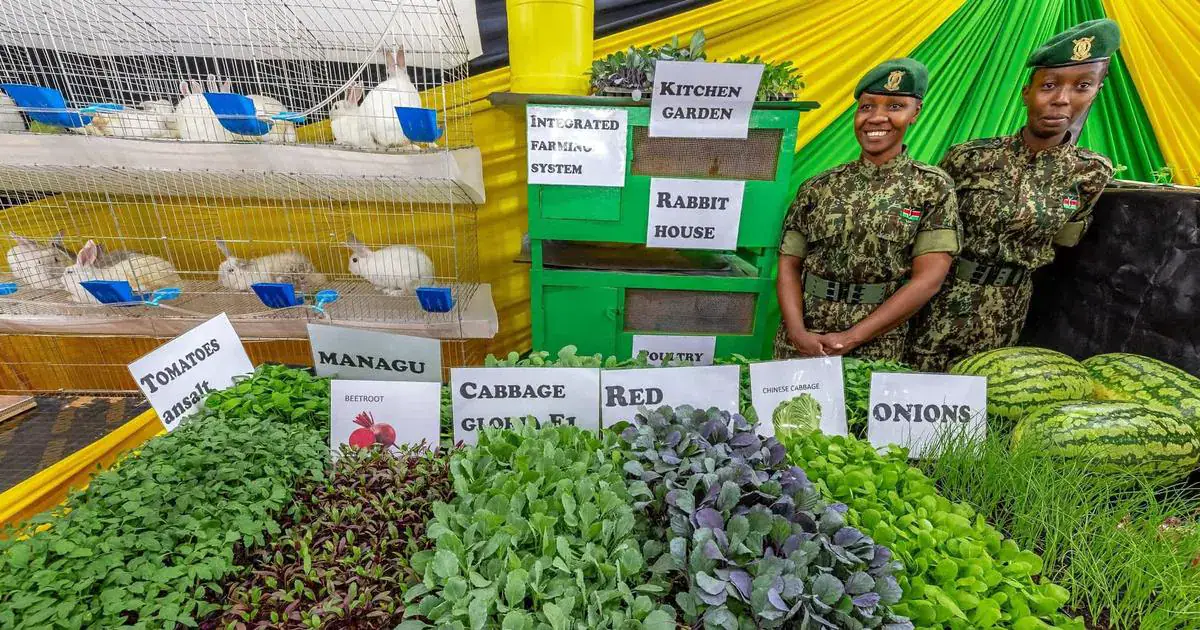
The Kenyan government is seeking to overhaul the country's food production system, with President William Ruto calling for an increase in domestic food production to reduce reliance on imports. At the Agriculture and Food Systems Transformation Summit in Nairobi, Ruto cited a Sh3 trillion food import bill, although this figure has not been verified by the Kenya National Bureau of Statistics. The summit, which took place from 7-9 October 2026, brought together stakeholders to discuss ways to improve Kenya's food security.
According to the Kenya National Bureau of Statistics, Kenya's total imports stood at Sh2.773 trillion in 2025, with food and beverage imports accounting for approximately Sh252.85 billion. The country imported significant volumes of staple foods, including 2.24 million tonnes of unmilled wheat, 786,000 tonnes of rice, and 468,000 tonnes of maize in 2025. These imports put pressure on the country's foreign exchange reserves and highlight the need to increase domestic production.
Most Kenyan farming remains dependent on rainfall patterns, which can be unpredictable and lead to crop failures. The Ministry of Irrigation reports that only about 500,000 of Kenya's 8.9 million registered farmers currently benefit from irrigation. To address this, the government plans to bring another 1.5 million acres of farmland under irrigation, covering both large commercial farms and smallholder producers.
However, increasing irrigated acreage requires more than just building dams or canals. Farmers need access to water infrastructure, affordable pumping, suitable seed, fertiliser, extension services, and reliable markets. The government has introduced a fertiliser subsidy, which has reduced the price of a 50-kilogramme bag from roughly Sh7,000 to Sh2,000 at National Cereals and Produce Board depots.
The fertiliser subsidy programme has distributed over 34 million subsidised bags and registered 7.2 million crop farmers and three million livestock keepers. However, cheaper fertiliser alone cannot guarantee higher output, as results also depend on soil quality, rainfall or irrigation, timely delivery, good farming practices, and the price farmers receive for their produce.
Food losses are also a significant challenge in Kenya, with Nairobi Governor Johnson Sakaja estimating that about 40 per cent of food produced in the country is lost or wasted. This is due to various factors, including poor roads, inadequate cold storage, limited aggregation facilities, weak packaging, and a lack of predictable buyers.
To address these challenges, the government is investing in infrastructure, including the construction of 17 County Aggregation and Industrial Centres, with eight ready for finishing. These facilities aim to support the processing, packaging, and branding of agricultural produce before it reaches local or export markets. The success of these initiatives will depend on the government's ability to coordinate the different parts of the food system.
Key points
- The Kenyan government aims to bring 1.5 million acres of farmland under irrigation to increase domestic food production.
- The country's food import bill stood at Sh252.85 billion in 2025, according to the Kenya National Bureau of Statistics.
- About 40 per cent of food produced in Kenya is lost or wasted due to various factors, including poor infrastructure and inadequate storage facilities.