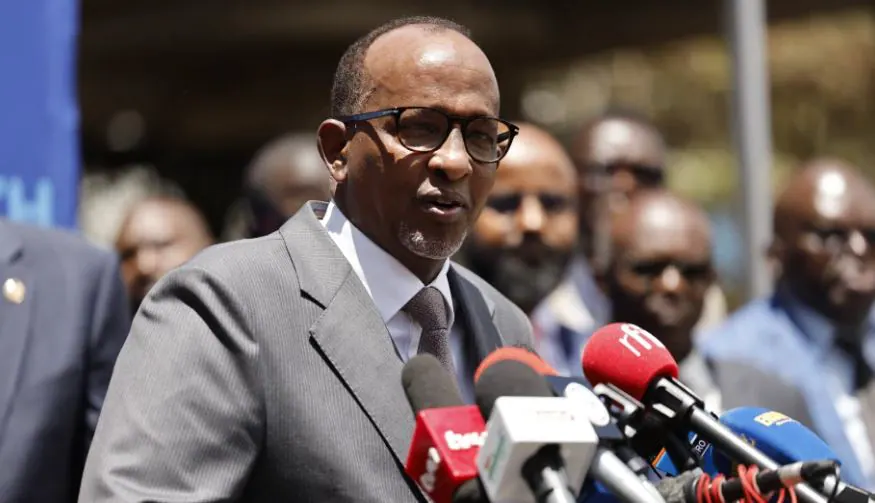
The Ministry of Health in Kenya has revealed that the country's first confirmed Ebola patient may have passed through port health screenings at Jomo Kenyatta International Airport (JKIA) undetected due to medications he was taking. According to Director General for Health Dr. Patrick Amoth, the patient had been unwell for nearly a month and received treatment at multiple medical centers in the Democratic Republic of Congo (DRC) before traveling through Uganda to Kenya.
The patient, a Kenyan citizen, underwent normal public health protocols at JKIA before passing through immigration. A relative and a friend picked him up directly from JKIA and drove him to Nairobi Hospital. Upon arrival, medical staff quickly isolated him in an emergency room before transferring him to the hospital's East Wing isolation unit, a designated facility previously equipped for Covid-19 management.
Health Cabinet Secretary Aden Duale confirmed that the patient exhibited severe symptoms, including fever and chills, intense fatigue and muscle pain, painful swallowing and sore throat, and bleeding under the skin at the injection site. Due to the symptoms and the patient's travel history from the DRC, medical personnel immediately tested him for viral hemorrhagic fevers.
The laboratory results confirmed the presence of the Bundibugyo Ebola virus strain. Despite receiving supportive care in isolation, the patient succumbed to the illness at around 11:30 PM on Monday. The Ministry of Health has since activated isolation protocols across both public and private health institutions.
Anyone identified as a contact will remain under a 21-day quarantine, matching the maximum incubation period for the Ebola virus. According to Dr. Amoth, "The incubation period for Ebola is from two to 21 days, and therefore the isolation will be able to take place up to 21 days."
Health CS Duale reassured citizens that the national surveillance framework has been on high alert since the regional outbreak began in May. He emphasized that all systems are in place to mitigate the spread of the disease and urged the public not to panic.
The Ministry of Health advises members of the public to maintain strict hygiene standards, including washing hands frequently, avoiding direct physical contact with individuals showing signs of illness, and seeking immediate attention at authorized medical facilities when feeling unwell.
Key points
- The patient's medications may have masked his Ebola symptoms, allowing him to pass through JKIA screening undetected.
- The government has activated isolation protocols and will quarantine anyone identified as a contact for 21 days.
- The Ministry of Health advises the public to maintain strict hygiene standards to prevent the spread of the disease.