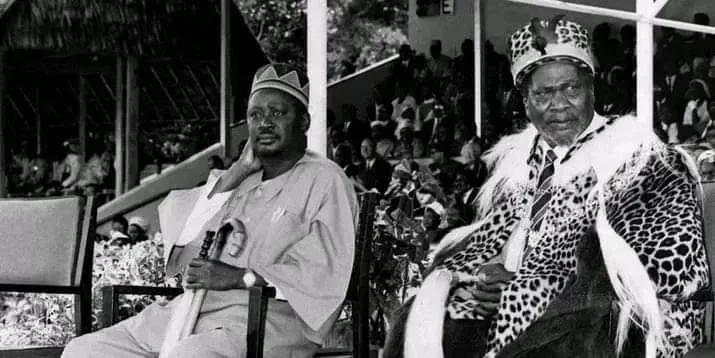
The recent re-entry of former President Uhuru Kenyatta into politics has sparked debate about the role of political dynasties in Kenya. Kenyatta, who handed over the leadership of Jubilee to former Interior Cabinet Secretary Fred Matiang'i, emphasized his continued involvement in the party and his role as a senior adviser. This move comes after a High Court ruling that affirmed the constitutional political rights of retired presidents, allowing them to hold political party office.
The Kenyatta family is one of the most recognizable political families in Kenya, with Jomo Kenyatta, the country's first prime minister and president, playing a central role in the country's history. His family has produced another president, Uhuru Kenyatta, who entered national politics in 1997 and eventually became president in 2013. The wider Kenyatta family has also had members involved in public affairs, including Peter Kenyatta, who served as an assistant minister, and Margaret Kenyatta, who served as mayor of Nairobi and Kenya's Permanent Representative to the United Nations Environment Programme.
However, it remains to be seen whether Uhuru Kenyatta's children or those of his siblings will follow in his footsteps in politics. So far, they have not openly shown any interest in politics, leaving many wondering if the Kenyatta name will fade from politics after Uhuru. Political commentator Caleb Burudi notes that the survival of a political family depends on its ability to turn a prominent surname into something larger than an individual.
The Jaramogi Oginga Odinga family provides another example of political continuity in Kenya. Jaramogi, one of the leading figures in the independence struggle, became Kenya's first Vice President under Kenyatta. His sons, including Raila Odinga and Oburu Oginga, have carried on his political legacy, with Raila serving as prime minister and one of the country's most prominent opposition leaders. The next generation of the Odinga family has also begun to emerge, with Ruth Odinga serving as Kisumu's first deputy governor and Winnie Odinga as a member of the East African Legislative Assembly.
Following Raila Odinga's death last October, several members of the Odinga family are now considering or pursuing elective positions ahead of the 2027 election. Raila's son, Raila Jr, is seeking the Kibra parliamentary seat, while Oburu is the ODM leader and Ruth has declared an interest in the Kisumu governorship. The Moi family offers another version of political continuity, with Moi succeeding Kenyatta as president in 1978 and remaining in office for 24 years.
Political analyst Joseph Mutua notes that political networks are among the most important assets inherited by the children of prominent politicians. A familiar political name can also lower the barriers faced by someone entering politics for the first time. However, Mutua cautions that such advantages do not guarantee electoral success, and the ability of a successor to build an independent political identity is equally important.
The influence of Kenya's political families is not limited to the Kenyatta, Odinga, and Moi families. Other families, such as the Kibaki family, have seen their influence diminish after the founding generation left the political stage. As Kenya continues to evolve politically, it remains to be seen how these families will shape the country's future.
Key points
- The Kenyatta, Odinga, and Moi families have maintained a national presence beyond the generation that first established their political influence.
- The survival of a political family depends on its ability to turn a prominent surname into something larger than an individual.
- Political networks and a familiar political name can provide advantages for the children of prominent politicians, but do not guarantee electoral success.