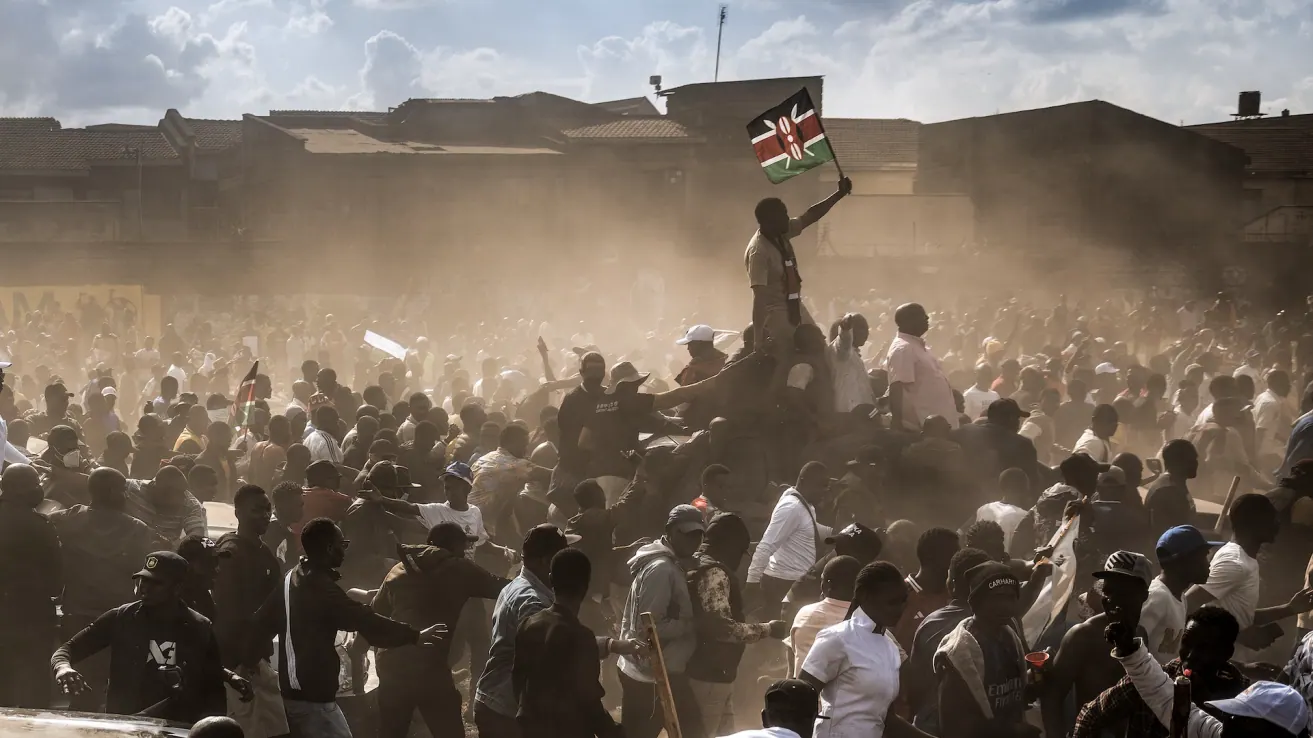
As Kenya approaches the 2027 presidential elections, the electorate is becoming increasingly divided. The 'Wantam!' slogan, meaning one term, reflects public dissatisfaction with incumbent President William Ruto's administration. This call for accountability has gained momentum, particularly among youths, who are frustrated with Ruto's leadership and are demanding that he serve only a single term. The opposition is fractured, with key outfits such as Linda Mwananchi struggling to agree on a preferred presidential candidate.
The opposition's division has strengthened Ruto's prospects for re-election. The Independent Electoral and Boundaries Commission has set a tight deadline of October 15 for political parties to submit their leaders' names and party symbols. The veteran opposition leader Raila Odinga's death last year left a power vacuum, and his party, the Orange Democratic Movement, has split into two factions: Linda Mwananchi and Linda Ground. The latter, headed by Odinga's brother Oburu Odinga, is seen as government-leaning.
Despite the opposition's fractures, the 'Wantam!' call has rallied support. Proponents cite Ruto's underperformance, worsening human rights record, and increased graft. Recent reports indicate that over 40 Kenyans, mostly youths, have been tortured and killed in police cells since January 2025. The call is also driven by high taxation regimes, including the introduction of new taxes through the Housing and Social Health levies. The one-term call against Ruto originated from last year's Democracy for the Citizens Party campaigns in Mount Kenya.
The 'Tutam!' slogan, meaning two terms, has also gained traction. Ruto's re-election is backed by his party, the United Democratic Alliance, and the Linda Ground faction of the ODM. Supporters argue that his presidency has brought equity in resource distribution and point to large-scale infrastructure development, including the proposed extension of the Standard Gauge Railway and the construction of new roads. They also cite the appointment of cabinet ministers from the opposition ODM following the Odinga-Ruto pact.
Ruto's supporters highlight his development record in areas previously considered opposition zones. They point to water projects built in Homa Bay and Siaya, as well as the Lake Victoria Water and Sanitation Project in Kisumu. According to his backers, Ruto has outperformed his predecessors in providing affordable medical care through the Social Health Authority scheme. The 'Tutam!' call has gained momentum, with Ruto's approval rating increasing to 38.7% in recent polls.
Achieving the 'Wantam!' goal would require massive youth voter registration and mobilisation on polling day. The opposition must unite and field a single major candidate capable of challenging Ruto. If the opposition remains divided, Ruto looks likely to win a second term. Rising political intolerance and 'political goonism' are worrying trends, and a free and fair democratic space is essential for Kenyan voters to exercise their constitutional right.
The outcome of the 2027 elections will depend on various factors, including voter mobilisation and the opposition's ability to unite. A government that can translate political rhetoric into actionable outcomes is crucial. Failure to do so could see a rising tide of informed young people determined to enforce a 'Wantam!' rule for all future elected leaders. The ISS Africa has highlighted the need for a free and fair democratic space and a government that prioritises actionable outcomes.
Key points
- The 'Wantam!' and 'Tutam!' slogans reflect the divisions within Kenya's electorate ahead of the 2027 presidential elections.
- The opposition's fractures have strengthened President Ruto's prospects for re-election.
- Achieving the 'Wantam!' goal will require massive youth voter registration and mobilisation on polling day.