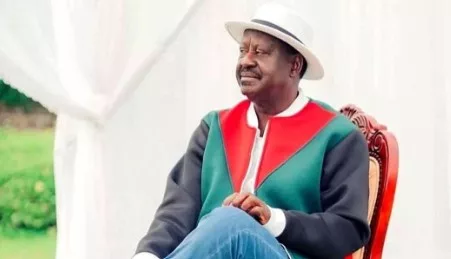
Kenyan politics has been thrown into turmoil after former President Uhuru Kenyatta made a shocking admission that Raila Odinga won the 2022 election. Kenyatta's statement has sparked widespread debate and raised questions about the integrity of the country's electoral process. As the outgoing president at the time of the election, Kenyatta's admission implies that an opposition candidate won the election despite the security and intelligence apparatus being under his control.
The revelations were quickly followed by former CS Moses Kuria, who claimed that not only was the 2022 election stolen, but also the 2013 and 2017 polls. Kuria's comments have been met with a mixture of shock and indifference, with many Kenyans questioning why no action has been taken against those involved in the alleged electoral malpractices. The confessions have sparked concerns about the impact on Kenya's democracy and the trust in the electoral process.
Kenya's electoral history has been marred by controversy and violence, with the 2007 election being a notable example. The disputed election led to widespread bloodshed and the eventual signing of the National Accord in 2008. Since then, each election has been disputed and prosecuted at the Supreme Court, with revelations of electoral malpractices emerging. The country's electoral process has failed to appreciate the magnitude of this issue, leading to a perpetual cycle of dishonesty.
The implications of Kenyatta's and Kuria's statements are far-reaching, with some suggesting that Raila Odinga may have been robbed of victory four times. This raises questions about the willingness of senior politicians to forego victory without a fuss. The collective national question is how many more senior politicians would let this happen multiple times. The revelations confirm that elections as a tool for democratic transitions have become a joke in Kenya.
The country's ethnic and class divide has always been assuaged by the knowledge that there is a five-year cycle offered by the constitution to attempt and remedy some governance issues. However, the casual nature of the confessions of electoral fraud has raised concerns. The lack of outrage and action from state agencies has been criticized, with some leaders in the current regime openly claiming that they would stuff ballot boxes or "resurrect" dead voters to secure victory in 2027.
The Post-Election Violence (PEV) of 2008 remains a reminder of what can happen if sections of the population reject results and resort to extrajudicial means to reassert their aspirations. The fact that the three subsequent elections passed off without much volatility may be down to the personality of the aggrieved contestant, Raila Odinga. However, attempting to lull ourselves into a false sense of security would be foolish, especially with the main protagonist communities of 2008 set to vote on opposite sides in the upcoming election.
As Kenya prepares for the 2027 election, concerns about electoral integrity and the trust in the electoral process have come to the fore. The country needs to reflect on its electoral history and the magnitude of the issue at hand. With the constitution offering a five-year cycle for remedying governance issues, it remains to be seen whether Kenya can break the cycle of electoral fraud and ensure a free and fair election.
Key points
- Former President Uhuru Kenyatta admits Raila Odinga won the 2022 election.
- Former CS Moses Kuria claims 2013 and 2017 polls were also stolen.
- Kenya's electoral integrity and trust in the electoral process have been raised.