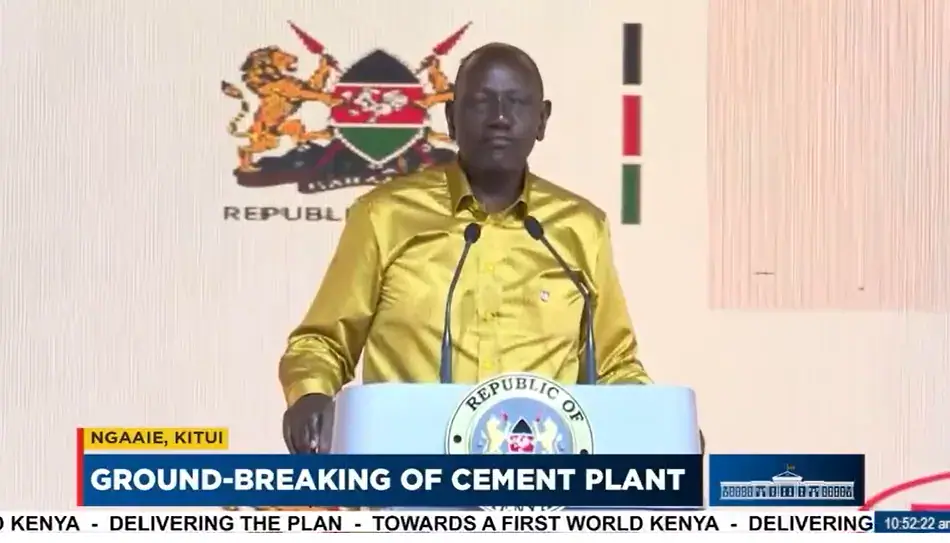
The concept of a broad-based government in Kenya is gaining traction as a means to achieve lasting national unity. According to Dennis Elnino, history has shown that rigid and overly formalized political agreements have rarely delivered desired results. Instead, these agreements often serve narrow interests rather than the collective aspirations of the public. The proposed 'Usawa' initiative aims to empower President William Ruto to build a government that is truly representative of Kenya's diverse population.
A key aspect of the 'Usawa' initiative is its emphasis on flexibility in forming coalitions and partnerships. Inflexibly demanding fixed shares of government offices can create administrative bottlenecks and exclude vital voices. By maintaining flexibility, the administration can foster an inclusive partnership model where governance is open, fluid, and responsive to the evolving needs of the country. This approach ensures that leadership reflects the rich tapestry of Kenya's diverse population.
Kenya is home to numerous communities, including the Luo, Kamba, Kikuyu, Giriama, Mijikenda, Kalenjin, Luhya, and Somali, among others. Every region and every citizen has a rightful stake in the nation's prosperity. The 'Usawa' agenda recognizes this diversity and seeks to promote broad regional representation by embracing an open-door policy. This policy allows the administration to weave together varied perspectives from every corner of the country.
The proposed broad-based government also aims to promote grassroots equity by shifting away from rigid deals that often marginalize smaller communities. By giving the President the flexibility to build a broad-based government, marginalized voices and smaller communities can find a genuine seat at the table. This approach is expected to foster long-term national cohesion, diffusing political tensions and replacing competition with cooperation.
The 'Usawa' initiative has been championed as a means to promote equality, fairness, and mutual respect. Giving the President the flexibility to build a broad-based government is not about compromising principles; it is about expanding the table so that no community is left behind. Through open dialogue and inclusive partnership, the initiative aims to forge a resilient, united, and truly equitable Kenya for generations to come.
The proposed broad-based government has garnered attention from various stakeholders, including politicians and citizens. Some have expressed support for the initiative, citing its potential to promote national unity and inclusivity. Others have raised concerns about the potential challenges of implementing such a system. Nevertheless, the 'Usawa' initiative remains a significant development in Kenya's quest for a more representative and equitable government.
As Kenya moves forward with the 'Usawa' initiative, the country will be watching closely to see how it unfolds. The success of this initiative will depend on various factors, including the President's ability to build a truly representative government and the willingness of different communities to work together. If successful, the 'Usawa' initiative could serve as a model for other countries seeking to promote national unity and inclusivity.
Key points
- The 'Usawa' initiative aims to promote national unity through flexible coalitions and equitable representation.
- The proposed broad-based government seeks to empower President William Ruto to build a government that is truly representative of Kenya's diverse population.
- The initiative has the potential to foster long-term national cohesion and promote equality, fairness, and mutual respect.