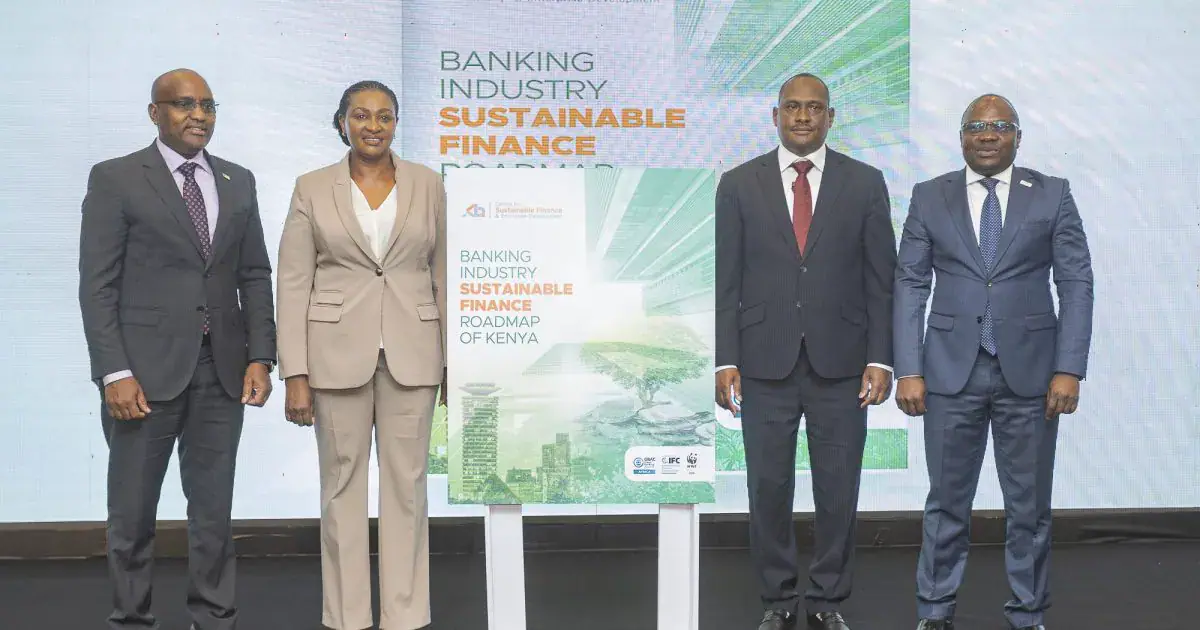
Kenya's banking sector has been urged to prioritize investments that protect the environment and strengthen the country's resilience to climate change. The call was made during the launch of the Kenya Banking Industry Sustainable Finance Roadmap, where government representatives, banking leaders, and development partners highlighted the need to align financial decisions with environmental protection and long-term economic growth. This move aims to promote a more sustainable approach to financing businesses and development projects.
Environment and Climate Change Principal Secretary Dr. Festus Ng'eno emphasized that changing rainfall patterns, prolonged droughts, and floods are clear indications of the growing effects of climate change. He challenged banks to consider environmental protection as part of the cost of doing business, rather than focusing solely on financial returns. Ng'eno stressed that financial institutions must take greater responsibility for the environmental impact of projects they support.
Ng'eno noted that Kenya's economy depends on healthy ecosystems, reliable water resources, productive agricultural land, forests, and biodiversity. He warned that environmental degradation has consequences for communities, businesses, and the wider economy. Ng'eno emphasized that environmental protection must be understood as an essential part of economic planning and long-term prosperity, not just a conservation responsibility.
The Principal Secretary highlighted Kenya's climate commitments under the Paris Agreement, including investing in renewable energy, cleaner transport, climate-smart agriculture, forest management, and water conservation. He stressed that adaptation is crucial for farmers, businesses, and communities exposed to climate-related shocks. Ng'eno called on banks to direct financing towards viable projects with environmental and social benefits.
Kenya Bankers Association (KBA) Chairman and KCB Group CEO Paul Russo stated that the industry has made progress since ratifying its Sustainable Finance Guiding Principles in 2015. However, he noted that the next phase requires practical action. Russo called for improved data, institutional capacity, and better preparation of projects to attract lenders and investors.
International Finance Corporation Senior Investment Officer Salah Elassar noted that the roadmap is an important milestone, citing progress among Kenyan commercial banks in adopting sustainable finance principles and climate-risk reporting tools. He stated that all commercial banks have adopted sustainable financing principles, while 83% use KBA's climate-related disclosure templates and 73% implement Central Bank of Kenya climate-risk guidelines.
The speakers emphasized the need for stronger collaboration between government, banks, investors, and development partners to mobilize capital for projects that support economic growth while safeguarding natural resources. They urged banks to develop financing approaches that support farmers and small enterprises while ensuring lending remains viable. The goal is to deploy capital into viable projects that generate tangible economic, environmental, and social benefits.
Key points
- Kenya's banking sector must prioritize environmental protection in financing decisions
- The industry has made progress in adopting sustainable finance principles
- Stronger collaboration is needed to mobilize capital for environmentally friendly projects