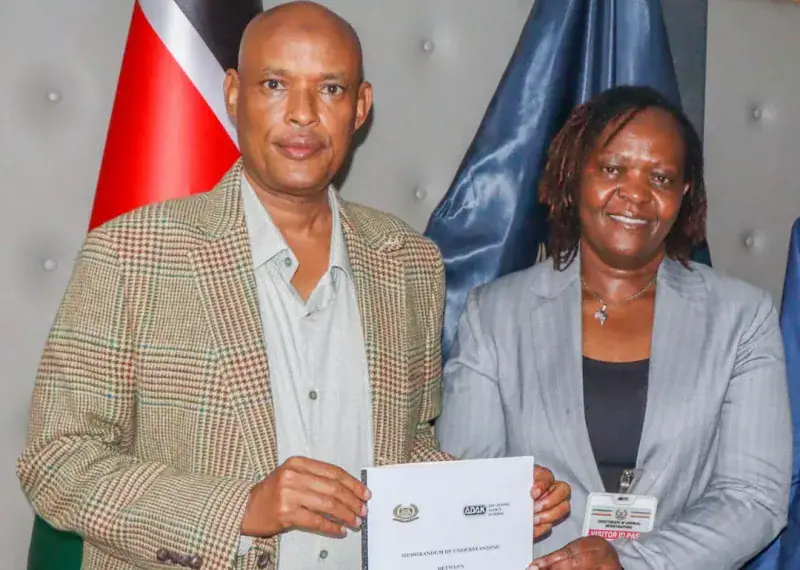
The Directorate of Criminal Investigations (DCI) and the Anti-Doping Agency of Kenya (ADAK) have partnered to tackle doping in sports. They signed a Memorandum of Understanding to share intelligence, conduct investigations, and take coordinated action against doping-related offences. This move aims to dismantle networks behind the use and distribution of prohibited substances in sports. The partnership was signed at DCI headquarters in Nairobi.
The collaboration comes at a challenging time for Kenyan athletics, which has faced repeated doping scandals involving celebrated athletes. Recently, Peres Jepchirchir, the reigning world marathon champion, was handed a three-year ban for testing positive for erythropoietin (EPO). Her Sydney Marathon victory in August was also disqualified. Other athletes, including Veronica Loleo and Ronald Korir, have faced sanctions for EPO violations and abnormalities in their Athlete Biological Passport.
DCI Director Mohamed Amin stated that the agency is committed to supporting ADAK through intelligence gathering and investigative capabilities. He emphasized that sporting success must be built on talent, discipline, and integrity, not on prohibited substances and unfair advantage. Amin said the DCI would provide its investigative expertise to ADAK to identify and dismantle doping networks.
ADAK Chief Executive Officer Peninah Wahome highlighted the importance of collaboration with law enforcement agencies in strengthening the agency's capacity to confront doping-related offences. She stated that closer collaboration will enable intelligence sharing, coordinated investigations, and effective enforcement. Wahome added that working with investigative agencies is crucial in protecting clean athletes and preserving the credibility of competitive sports.
The partnership between DCI and ADAK aims to provide a stronger investigative arm to Kenya's clean-sport campaign. By leveraging law-enforcement expertise, the two agencies seek to prevent, detect, and prosecute doping-related offences. This move could mark a significant shift in Kenya's approach to tackling doping.
The recent doping cases have renewed scrutiny of Kenya's anti-doping efforts. The sanctions against Jepchirchir, Loleo, and Korir have raised concerns about the country's ability to effectively combat doping. The DCI-ADAK partnership is expected to address these concerns and demonstrate a commitment to fair competition and clean sports.
The partnership is a positive step towards protecting the integrity of sports in Kenya. With the DCI's investigative expertise and ADAK's knowledge of anti-doping regulations, the two agencies are well-positioned to tackle doping networks and promote fair competition. The collaboration is expected to yield positive results in the fight against doping in Kenyan sports.
Key points
- DCI and ADAK partner to combat doping networks in Kenyan sports
- Partnership aims to strengthen investigative arm of Kenya's clean-sport campaign
- Collaboration expected to prevent, detect, and prosecute doping-related offences