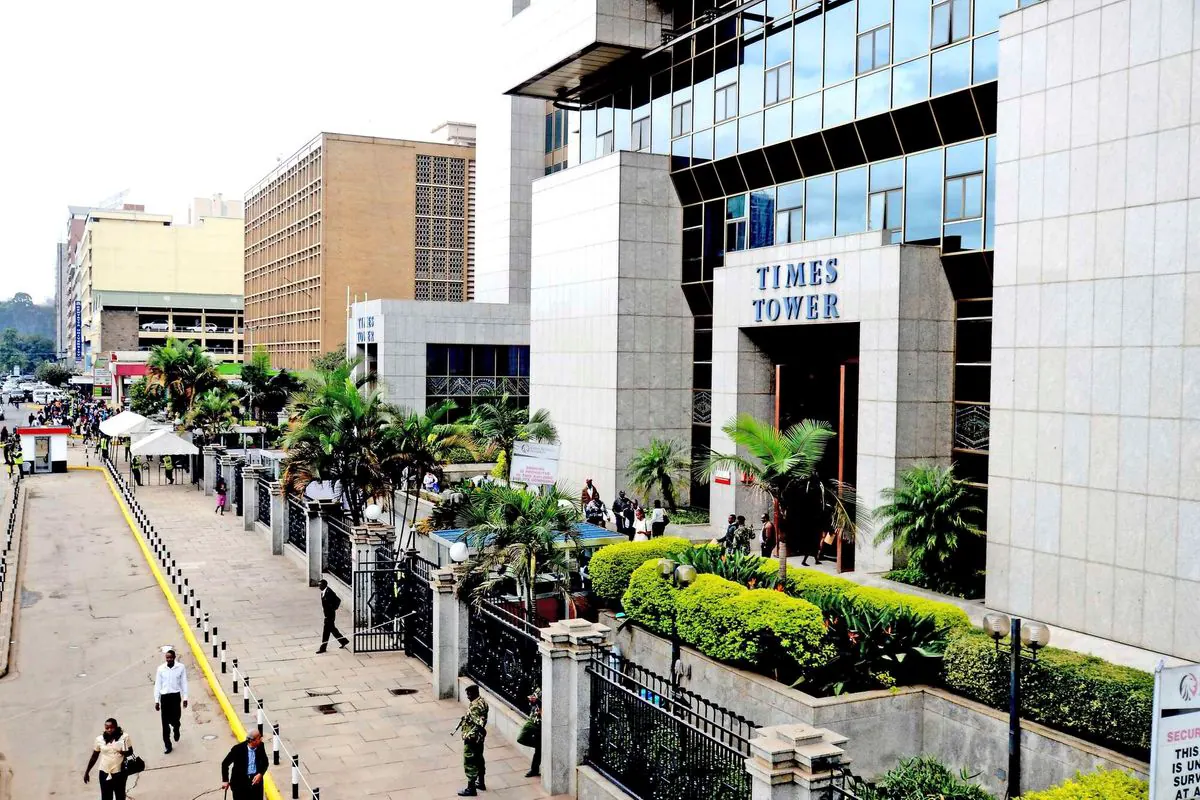
The Kenya Revenue Authority (KRA) has reported a significant revenue shortfall, with ordinary revenue receipts totaling Sh655.8 billion in the first quarter of the 2026/27 financial year. This represents a 14.4 percent growth from the same period last year, when the authority collected Sh573.5 billion. Despite this growth, the revenue collected was below the target by Sh58.2 billion.
According to data from the National Treasury, domestic revenue collection has shown significant recovery compared to the previous year. In the same quarter of 2025, ordinary revenue receipts had contracted by 2.9 percent. The current growth in revenue collection is a positive indicator, but the shortfall in revenue targets raises concerns about the taxman's ability to meet its projections.
The National Treasury has attributed the revenue underperformance to shortfalls in ordinary revenues, mainly from income tax and excise duty. Income tax recorded the largest shortfall at Sh25.4 billion, with receipts at Sh297.9 billion against a target of Sh323.3 billion. Excise duty receipts were off the mark by Sh16.3 billion.
The revenue shortfalls are expected to widen the budget deficit, forcing the National Treasury to borrow more to fund government spending. By the end of September 2026, expenditure had surpassed the target by Sh116.9 billion, largely due to above-target absorption of recurrent expenditure and development expenditure.
The fiscal deficit, including grants, reached Sh329.1 billion in the first three months, or 1.6 percent of gross domestic product (GDP). This surpasses the target of Sh174.8 billion or 0.8 percent of GDP. The National Treasury has identified revenue erosion, debt, and rising spending needs as fiscal pressures on the budget.
To address these challenges, the National Treasury is implementing reforms aimed at strengthening tax revenue mobilisation and expanding the revenue base. The strategy involves simplifying and harmonising tax laws, rationalising tax expenditures, and creating a simple, predictable, and fair tax system.
Additionally, the Treasury is focusing on scaling up non-tax revenues by enhancing the capacity of ministries and State departments to generate income from public services. The National Infrastructure Fund (NIF), established in March 2026, is also expected to reduce budgeted expenditures by shifting some heavy capex development projects from the national budget.
Key points
- The Kenya Revenue Authority recorded a Sh58.2 billion revenue shortfall in the first quarter of the 2026/27 financial year.
- The revenue shortfalls are expected to widen the budget deficit, forcing the National Treasury to borrow more to fund government spending.
- The National Treasury is implementing reforms to strengthen tax revenue mobilisation and expand the revenue base.