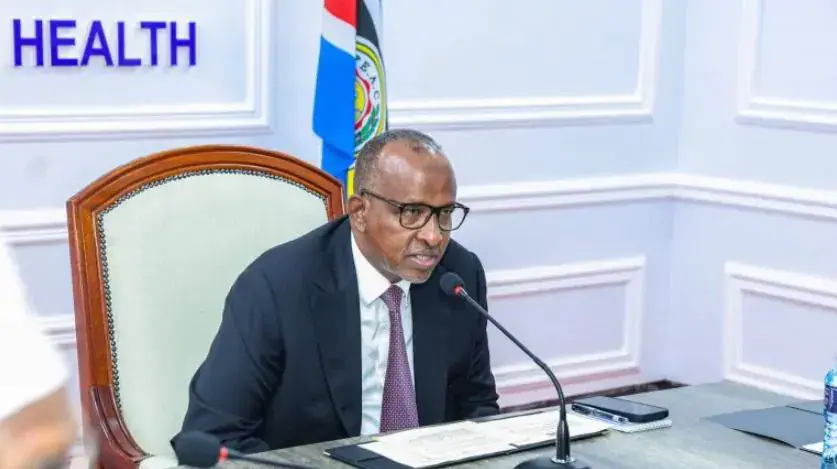
Health Cabinet Secretary Aden Duale announced on Wednesday, November 11, 2026, that all seven patients who tested positive for Ebola in Kenya have fully recovered and been discharged from hospital. This marks a significant milestone in the country's response to the outbreak, which was first detected on October 3. The recovery of the patients also means that all individuals who had contact with them have completed their mandatory medical monitoring.
Duale confirmed that Kenya will not serve as a quarantine centre for foreign Ebola patients or issue quarantine or Ebola-free certificates for travel. He stated that international health regulations do not provide for such documentation. The decision comes after several foreign jurisdictions imposed travel restrictions on Kenya following the initial outbreak. Duale criticized these travel bans, noting that Kenya had promptly shared data and complied with international health standards.
The Kenyan government recorded nine infections and two deaths during the outbreak. To prevent further transmission, government agencies plan to maintain heightened surveillance across all regions. Health teams will continue to screen travelers at all points of entry and investigate any suspected cases or alerts. Duale emphasized that Kenya remains open for trade, business, and international tourism despite the travel restrictions.
Duale called on affected foreign governments to review and lift the travel restrictions immediately, citing that there are no active cases or community transmission in Kenya to justify them. He stressed that transparency and prompt data sharing should be rewarded, not punished. Kenya currently has no patients under treatment, no community transmission, and no contacts in quarantine.
The Laikipia Ebola Isolation Centre in Nanyuki, established by the Kenyan and US governments, was set up to monitor and isolate individuals arriving from regional outbreak zones. However, Duale declined to comment on future operational plans for the centre, citing active judicial proceedings. The centre's status remains unclear amid ongoing court proceedings.
If no new cases arise during the required 42-day monitoring period, Kenya will officially be declared Ebola-free on December 23, 2026. During this period, health teams will heighten vigilance and surveillance. Duale emphasized that the countdown to the declaration does not mark the end of the government's response, but rather a transition to sustained vigilance.
The Kenyan government's response to the Ebola outbreak has been marked by transparency and compliance with international health standards. Duale's statements reflect the government's efforts to reassure the public and international partners of its commitment to containing the outbreak. The recovery of all patients and completion of contact tracing are significant achievements in this effort.
Key points
- Kenya has no active Ebola cases and will not serve as a quarantine centre for foreign patients.
- The country will be declared Ebola-free on December 23, 2026, if no new cases arise during the 42-day monitoring period.
- Kenya criticizes travel restrictions imposed by foreign jurisdictions, citing transparency and compliance with international health standards.