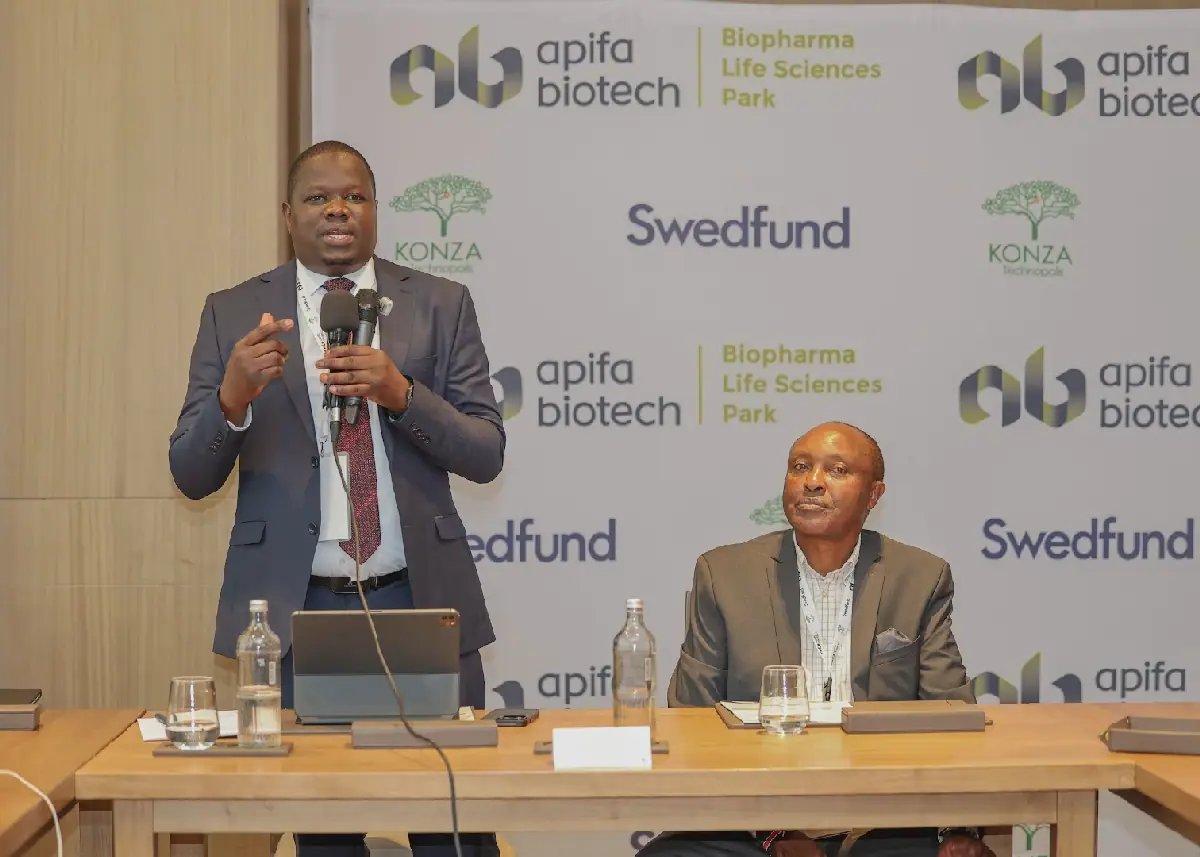
The Kenyan government is moving forward with plans to establish its first Biopharma Life Sciences Park at Konza Technopolis, a hub for pharmaceutical and biotechnology manufacturing. The project, still in the study stage, aims to reduce the country's dependence on imported medicines and strengthen its position as a regional healthcare manufacturing center. A consortium of JLL and IQVIA has been selected to conduct a feasibility study to test the park's technical requirements, commercial viability, investment structure, and implementation roadmap.
Apifa Biotech, a subsidiary of API for Africa (APIFA), has secured grant funding from Swedfund, Sweden's development finance institution, to study the case for the park. The project is structured as a public-private partnership with the Technopolis Development Authority, which was cleared by the National Treasury in April 2026 to proceed to the development phase. The proposed park will host manufacturers, researchers, and investors, with Invest Kenya envisioning a 200-acre site that could attract seven to ten major pharmaceutical companies.
The Biopharma Life Sciences Park is expected to position Konza as an emerging center for life sciences and pharmaceutical manufacturing, helping Kenya to shift from importing most of its medicines to producing them locally. According to Technopolis Development Authority CEO John Paul Okwiri, the park will help Kenya achieve its policy target of producing at least half of its essential health products locally. The Ministry of Health has estimated that the country's pharmaceutical supply gap is around 70%, making the development of local production capacity a priority.
The establishment of the Biopharma Life Sciences Park could have significant implications for Konza Technopolis, providing a credible anchor tenant and a stronger cluster identity. The presence of pharmaceutical manufacturers, laboratories, packaging firms, cold-chain operators, and investors could improve land take-up and validate Konza's science-park proposition. The park model also offers the potential for recurring lease, utility, and service income, as well as upgrades to power, water, roads, and connectivity that could benefit the wider technopolis.
However, the project also carries risks and constraints, particularly in terms of execution. Konza's PPP pipeline shows many projects in preparation, but far fewer have reached financial close. The success of the Biopharma Life Sciences Park will depend on the publication of feasibility findings, land and utility commitments, approvals, named tenants, and signed financing. The park will also need to offer predictable procurement, timely product registration, GMP-compliant facilities, efficient customs handling, and skilled operators to attract tenants.
The feasibility study will establish the technical requirements, commercial viability, investment structure, and implementation roadmap for the project. The study will also need to consider water, waste, and environmental performance, including process water, hazardous-material handling, and effluent treatment. The park's capital model will need to include these factors from the start, rather than leaving them to tenants.
The significance of the Biopharma Life Sciences Park for Kenya's pharmaceutical industry will ultimately depend on the products manufactured, the investment secured, and the extent to which local production becomes commercially sustainable. If successful, the park could help to reduce the country's reliance on imported medicines and strengthen its position as a regional healthcare manufacturing center.
Key points
- The project aims to reduce Kenya's dependence on imported medicines and strengthen its position as a regional healthcare manufacturing center.
- The proposed park will host manufacturers, researchers, and investors, with a potential investment value of US$217 million.
- The feasibility study will establish the technical requirements, commercial viability, investment structure, and implementation roadmap for the project.
Reporting sources
- techweez.com · techweez.com