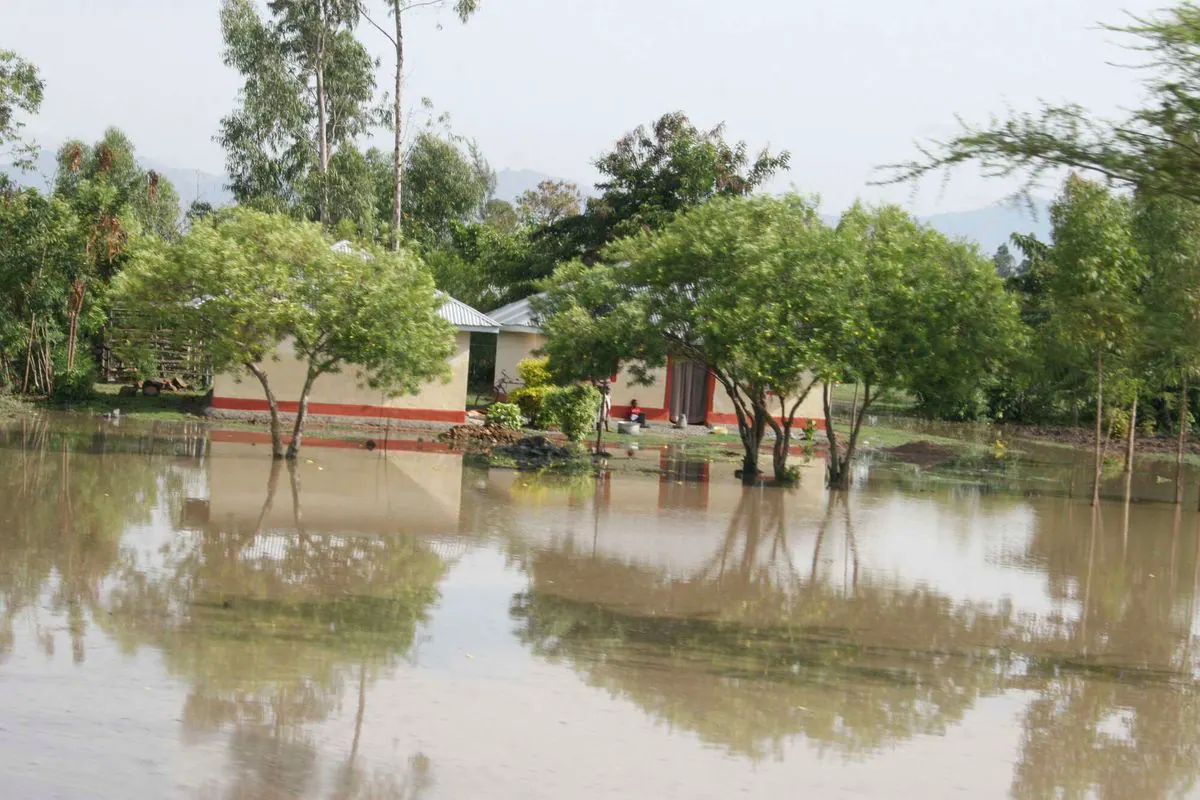
Kenya is facing an increased risk of floods and landslides as the El Niño phenomenon approaches, with experts warning that the country is not adequately prepared to mitigate the impacts. The country's largest river drainage basin, the Tana River, is particularly vulnerable, with many dams filling with sediment due to intensified agricultural activities upstream. This has reduced the volumetric holding capacities of the dams, increasing the risk of overflow and subsequent flooding.
The El Niño event, which is expected to bring extreme rainfall and flooding, has in the past caused significant damage to properties and livelihoods in Kenya. The Tana River has repeatedly changed course, particularly in the mid-Tana region around Garissa and its surrounding areas, resulting in acres of land and crops being washed away. The government has been urged to take proactive measures to move people away from riparian areas and floodplains that have not flooded for many years.
Despite existing laws regulating activities in riparian zones, enforcement remains a challenge, with some politically powerful individuals owning and operating large farms that extend into the river channel. This has led to concerns that the government's underinvestment in nature conservation, science, and local knowledge has exacerbated the risk of flooding. Experts argue that building embankments to protect communities is not a viable solution, as it is impossible to tame a determined river discharge.
The development of urban areas along the Tana River, as well as farming activities in the upper and middle parts of the basin, has increased the speed and volume of water reaching the river during heavy rainfall events. This has resulted in unpredictable peak river flows, leaving little time for early-warning systems to detect the danger and evacuate people safely. Kenya's hydrological and meteorological monitoring systems remain a concern, with systems that provided useful information in the 1980s being no better, or in some cases worse, than they were decades ago.
Environmental-flow studies and assessments of the Tana River have been produced, but remain largely unused. These documents, which have sat on shelves for years, provide valuable scientific information that could inform policy and decision-making. The challenge is ensuring that investments in monitoring, forecasting, and projection capabilities translate into reliable systems, useful information, and timely action on the ground.
The government has been urged to act early, strengthen its systems, enforce the rules, protect river corridors, and prepare communities for the potential impacts of El Niño. This includes taking proactive measures to mitigate the effects of flooding, such as relocating communities living in high-risk areas and implementing sustainable agricultural practices. By taking early action, Kenya can reduce the risk of catastrophic damage and protect the livelihoods of communities living along the Tana River.
As the El Niño event approaches, communities living along major river basins in the Tana Basin and beyond are bracing for impact. While nature has provided numerous warning signs, there is still an opportunity for Kenya to correct course and take proactive measures to mitigate the effects of flooding. The choice before the government and communities is clear: act early and take proactive measures, or wait for a disaster to force action.
Key points
- Kenya faces increased risk of floods and landslides due to El Niño
- Existing laws regulating activities in riparian zones are not effectively enforced
- Government urged to act early to mitigate impacts of El Niño