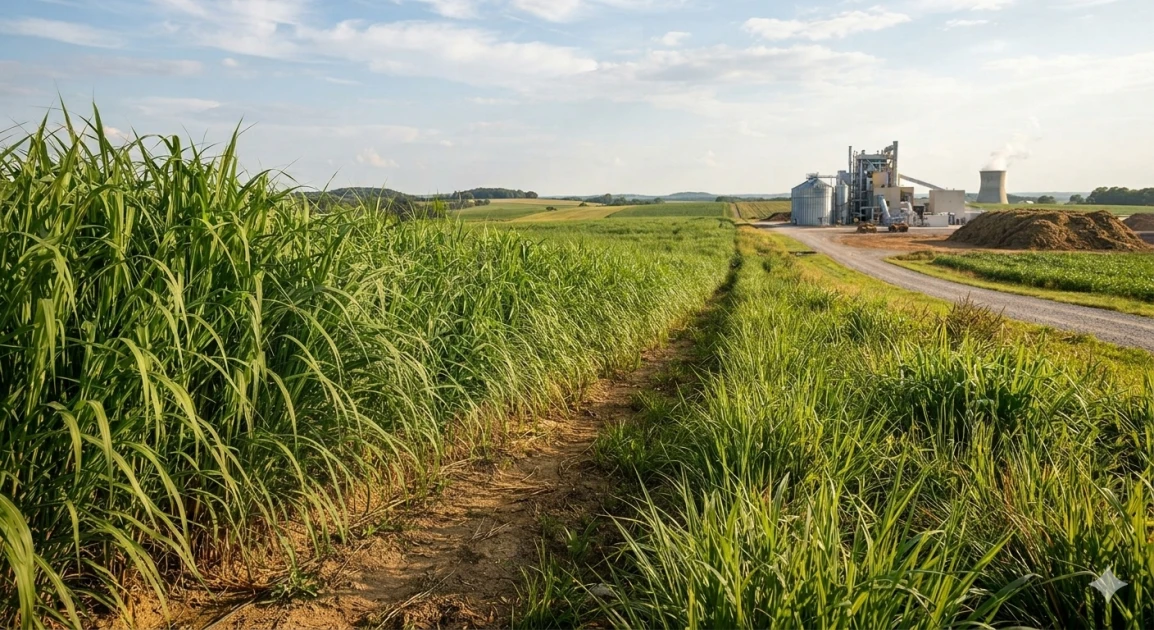
A well-developed biofuels sector in Kenya can create green jobs, raise rural incomes, and reduce pressure on forests. Energy crops like cassava, sugarcane, and sweet sorghum can supply part of the feedstock needed for locally produced bioethanol. A recent review of the policy and regulatory environment for energy crops in Kenya found significant progress in putting in place policies and regulations to support the sector. However, the next step is to improve coordination and implementation across relevant institutions.
The review was conducted by Practical Action, Gamos East Africa, and the Clean Cooking Association of Kenya, in partnership with the Ministry of Energy and Petroleum. Policies affecting the biofuels sector cut across energy, agriculture, environment, and forestry, and land at both national and county levels. There is an opportunity to strengthen joint planning and implementation across these institutions. Kenya already has a strong policy foundation on the energy side, with the Bioenergy Strategy 2020–2027 and its Action Plan providing direction for developing a modern bioenergy sector.
The Kenya National Cooking Transition Strategy 2024–2028 gives bioethanol an important place in the country's clean cooking plans, while the Energy (Biofuels) Regulations 2025 set rules for the biofuels value chain. The National Energy Policy 2025–2034 also recognises bioethanol and the use of agricultural waste for energy. However, energy crops are less explicitly addressed in agricultural policy than in energy policy. The Agricultural Policy 2021 promotes diversification, commercialisation, research, and value addition, but energy crops are not clearly prioritised.
The review found limited extension capacity specifically for energy crops, including gaps in specialised knowledge on integrating them into existing farming systems. It also identified a wider research-to-policy gap, with findings on the viability of bioenergy feedstocks not consistently informing policy decisions. Among its recommendations is the classification of cassava, sugarcane, and sweet sorghum as scheduled industrial crops under the Agriculture and Food Authority.
The Ministry of Energy and Petroleum leads bioenergy policy and regulation, while the Ministry of Agriculture and Livestock Development oversees the farming systems that would produce much of the feedstock. Environment, forestry, land, and water institutions also have responsibilities that become important as cultivation expands. Counties have an equally important role because agriculture is devolved and many of the decisions affecting extension services, local infrastructure, and agricultural investment are made at county level.
Existing coordination arrangements within the national and county governments should be strengthened so that agriculture and the wider bioenergy supply chain receive greater attention alongside energy and clean cooking. Better coordination would need to happen around actual value chains, not only through meetings between institutions. The review found uneven recognition of energy crops in the five counties it examined, with Kilifi identifying cassava and Kisumu sugarcane, but largely through agriculture and food security rather than as part of energy value chains.
Commercial viability also depends on the wider business environment, with concerns about limited incentives and the cost of meeting multiple regulatory requirements. The current Bioenergy Strategy is approaching the end of its implementation period, and the evidence now available from policy reviews, producer assessments, and emerging commercial models provides an opportunity to examine how the next phase of bioenergy policy can deal more clearly with energy crops.
Key points
- Kenya's biofuels sector can create green jobs and expand access to cleaner cooking fuels with better policy coordination for energy crops.
- The review recommends classifying cassava, sugarcane, and sweet sorghum as scheduled industrial crops under the Agriculture and Food Authority.
- Better coordination across energy, agriculture, environment, and forestry, land, and county development is needed to translate the policy foundation into a viable sector.