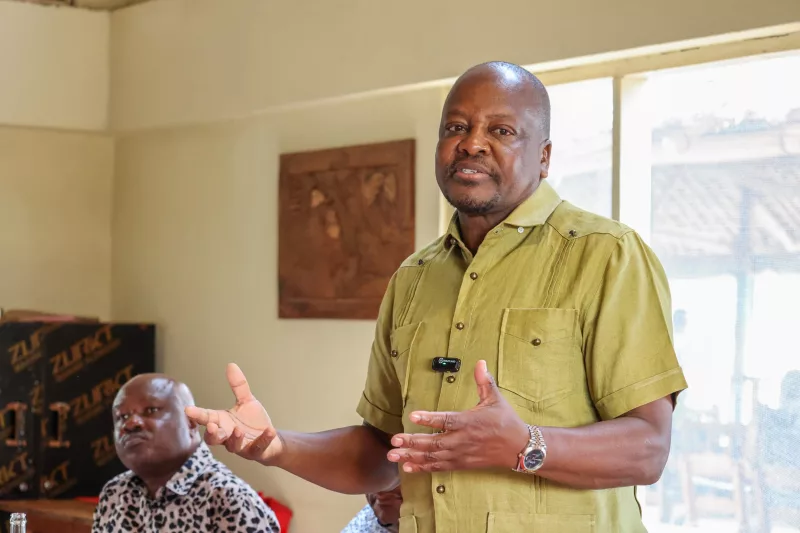
The Kenyan government is intensifying efforts to turn livestock farming from a traditional livelihood into a commercially driven export industry. Agriculture and Livestock Development Cabinet Secretary Mutahi Kagwe recently engaged with ranchers in Taita-Taveta County to unlock the region's livestock potential. The government's strategy focuses on expanding access to water, finance, improved breeding, and high-value markets.
The engagement in Taita-Taveta County included discussions on interventions to improve water availability, access to finance, markets, and livestock breeding. These are considered key to shifting production from subsistence farming to a commercially viable enterprise. The government's efforts aim to support higher incomes for livestock farmers and create opportunities for investment and employment.
A key component of the strategy is the Bachuma National Livestock Quarantine Centre, which has been handed over to private investor Blue Mountain for commercialization. The facility will provide quarantine, inspection, and certification services for animals destined for export, helping Kenyan livestock meet international requirements on animal health, traceability, and food safety.
The government is also advancing a proposed County Livestock Investment Company model across 23 arid and semi-arid counties. The model targets 15,000 livestock farmers in each county, with each farmer contributing Sh3,000 towards a Sh10,000 share, and the government providing the remaining Sh7,000. This initiative aims to mobilize up to Sh150 million per county and Sh3.45 billion across the 23 counties.
The proposed farmer-owned companies will aggregate livestock, facilitate access to larger markets, and enable farmers to benefit from returns through dividends or bonuses. Additionally, the Animal Identification and Traceability system, known as ANITRAC, is being used to strengthen the livestock export chain by enabling animals to be traced to their source.
In Taita-Taveta, the national and county governments will work with ranchers to identify strategic sites for water pans and other livestock infrastructure to support production across the county's extensive rangelands. The emerging public-private sector model combines private capital, technical expertise, and commercial efficiency with government support through infrastructure development, water provision, regulation, and policy.
The government believes that the Bachuma facility will play a key role in its ambition to develop a competitive, traceable, and high-value livestock export industry. The initiative is expected to create opportunities for investment and employment while supporting higher incomes for livestock farmers. The government's efforts aim to transform the livestock sector into a major export industry.
Key points
- The Kenyan government aims to transform livestock farming into a commercially driven export industry by expanding access to water, finance, improved breeding, and high-value markets.
- The Bachuma National Livestock Quarantine Centre has been handed over to a private investor for commercialization to help Kenyan livestock meet international requirements.
- The government is advancing a County Livestock Investment Company model to mobilize funds and support livestock farmers in 23 arid and semi-arid counties.