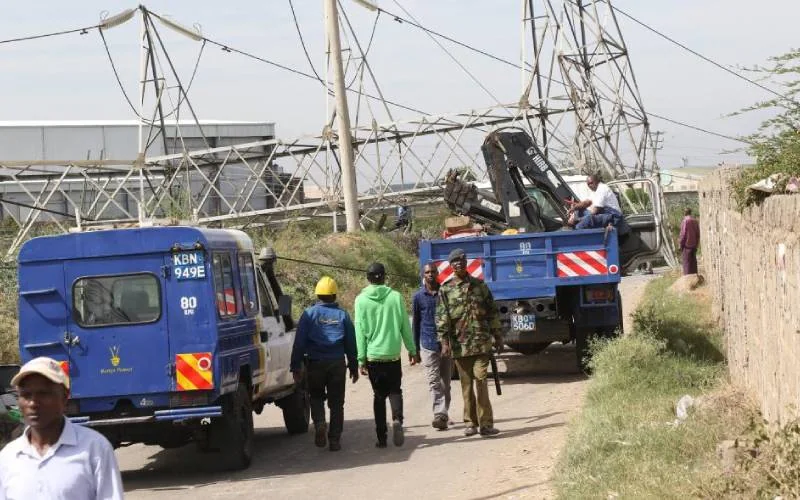
A recent report by the Kenya Institute for Public Policy Research and Analysis (KIPPRA) has revealed that Kenya loses approximately 22% of the electricity it generates. This is based on data from the five-year period ending in 2023. The report indicates that annual losses have consistently exceeded the recommended 10% ceiling, varying between 15% and 25% each year from 2019 to 2023.
According to the KIPPRA report, Kenya ranks second among 17 African countries surveyed in terms of system losses, with Ghana recording the highest loss rate of 24%. The institute attributes the high technical losses primarily to ageing transmission and distribution lines, which are more prone to faults and less efficient than newer assets. Inadequate maintenance, limited investment, and weather-related damage, especially during rainy periods, are also cited as contributing factors.
The KIPPRA report highlights that Kenya recorded the longest average duration of power interruptions among the surveyed nations. Consumers in Kenya experience approximately three hours and 40 minutes of outages per year, exceeding the Energy and Petroleum Regulatory Authority's target of 3.5 hours. These prolonged outages and technical losses increase the cost of supplying electricity, adding pressure to an already high-tariff system.
The report notes that the high losses and prolonged outages have significant implications for the country's economy and population. As Kenya's population and economy continue to drive rising electricity demand, the institute stresses that interventions are essential to sustain a reliable supply of electricity. KIPPRA recommends that the government and energy stakeholders prioritize regular maintenance, adopt smart-grid technologies for fault detection, and seek innovative financing to modernize the network and improve weather resilience.
The KIPPRA report analyzed data from 17 African countries, providing a comprehensive overview of the region's energy landscape. The institute's findings underscore the need for urgent action to address the challenges facing Kenya's energy sector. By implementing the recommended interventions, the government and energy stakeholders can work towards reducing technical losses and improving the reliability of the electricity supply.
The Energy and Petroleum Regulatory Authority's target of 3.5 hours of outages per year is a critical benchmark for the sector. Exceeding this target highlights the need for enhanced maintenance and investment in the energy infrastructure. KIPPRA's recommendations aim to support the government's efforts to improve the efficiency and reliability of the energy sector, ultimately benefiting consumers and the broader economy.
The KIPPRA report's findings and recommendations are set to inform policy and investment decisions in Kenya's energy sector. By prioritizing regular maintenance, adopting smart-grid technologies, and seeking innovative financing, the government and energy stakeholders can work towards reducing technical losses and improving the reliability of the electricity supply, ultimately supporting the country's economic growth and development.
Key points
- Kenya loses approximately 22% of generated power due to technical losses.
- The country faces the longest average duration of power interruptions in the region.
- KIPPRA recommends prioritizing regular maintenance and adopting smart-grid technologies to address the challenges.