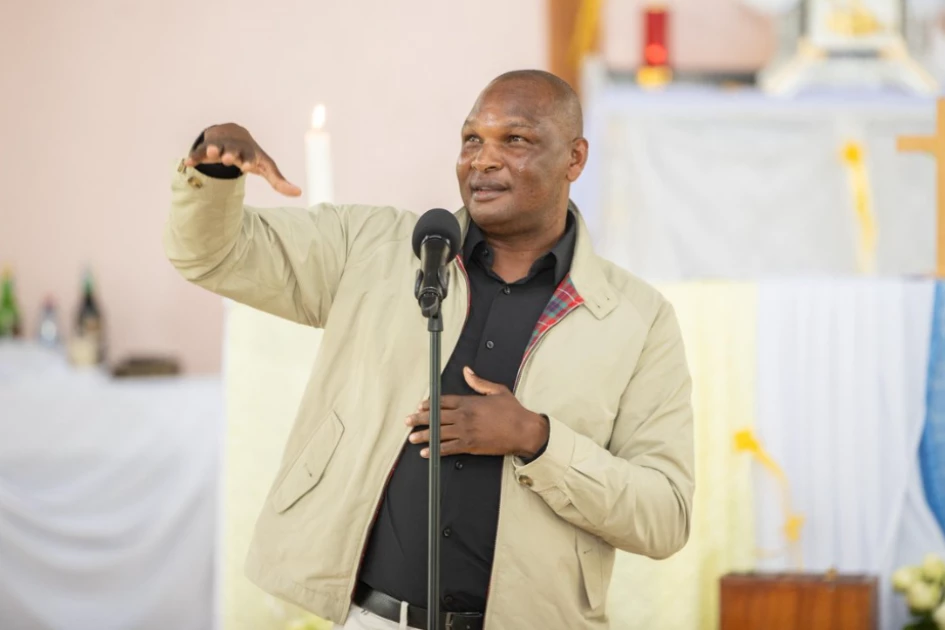
Kenya Kwanza leaders have defended the government's decision to import fuel through a government-to-government (G-to-G) deal, despite concerns raised by Uganda's President Yoweri Museveni. The leaders, including President William Ruto's personal aide Farouk Kibet, accused the opposition of trying to discredit the government. Speaking in Butere during an empowerment program, Kibet targeted Kiharu MP Ndindi Nyoro and former President Uhuru Kenyatta, alleging they were undermining the Ruto administration.
Kibet claimed that Nyoro was receiving poor advice from Kenyatta and could not claim moral high ground as a member of the opposition. He also accused Nyoro of being involved in a large-scale fuel theft scheme when he was chairman of the budget committee. Migori Senator Eddy Oketch supported Kibet's sentiments, adding that former Deputy President Rigathi Gachagua was also allegedly involved in a plot to compromise the G-to-G deal.
President Museveni recently revealed that a Kenyan Senator had alerted him to the fact that Uganda was procuring petroleum products at exorbitant rates through middlemen in Kenya, leading him to end the arrangement. Museveni stated that Uganda was paying a premium of $118 per metric tonne for diesel under the previous arrangement, compared to $83 under its current arrangement with Vitol and Uganda National Oil Company (UNOC).
The Kenyan government has clarified that the G-to-G deal was signed to address a severe US dollar shortage in 2022 that threatened to crash the economy and drain the country's foreign exchange reserves. The government emphasized that the deal was not intended to orchestrate a fraudulent scheme. Kakamega Governor Fernandes Barasa and Kapseret MP Oscar Sudi echoed the government's sentiments, urging that the deal should not be politicized.
Barasa stated that the G-to-G deal would benefit the nation in securing refined petroleum products. The controversy surrounding the deal has sparked a fresh debate, with some leaders calling for transparency and accountability. The government's decision to import fuel through a G-to-G deal has raised concerns about the potential for corruption and the impact on the economy.
Senator Oketch claimed that Gachagua's senators had lied to President Museveni about the G-to-G deal. The allegations have sparked a heated debate, with some leaders demanding that the government provide more information about the deal. The opposition has called for a thorough investigation into the matter, citing concerns about corruption and the potential for economic sabotage.
The government has faced criticism for its handling of the G-to-G deal, with some leaders accusing it of lacking transparency. The controversy has highlighted the need for greater accountability and transparency in government dealings. The issue remains a contentious topic in Kenyan politics, with many Kenyans calling for clarity on the matter.
Key points
- The Kenyan government defends the G-to-G fuel deal, citing the need to address a severe US dollar shortage in 2022.
- The opposition accuses the government of lacking transparency and corruption in the G-to-G deal.
- President Museveni's concerns about the deal led to Uganda ending its arrangement with Kenyan middlemen.