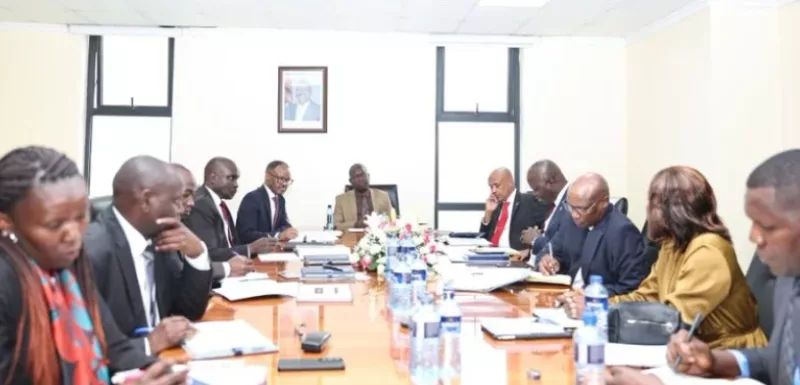
Kenya has intensified efforts to address outstanding anti-money laundering and counter-terrorism financing measures as the country seeks to exit the Financial Action Task Force (FATF) grey list. Director of Public Prosecutions Renson Ingonga chaired a meeting of law enforcement and financial sector principals to review Kenya's progress in addressing deficiencies identified by FATF. The meeting also reviewed the outcomes of the face-to-face FATF Africa Joint Group meeting held in Abidjan, Côte d'Ivoire, on September 11, 2026.
The officials assessed issues raised during the Abidjan engagement and considered the remaining action points under Kenya's FATF action plan. The DPP stressed the importance of sustained inter-agency collaboration in strengthening the country's framework for combating money laundering and terrorist financing. The meeting also focused on priority interventions, implementation of existing measures, and ensuring evidence of progress is properly documented and submitted through the applicable FATF processes.
Kenya has been under FATF increased monitoring since February 2024, when it made a high-level political commitment to work with FATF and the Eastern and Southern Africa Anti-Money Laundering Group (ESAAMLG) to strengthen the effectiveness of its anti-money laundering and counter-terrorist financing regime. FATF's latest review, published on June 19, retained Kenya on the list of jurisdictions under increased monitoring, commonly referred to as the grey list.
FATF said Kenya had taken steps to improve its regime, including increasing the understanding of targeted financial sanctions among financial institutions and designated non-financial businesses and professions. However, FATF said Kenya still needed to address seven areas under its action plan. These include improving risk-based anti-money laundering and counter-terrorist financing supervision of financial institutions and designated non-financial businesses and professions.
Kenya is also required to designate an authority to regulate trusts, improve the collection of accurate and up-to-date beneficial ownership information, and implement remedial measures where transparency requirements for legal persons and arrangements are breached. Other outstanding measures include improving the use and quality of financial intelligence products, increasing money laundering investigations and prosecutions in line with identified risks.
The international watchdog said jurisdictions under increased monitoring are actively working with FATF to address strategic deficiencies and are expected to complete their action plans within agreed timelines. It also said being placed under increased monitoring does not in itself call for enhanced due diligence measures to be applied to the jurisdiction. The latest meeting chaired by Ingonga comes as Kenya seeks to maintain progress on the outstanding measures and demonstrate that the reforms are being effectively implemented.
According to the ODPP, the principals agreed on strategic actions and timelines aimed at sustaining the momentum generated during the Abidjan engagement and advancing Kenya's case for removal from the FATF grey list. The ODPP continues to be involved in Kenya's anti-financial crime efforts through the prosecution of money laundering and terrorism financing offences, asset forfeiture proceedings, development of prosecutorial guidelines, and capacity building for prosecutors handling complex financial and economic crimes.
Key points
- Kenya has been under FATF increased monitoring since February 2024.
- FATF said Kenya still needed to address seven areas under its action plan.
- The country seeks to exit the Financial Action Task Force (FATF) grey list.