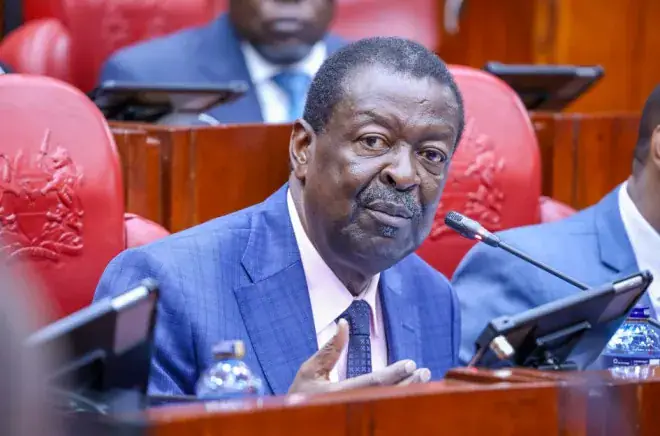
The Kenyan government has confirmed that approximately 40,000 Ethiopians have crossed into Kenya and are currently being hosted in Moyale. Prime Cabinet Secretary Musalia Mudavadi stated that tensions in Ethiopia had forced thousands of people to flee into Kenya. The situation has been attributed to clashes that erupted in October 2026, amid longstanding disagreements between the Oromia and Somali regional administrations over territorial boundaries and administrative control.
Mudavadi appeared before the Senate Committee on Devolution and Intergovernmental Relations on March 30, 2026, to discuss the ongoing situation. He mentioned that he had communicated with his Ethiopian counterpart and asked him to intervene and help stabilise the situation so that the displaced families can return home. The Ethiopian government has assured Kenya that it is working to restore normalcy and facilitate the return of the refugees.
The displacement has resulted in thousands of people seeking shelter in schools, churches, and temporary camps, while others have been accommodated by relatives and members of the local community. Mudavadi added that the Ethiopian government had assured Kenya that it was working to restore normalcy and facilitate the return of the refugees. The Kenyan government is working to ensure the refugees receive necessary assistance and support.
The conflict between the Oromia and Somali regional administrations has been ongoing, with many families affected by the violence. The situation has put a strain on Kenya's resources, as it hosts the large number of refugees. The Kenyan government has called for calm and urged the Ethiopian government to take steps to address the underlying issues driving the conflict.
Mudavadi's discussions with his Ethiopian counterpart have focused on finding a solution to the crisis. The two leaders have emphasized the need for dialogue and cooperation to address the root causes of the conflict. Kenya has offered to provide support and assistance to help stabilize the situation and facilitate the return of the refugees.
The international community has expressed concern over the situation, with many countries calling for an end to the violence and a peaceful resolution to the conflict. The United Nations and other humanitarian organizations have provided assistance to the affected families, but more support is needed to address the scale of the crisis.
The situation remains volatile, with many families still in need of assistance and support. The Kenyan government, in collaboration with international partners, continues to work towards finding a lasting solution to the crisis and ensuring the safe return of the refugees to their homes.
Key points
- Approximately 40,000 Ethiopians have crossed into Kenya, fleeing escalating tensions between Oromia and Somali regional administrations.
Reporting sources
- Kenya hosting 40,000 Ethiopian refugees fleeing border conflicts · Hiiraan Online