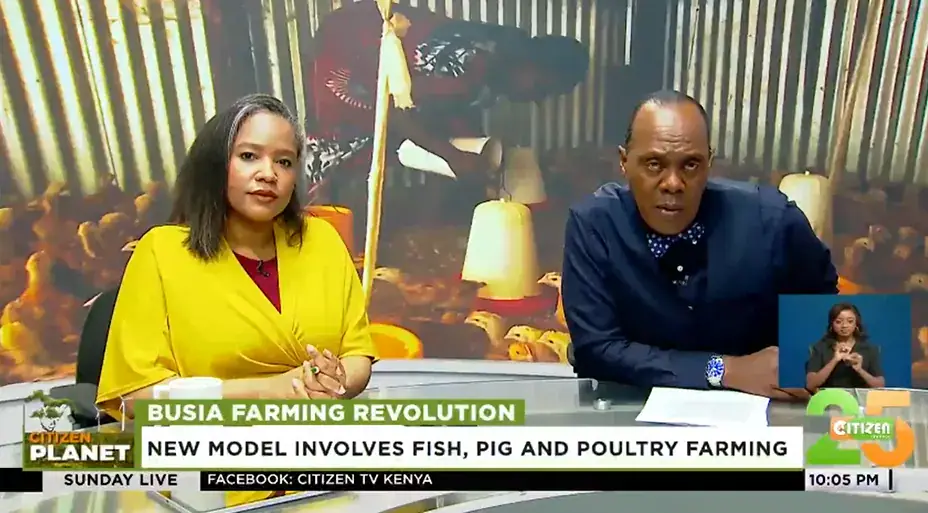
The Kenyan government has launched an initiative to promote circular farming, an integrated model that combines poultry, fish and vegetable production. This approach aims to improve food security, increase farmers' incomes and encourage efficient use of agricultural resources. The initiative is being implemented through the Lake Basin Development Authority (LBDA) and the Wezesha Agribusiness Programme. By adopting climate-smart practices, farmers can minimise waste while creating multiple sources of income.
In Busia County, farmers Miriam Ojakol and Rebecca Odalo have adopted modern poultry housing and improved biosecurity measures to reduce losses and expand their farming businesses. Their experiences highlight the role of targeted training and improved farming techniques in strengthening small-scale agribusinesses. The government's initiative provides farmers with the necessary skills and knowledge to improve their productivity and efficiency. This, in turn, can lead to increased food security and improved livelihoods for farmers and their communities.
The circular farming model allows farmers to use waste from one production activity as a resource for another. Poultry manure is used to enrich fish ponds, while nutrient-rich water from the ponds is recycled to irrigate vegetable gardens. This approach reduces waste, conserves resources and enables farmers to run several agricultural enterprises even on limited land. By improving productivity and lowering the cost of farming, the model can help farmers increase their incomes and improve their overall well-being.
Through the Wezesha Agribusiness Programme, at least 5,000 young people have received training in climate-smart farming practices over the past two years. The programme is also working to improve farmers' access to financing and markets, helping them turn agricultural activities into sustainable businesses. This training and support can help young people develop the skills and knowledge they need to succeed in agriculture and improve their livelihoods.
LBDA Managing Director Wycliffe Ochiaga said the authority was promoting modern poultry farming and supporting the development of locally produced animal feeds to reduce production costs. The government has also established a poultry technology transfer centre in Kisumu, which produces 300 trays of eggs daily for the local market. These initiatives are part of broader efforts to strengthen agricultural production, expand economic opportunities and improve food security through modern and resource-efficient farming methods.
The government's initiative has the potential to make a significant impact on food security and the economy. By promoting circular farming and providing support to farmers, the government can help increase agricultural productivity and improve the livelihoods of farmers and their communities. This, in turn, can contribute to the country's overall economic growth and development.
The circular farming model is a sustainable and efficient approach to agriculture that can help address some of the country's most pressing challenges, including food insecurity and unemployment. By adopting this approach, farmers can improve their productivity, increase their incomes and contribute to the country's economic growth. The government's initiative is a step in the right direction, and its success will depend on continued support and investment in the agricultural sector.
Key points
- 5,000 young people trained in climate-smart farming practices
- Government promotes modern poultry farming and locally produced animal feeds
- Circular farming model reduces waste and conserves resources