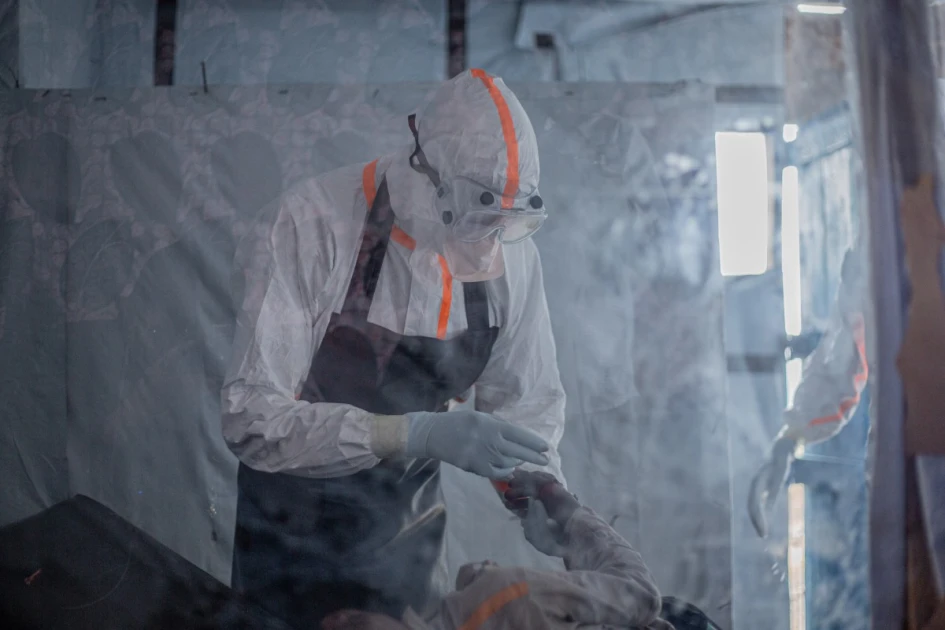
The Kenyan Ministry of Health has initiated a comprehensive contact tracing exercise following the confirmation of the country's first Ebola case. A Kenyan citizen, who had been living in the Democratic Republic of Congo for seven years, tested positive for the virus and passed away at Nairobi Hospital on Monday night. According to Cabinet Secretary Aden Duale, 28 contacts have been identified so far, including family members of the deceased and healthcare workers who attended to the patient.
The Ministry is also working to track down 23 passengers and four crew members who were on the same flight as the deceased, which traveled from Kampala to Nairobi. The patient, who arrived in Kenya on October 3, had fallen ill about a month ago and received treatment in several hospitals in the Democratic Republic of Congo before traveling to Kampala by road and then boarding a Jambojet flight to Nairobi.
The government has made arrangements for the traced contacts to undergo quarantine as healthcare officials continue to monitor them for symptoms. This is part of the measures taken to prevent further transmission of the virus and quickly identify anyone who has been exposed. The Ministry of Health is working to strengthen surveillance at entry points and increase laboratory testing as part of efforts to prevent and contain Ebola.
A total of 276 samples have been tested across five laboratories, including the Kenya Medical Research Institute (KEMRI) laboratories in Nairobi and Kisumu, the national virus reference laboratory, and two other mobile laboratories deployed at the Busia border and in Bungoma County. Only one sample has been confirmed positive, and it belonged to the deceased patient.
Ebola is a severe disease that can be spread through direct contact with blood or bodily fluids of an infected person or contaminated materials. The Ministry of Health is urging the public to be aware of the risks and take precautions to prevent the spread of the virus. The government has assured the public that it is taking all necessary measures to contain the outbreak and prevent further transmission.
The contact tracing exercise is a critical component of the government's response to the outbreak. By identifying and monitoring individuals who have come into contact with the infected patient, the Ministry of Health aims to prevent further transmission of the virus and contain the outbreak. The government has appealed to the public to cooperate with healthcare officials and provide any necessary information to support the contact tracing exercise.
The Ministry of Health will continue to provide updates on the situation and take all necessary measures to prevent and contain the outbreak. The government has urged the public to remain calm and take precautions to protect themselves and their loved ones from the virus. Key measures to prevent the spread of Ebola include avoiding direct contact with infected individuals, washing hands regularly, and seeking medical attention immediately if symptoms occur.
Key points
- The Kenyan government has identified 28 contacts of the first Ebola patient and is working to track down 27 others who were on the same flight from Kampala.
- A total of 276 samples have been tested for Ebola across five laboratories, with only one confirmed positive case.
- The Ministry of Health has made arrangements for traced contacts to undergo quarantine as part of efforts to prevent further transmission of the virus.