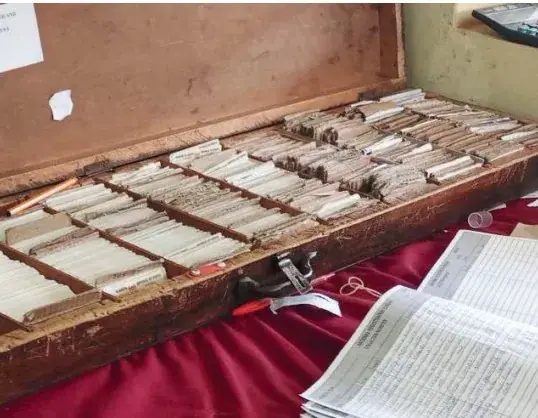
The Kenyan government is intensifying efforts to address a backlog of 557,930 uncollected national identity cards, a move aimed at ensuring that eligible citizens can participate in the 2027 elections. Immigration and Citizen Services PS Belio Kipsang stated that the government is working to ensure that every Kenyan who should have an ID has one before the voter registration exercise begins in January 2027.
The backlog includes nearly 400,000 cards that have remained uncollected for more than 10 years. To address this issue, the government is using a combination of local administration support, improved processing systems, and technology. The PS noted that the government has removed all payments, including the Sh300 charged for new IDs and the Sh1,000 for replacements, to make it easier for Kenyans to acquire these documents.
The government is working with chiefs and assistant chiefs to trace people whose identity cards have been processed but remain uncollected at registration offices. Under this arrangement, National Government Administration Officers will receive information on uncollected cards in their respective areas and help trace the owners. The department is also considering allowing registration officers to release identity cards to parents, guardians, and other authorized persons, provided proper verification is conducted.
Teso South MP Oku Kaunya raised concerns about long delays in Amagoro, where more than 5,000 identity cards have reportedly taken between two and three months to reach registration stations after applications have been processed. He proposed that the department works with village elders to ensure uncollected identity cards reach their rightful owners.
Saku MP Dido Raso lauded the government for significant improvements in the registration process, particularly for residents of pastoralist communities who previously faced difficulties obtaining identity cards. However, he suggested that the department adopt a system similar to the passport collection system, where applicants receive text messages once their documents are ready.
Responding to concerns, PS Kipsang stated that the department has the capacity to print up to 20,000 identity cards daily and is working to ensure applications are processed and delivered within shorter timelines. He noted that any ID application should be processed and delivered within seven to 10 days.
On concerns about expiry dates printed on identity cards, the PS clarified that the dates relate to the validity of the technology and information stored in the identification chip, rather than the citizenship of the holder. He emphasized that when an identity card expires, it does not affect the holder's citizenship, but rather requires an update of the information contained in the chip.
Key points
- The Kenyan government has removed all payments for new IDs and replacements to make it easier for citizens to acquire these documents.