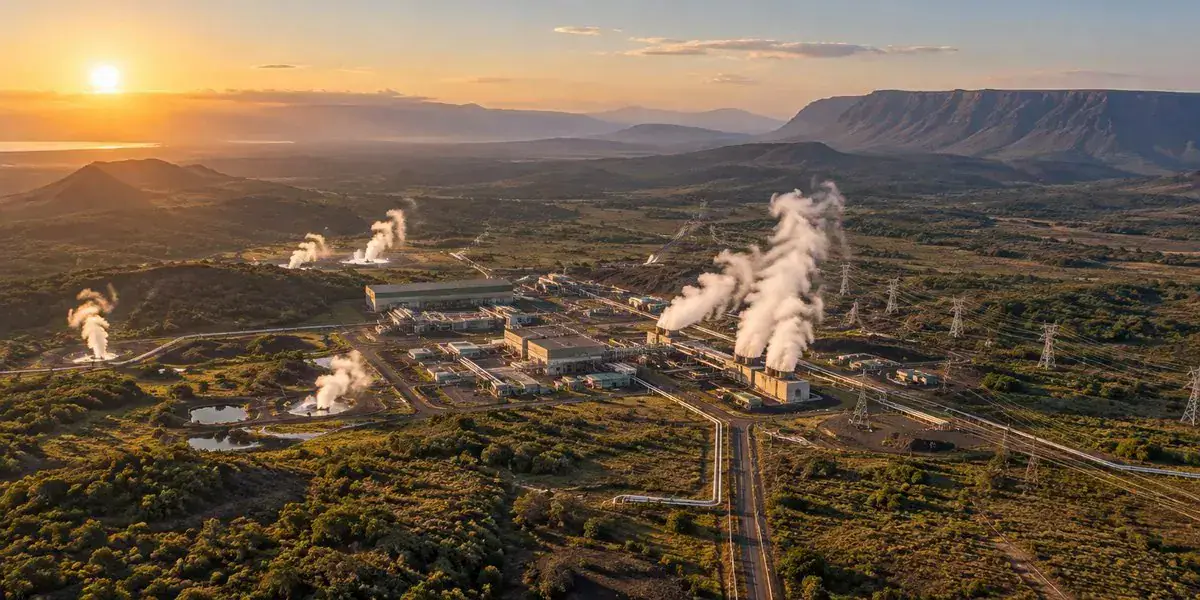
Kenya's geothermal investment has successfully transformed high-risk drilling into bankable power infrastructure by combining public risk-sharing with MIGA political risk insurance. This approach offers a replicable model for development finance across emerging markets. The country's Rift Valley is situated atop one of the world's most productive geothermal belts, but investors face significant upfront costs before confirming commercial steam. Drilling can be capital-intensive with no guarantee of a productive well.
To address this barrier, Kenya adopted a staged structure. Public institutions first proved the steam resource before private investors committed large sums. The Multilateral Investment Guarantee Agency (MIGA), the political risk arm of the World Bank Group, then reduced non-commercial risks through its guarantee instruments. This separation changes the investment calculus, allowing private capital to focus on construction, operations, and revenue once the resource risk has narrowed.
Public support absorbs risks that commercial lenders struggle to price, positioning Kenya as an early African test case for private participation in geothermal energy. The model creates a framework that development finance institutions can apply in other markets. Kenya's dominant power generator, KenGen, invested KSh15.5bn in the year ended June 2026, with a 63-megawatt geothermal plant at Olkaria approaching commissioning at that time.
The geothermal segment is a core part of KenGen's 2026 capital programme, but continued expansion depends on bankable project structures. Political risk insurance improves lender confidence where investors assess public-sector counterparties, currency transfer, or contract enforcement. MIGA's guarantee instruments address each of those concerns directly.
By enabling early public risk-taking, Kenya's experience delivers a clear investment lesson: geological uncertainty can be converted into private infrastructure finance. The benefits of reliable electricity extend past the power plant fence, strengthening industrial output and commercial activity around project sites. Those secondary effects expand the value of geothermal well beyond generation revenues alone.
Kenya's broader energy sector remains active across resource types, reinforcing the country's position as an investment destination. The geothermal model allocates risk across stakeholders, with public institutions absorbing drilling and resource risk, private investors taking on construction and operations risk, and MIGA covering political and non-commercial risk.
The model's success lies in its ability to separate risks rather than stacking them on one balance sheet. By proving the resource and allocating risks effectively, Kenya has created a framework for private participation in geothermal energy that can be replicated in other markets. This approach has significant implications for investors, who can now focus on construction, operations, and revenue generation with reduced risk.
Key points
- Early public risk-taking can convert geological uncertainty into private infrastructure finance.
- The model separates risks, allowing private capital to focus on construction, operations, and revenue generation.
- Reliable electricity strengthens industrial output and commercial activity around project sites, expanding the value of geothermal beyond generation revenues.
Reporting sources
- Kenya geothermal investment draws MIGA risk cover · FurtherAfrica