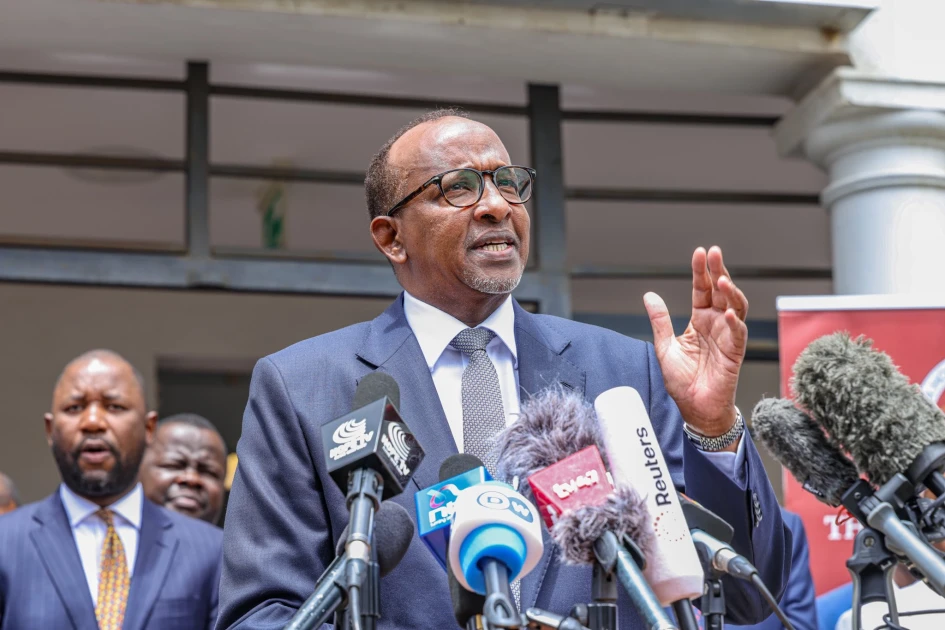
The Kenyan government has intensified its Ebola preparedness efforts, designating five health facilities as isolation centres for suspected cases. This move comes as the country remains on high alert, ready to respond should more cases of the deadly virus emerge. According to Health Cabinet Secretary Aden Duale, the designated facilities are equipped with essential equipment to manage suspected cases.
The five designated health facilities include Kenyatta National Hospital (KNH) with 8 beds, Moi Teaching and Referral Hospital (MTRH) with 50 beds, National Police Hospital with 49 beds, Port Reitz Hospital with 4 beds, and The Nairobi Hospital with 130 beds. These facilities are equipped with four beds in each room, oxygen cylinders, and other essential equipment required to manage suspected cases.
In addition to designating isolation centres, the government has also intensified screening and testing of travellers entering the country through border crossings and the Jomo Kenyatta International Airport (JKIA). Health officials are conducting enhanced screening at the Malaba border, particularly along the Kenya-Uganda border in Busia, where Malaba Health Centre and Kocholia have been designated as temporary isolation facilities for suspected Ebola cases.
Despite heightened vigilance, the government has stated that it will not close its borders to countries affected by the outbreak or neighbouring the Democratic Republic of Congo (DRC). Instead, all travellers arriving from those countries will be subjected to screening procedures as part of efforts to detect and contain any potential cases. According to Duale, screening of travellers from the Ebola disease epicentre has been enhanced at the Jomo Kenyatta International Airport, Gate 16, and all points of entry.
Contact-tracing efforts have led to the identification of two more people who had contact with the first patient, bringing the total number of people under quarantine to 10. Health Director General Dr. Patrick Amoth stated that the individuals are quarantined at facilities where they can be monitored for symptoms. The ministry has reiterated that there is no Ebola outbreak in the country but remains on high alert and prepared to respond should cases emerge.
The government has put in place robust measures to contain the disease and respond to any further cases, according to Duale. The measures include enhanced screening, testing, and contact tracing, as well as the designation of isolation centres and temporary facilities. The ministry continues to monitor the situation and is prepared to respond should more cases emerge.
The Kenyan government's preparedness efforts aim to detect and contain any potential Ebola cases, ensuring the country's readiness to respond to the deadly virus. With five designated isolation centres and enhanced screening measures in place, the government remains vigilant, working to prevent the spread of the disease and protect the public's health.
Key points
- The Kenyan government has designated five health facilities as isolation centres for suspected Ebola cases.
- The government has intensified screening and testing of travellers entering the country through border crossings and the Jomo Kenyatta International Airport (JKIA).
- Contact-tracing efforts have led to the identification of 10 people who are currently under quarantine.