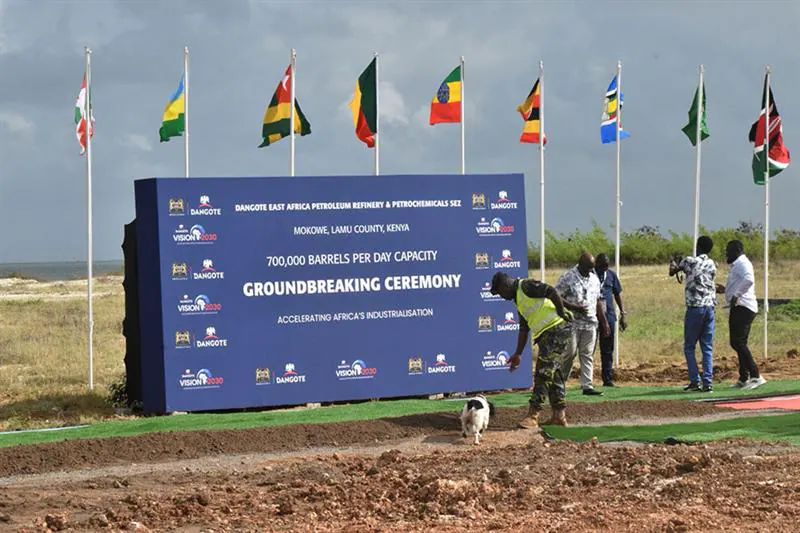
On Wednesday, September 30, 2026, the Dangote Group, a Nigerian conglomerate, held a groundbreaking ceremony for a mega-refinery project in Lamu, Kenya. The project, valued at approximately $16 billion, is expected to be completed within 30 months. The refinery will have a capacity of 700,000 barrels per day, marking a significant step towards Africa's industrialization and energy self-sufficiency.
The ceremony was attended by several high-profile guests, including Kenyan President William Ruto, Ugandan President Yoweri Museveni, Ethiopian Prime Minister Abiy Ahmed, and other African leaders. The event took place at the deep-water port of Lamu, which was inaugurated in 2012. The refinery will be built near the port, leveraging its strategic location for easy access to crude oil imports and facilitating the distribution of petroleum products across the region.
Aliko Dangote, founder and CEO of the Dangote Group, emphasized that the project represents a new chapter in Africa's industrialization. He noted that the continent has long been rich in resources but poor in value creation. Dangote stressed that Africa cannot achieve sustainable prosperity by exporting its raw materials and importing finished goods. The mega-refinery project aims to address this imbalance by enhancing the continent's refining capacity and promoting economic growth.
The Dangote Group has already made significant strides in the energy sector with the commissioning of a 650,000 barrels per day refinery in Nigeria in 2024. This facility is expected to be expanded to 1.4 million barrels per day by 2028, making it one of the largest refineries globally. The Kenyan project is part of Dangote's broader strategy to contribute to Africa's energy security and reduce the continent's reliance on imported petroleum products.
The Lamu mega-refinery project is poised to have a substantial impact on Kenya's economy and the wider East African region. Once operational, the refinery will not only meet domestic demand for petroleum products but also create opportunities for exports to neighboring countries. The project is expected to generate significant employment opportunities and stimulate economic growth in the region.
The construction of the mega-refinery is also seen as a strategic move to enhance Africa's energy self-sufficiency. Currently, the continent imports the majority of its fuel requirements, despite being a significant producer of crude oil. By increasing refining capacity, Africa can reduce its dependence on imported petroleum products and retain more value from its natural resources.
The Dangote Group's mega-refinery project in Lamu has garnered significant attention from industry stakeholders and policymakers. The project's success is expected to serve as a model for future industrialization initiatives in Africa, demonstrating the potential for large-scale investments in the energy sector to drive economic growth and development.
Key points
- The Dangote Group's $16 billion mega-refinery project in Kenya's Lamu county aims to boost Africa's industrialization and energy self-sufficiency.
- The refinery, with a capacity of 700,000 barrels per day, is expected to be completed within 30 months and will be a significant step towards reducing Africa's reliance on imported petroleum products.
- The project has been endorsed by several African leaders, who see it as a strategic initiative to promote economic growth, industrialization, and energy security on the continent.