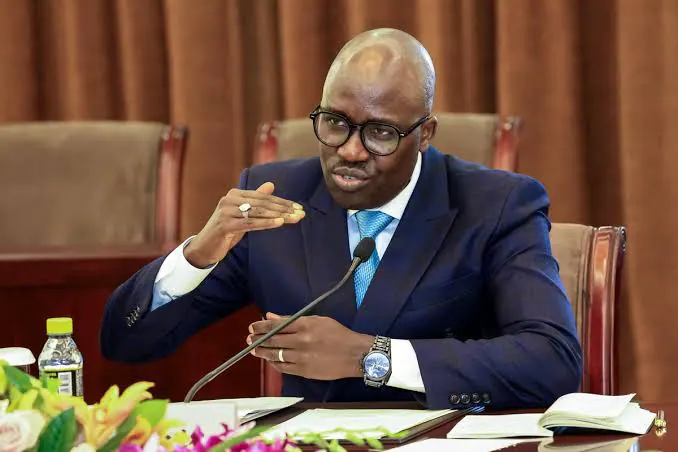
Kenya's Foreign Affairs Principal Secretary Korir Sing'oei has spoken out against sanctions imposed on the International Criminal Court (ICC) by the United States. Sing'oei described the ICC as needing "urgent reform" rather than sanctions. He emphasized that Kenya, a member state of the ICC, would continue working with other states parties to push for reforms at the court. The US sanctions were imposed in response to the ICC's investigations involving American citizens.
The US Secretary of State, Marco Rubio, defended the decision to impose sanctions on the ICC, citing concerns over the court's jurisdiction and investigations involving Americans. Rubio argued that both Republicans and Democrats had rejected the idea that the ICC had authority to prosecute American citizens, military personnel, or political leaders. He described the ICC as a "rogue court" and warned that the US would block transactions with the institution.
Sing'oei's criticism of the ICC focused on its selective focus and failure to meet expectations. He acknowledged shortcomings at the court but drew a distinction between the need for institutional reform and the use of sanctions. Kenya's position contrasts with that of the US, which has longstanding objections to the possibility of international prosecution of American nationals without Washington's consent.
The ICC is a permanent international court established under the Rome Statute to prosecute individuals for genocide, crimes against humanity, war crimes, and the crime of aggression. The court has jurisdiction over nationals of member states and, under certain circumstances, can investigate alleged crimes committed on the territory of a state party. The US is not a party to the Rome Statute, while Kenya is a member state.
Supporters of the ICC argue that international accountability is necessary where national authorities are unwilling or unable to genuinely investigate and prosecute serious crimes within the court's jurisdiction. The exchange between Sing'oei and Rubio highlights divisions over the court's authority, accountability, and relationship with countries that are not parties to the Rome Statute.
The US sanctions on the ICC reflect longstanding concerns over the court's potential to prosecute American nationals. The sanctions aim to restrict the court's resources and prevent it from taking action against Americans. In response, Sing'oei emphasized the need for reform rather than sanctions, which could undermine the court's ability to operate.
The debate over the ICC's authority and accountability is ongoing, with some countries supporting the court's role in promoting international justice and others expressing concerns over its jurisdiction and powers. Kenya's position, as outlined by Sing'oei, is that criticism of the court should lead to reform rather than sanctions.
Key points
- The US has imposed sanctions on the ICC over its investigations involving American citizens.
- Kenya's Foreign Affairs PS Korir Sing'oei has called for urgent reforms at the ICC.
- The ICC is a permanent international court established under the Rome Statute to prosecute individuals for serious crimes.