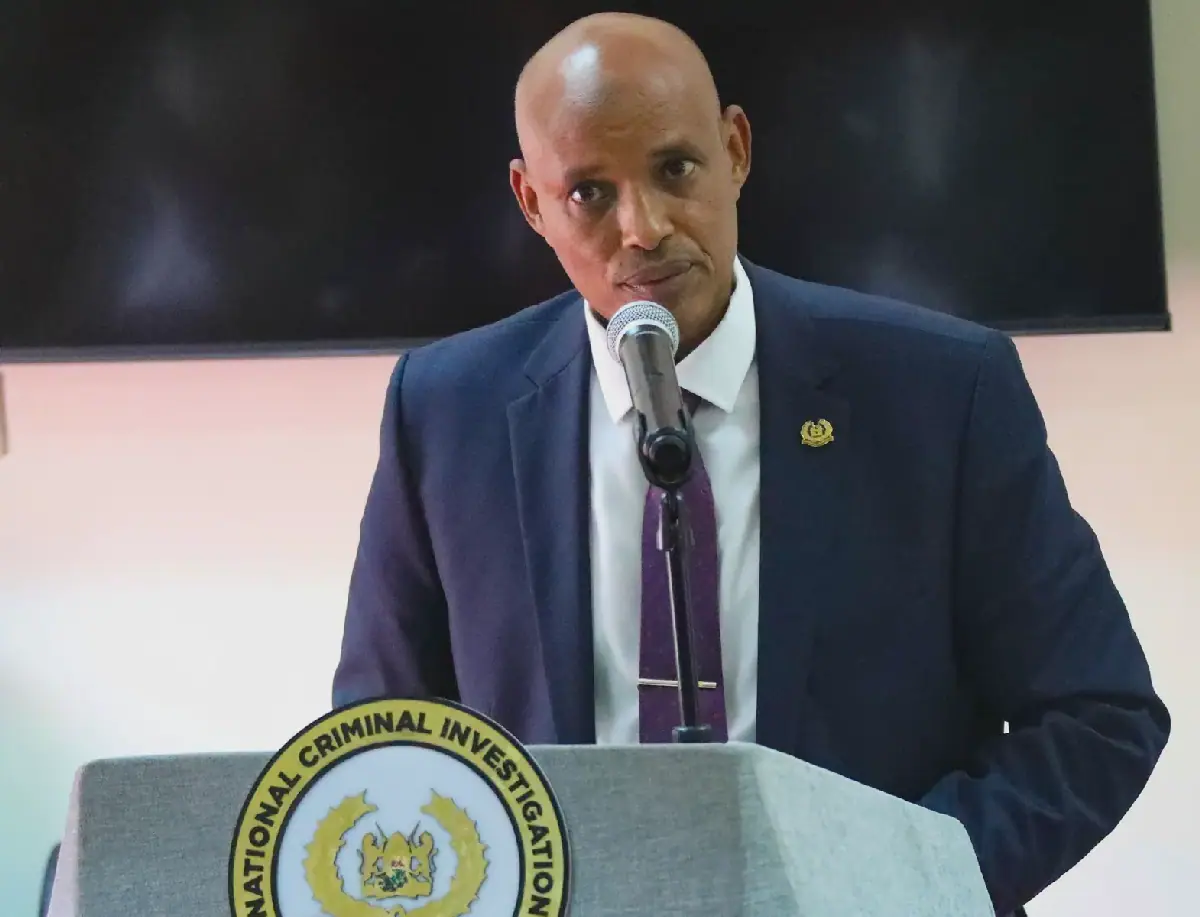
The Directorate of Criminal Investigations (DCI) in Kenya is intensifying its efforts to dismantle drug trafficking networks by pursuing the financiers and organisers behind the illicit trade. DCI Director Mohamed Amin stated that investigators are strengthening asset-centred investigations to identify and recover proceeds of crime linked to narcotics trafficking. This includes cash, vehicles, houses, land, and businesses. The DCI is working with the Asset Recovery Agency and other institutions to trace the financial networks sustaining the drug trade.
Amin's comments come after a significant seizure of 454 kilogrammes of suspected methamphetamine worth an estimated Ksh3.6 billion and the arrest of three suspects in an intelligence-led operation in Kwale County. The operation, conducted on November 7, was a result of intelligence sharing between Kenyan and Tanzanian authorities, targeting suspected trafficking networks operating across the two countries. This is part of the renewed campaign to crack down on drug trafficking in the region.
The recent seizure is not an isolated incident. Authorities had previously seized 1,036 kilogrammes of methamphetamine worth approximately Ksh8.2 billion from the vessel MV Mashaallah in the Indian Ocean. Amin described this as the largest methamphetamine seizure in Kenya's history. These significant seizures demonstrate the scale of the drug trafficking problem in Kenya and the efforts being made to address it.
The National Anti-Narcotics Investigations Bureau (NANIB) has made significant progress in its efforts to combat drug trafficking. Between January and October 2026, the bureau arrested 1,631 suspects and recovered various narcotics valued at approximately Ksh779.6 million. To strengthen investigations, the DCI has transformed the former Anti-Narcotics Unit into NANIB, recruited 208 additional officers, established 40 new stations, and trained 314 officers in anti-narcotics investigations.
The DCI is also working with regional and international law enforcement agencies to improve intelligence sharing and disrupt cross-border trafficking networks. Amin emphasized that the focus is not only on apprehending couriers but also on identifying and pursuing the financiers and organisers who sustain these criminal enterprises. This approach aims to dismantle the entire drug trafficking network, rather than just targeting the low-level operatives.
The efforts of the DCI and other agencies are crucial in addressing the drug trafficking problem in Kenya. The country has seen significant seizures of narcotics in recent months, and the authorities are working to stay ahead of the traffickers. By targeting the financiers and organisers of the drug trade, the DCI hopes to disrupt the networks and reduce the flow of narcotics into the country.
Key initiatives in the anti-narcotics campaign include the transformation of the former Anti-Narcotics Unit into NANIB, recruitment of additional officers, and training in anti-narcotics investigations. Three key points underpin the DCI's strategy: strengthening asset-centred investigations, improving intelligence sharing with regional and international agencies, and targeting the financiers and organisers of drug trafficking networks.
Key points
- The DCI is working with the Asset Recovery Agency and other institutions to trace the financial networks sustaining the drug trade.
- The National Anti-Narcotics Investigations Bureau (NANIB) arrested 1,631 suspects and recovered various narcotics valued at approximately Ksh779.6 million between January and October 2026.
- The DCI's strategy includes strengthening asset-centred investigations, improving intelligence sharing, and targeting the financiers and organisers of drug trafficking networks.
Reporting sources
- Amin: DCI to pursue drug barons, financiers in anti-narcotics crackdown · Kenya Broadcasting Corporation